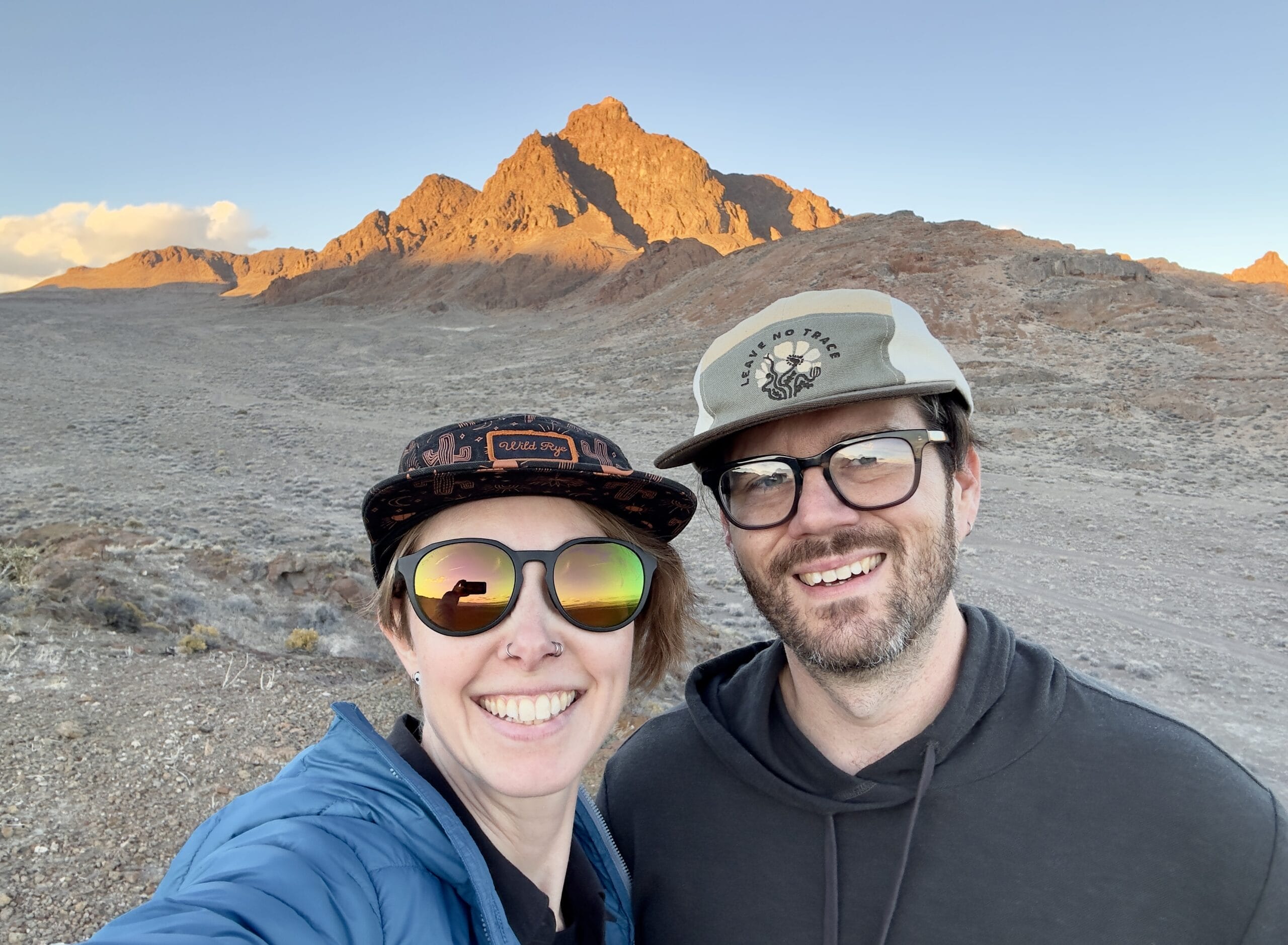
Glasses or Contacts for Backpacking? Here’s How to Choose and Keep Your Eyeballs Healthy
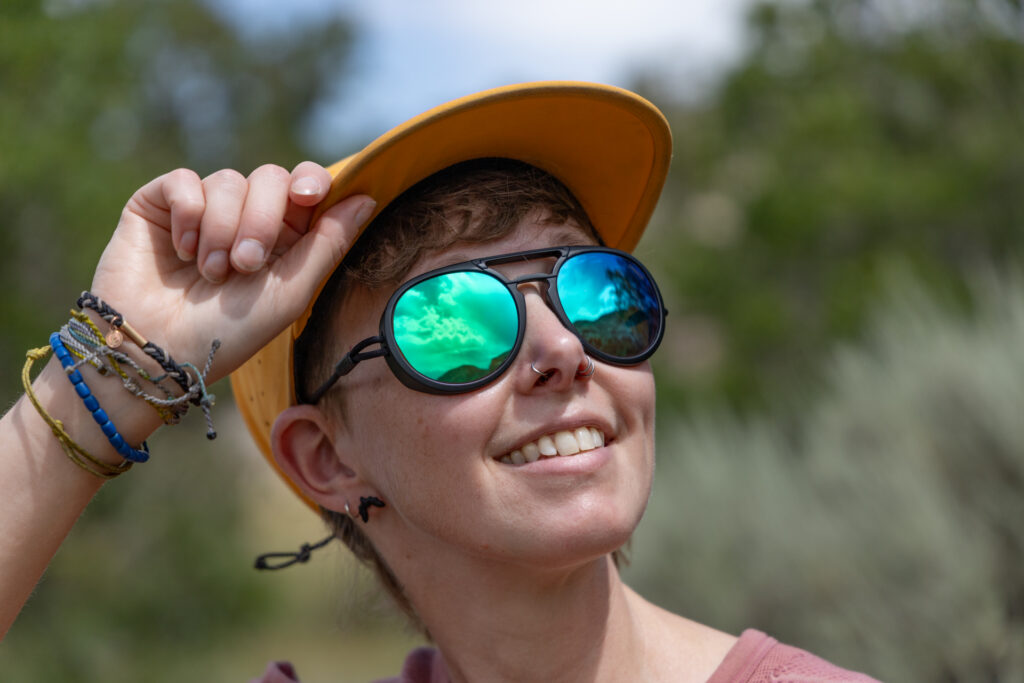
Trying to decide between glasses or contacts for backpacking? It’s a tough choice and one that largely comes down to personal preference. But there are also some pretty solid reasons to choose one over the other depending on your situation.
For example, I’ll be the first to admit that when it comes to eye care when backpacking and camping, I’m not the most responsible adult. I often forget either my contacts, case, or glasses and have given myself eye infections more than once because I thought my hands were cleaner than they actually were (gross, I know).
But I’ve picked up some tips and tricks along the way for how to keep your eyes healthy, carry less weight, and not hate your eye care routine on every trip. Here are the options, their pros and cons, and how to keep your eyes happy and healthy when you’re sleeping in the dirt, all to help you decide if you should wear contacts or glasses backpacking.
Glasses or Contacts for Backpacking?
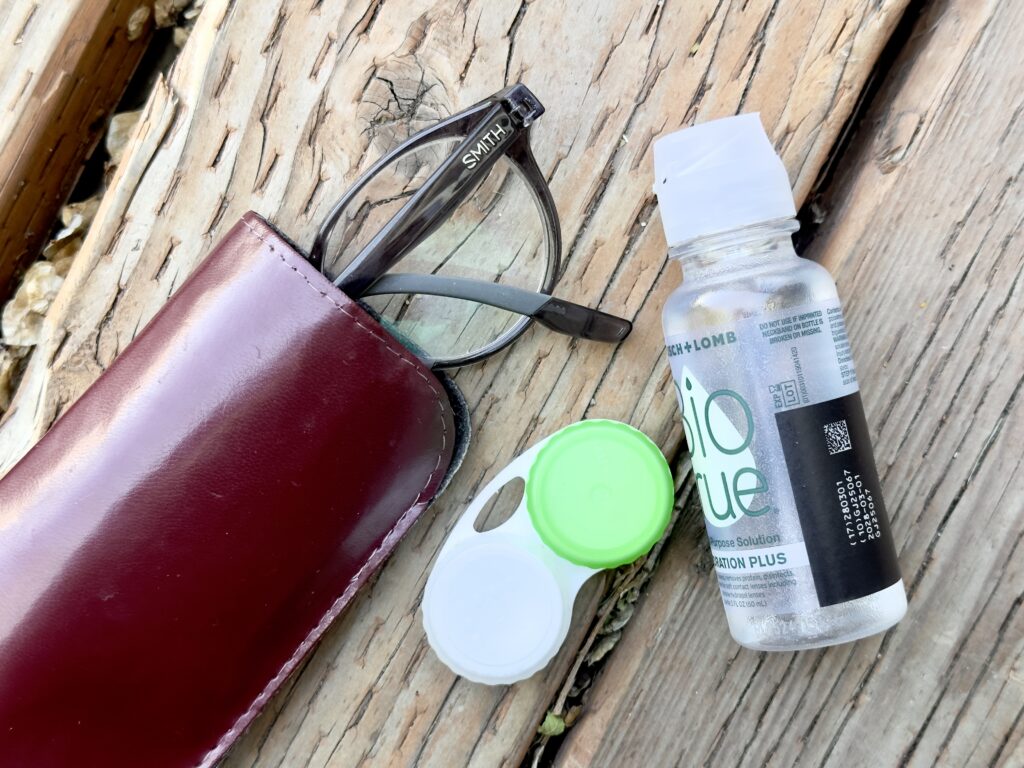
Contacts
Can you wear contact when backpacking? Absolutely. But know they come with a few downsides and require extra care.
Pros:
- Wear any sunglasses (or not)
- No glasses fogging up when it’s cold
- No glasses slipping down your nose when it’s hot
- Nothing pressing against your temples
Cons:
- Easy to get contacts dirty
- Easy to loose contacts in the dirt
- Lots of supplies to carry
- Potential for eye infection is higher
My preferred option (historically) for most hiking, camping and backpacking trips is to wear my regular contacts as usual. If you choose to backpack in contacts, too, you’ll have to bring your case, lenses and solution, put your contacts in in the morning and take ’em out at night, as usual (please don’t sleep in your contacts).
This is often my first choice because I want to wear whatever sunglasses I please, but I also appreciate being able to take sunnies off in the shade or when the sun sets without having to swap pairs of glasses.
But there’s a lot to pack when wearing contacts. You have to bring:
- Contacts
- Glasses for nighttime (I’ve left them at home before and did not like not being able to see when I got up to pee in the middle of the night)
- Contact solution (heavy, ugh)
- Contact case (I’ve forgotten this before…)
- Sunglasses + case
It’s a lot. And as an ultralight backpacker, I hate carrying all this stuff. Then you add in the possibility of getting an eye infection from sticking dirty fingers in your eyeballs and freezing solution in below-zero temps (like when winter backpacking) and there’s a lot to consider.
Contacts Alternative
- One-day contacts: Next time you go to the eye doctor to update your prescription, ask for a prescription for daily contacts if you normally wear 2-week+ varieties. They’re nice to keep on hand just for backpacking trips. That way, you don’t have to pack solution and can worry a little less about infection since you use fresh lenses every day.

Glasses
Choosing glasses when backpacking is a straightforward option, but comes with its own set of downsides.
Pros:
- Less to pack
- Lower chance of eye infection
- Lighter weight
Cons:
- Can only wear prescription sunglasses
- Photochromic lenses (Transitions) aren’t that effective
- Can slip and slide on your face
- Steam up in cold weather
Personally, I hate wearing glasses. Maybe it’s because I’ve historically never invested in a high quality pair (until recently; more on that in a minute), but I’ve worn plenty over my life and I hate hiking and backpacking in just about all of them. They slide down your nose, steam up when you’re working hard, and you have to swap them in and out with prescription sunnies when the light changes.
But photochromic (color-changing) lenses solve at least the last problem, right? Wrong.
The Problem with Photochromic Glasses
I’ve tried backpacking in photochromic/Transitions lenses before because on paper that seemed to solve several of my hang-ups with glasses and contacts: I wouldn’t have to carry a ton of contact supplies, only one pair of glasses is required, and I could invest a little more in a quality pair. But I used them for backpacking exactly once because:
- They don’t change fast enough from light to dark in mixed conditions
- They don’t get dark enough for really sunny days or desert hiking
- If you’re wearing a hat they’ll barely change at all (and you should definitely wear a hat for sun protection)
Basically, my eyes were miserable all the time, I was always squinting, they were sun-tired, and the only problem photochromic lenses actually solved was that I was carrying less weight. So especially in the winter, when you’re near water, and when hiking in the desert (all places light may seem brighter or more intense because it’s reflecting off surfaces around you), you may want to skip the photochromic lenses.
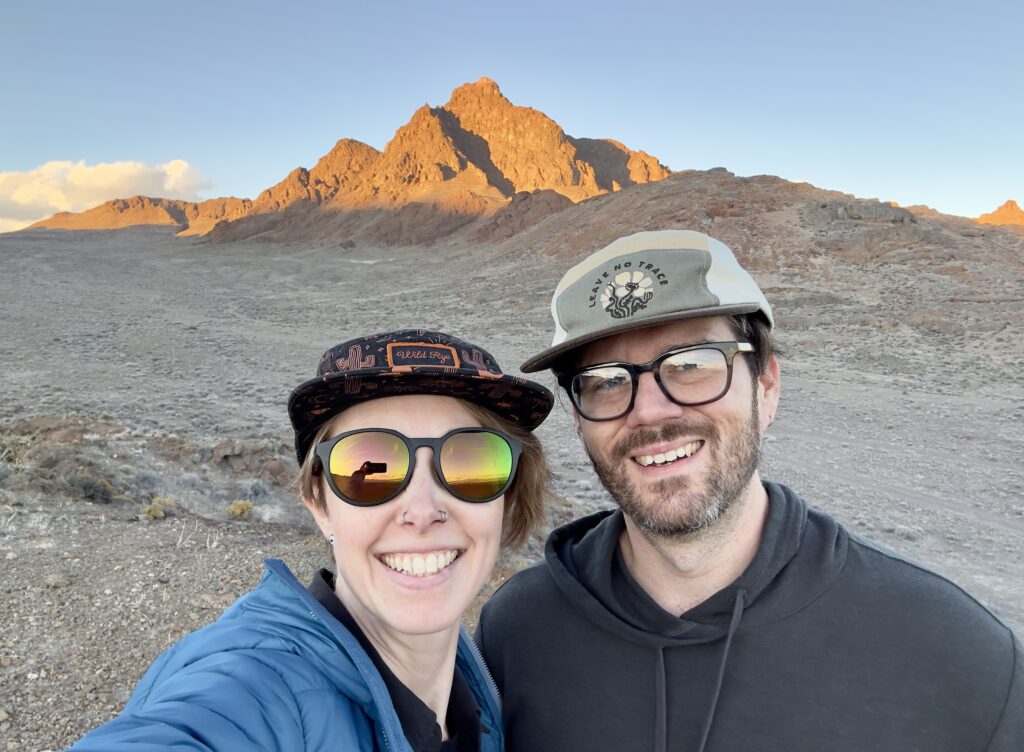
The Best of Both Worlds: Prescription Glasses + Prescription Sunglasses
So what’s a contact wearer to do? One solution: Backpack in prescription sunglasses and bringing regular prescription glasses along, too. I’ve recently started doing this, but there are a few important things I’ve learned make it more comfortable:
- Get a pair of glasses that fit: And I mean that fit well. If they’re constantly sliding down your nose or pressing on your temples you’ll be unhappy.
- Opt for adjustable frames: Look for a pair that’s easily adjustable, like that have arms that are soft and bendable so you can custom fit them on the go and tweak as necessary.
- Get high quality glass: Opt for quality lenses and coatings like anti-glare and anti-fog to reduce eye strain. Polarized lenses are more important if you’re regularly on the water, less so if you’re in the woods or mountains.
- For sunnies, choose tint wisely: For most people, a brown or grey tint offers the most light filtration and natural color observation while still boosting clear vision and contrast. Darker is often better in the mountains, near water, and in the desert.
- Look for action-specific frames: While you may prioritize style and color for your everyday glasses, if you’ll be sweating and working hard in your glasses, get a pair that advertises no-slip or have rubberized nose pieces so they’re more likely to stay put.
- Make them big: When it comes to prescription sunglasses, opt for a pair that offers good eye coverage and frames that wrap around or can be fitted with side shields.
Our Favorite Prescription Lenses
Smith Optics
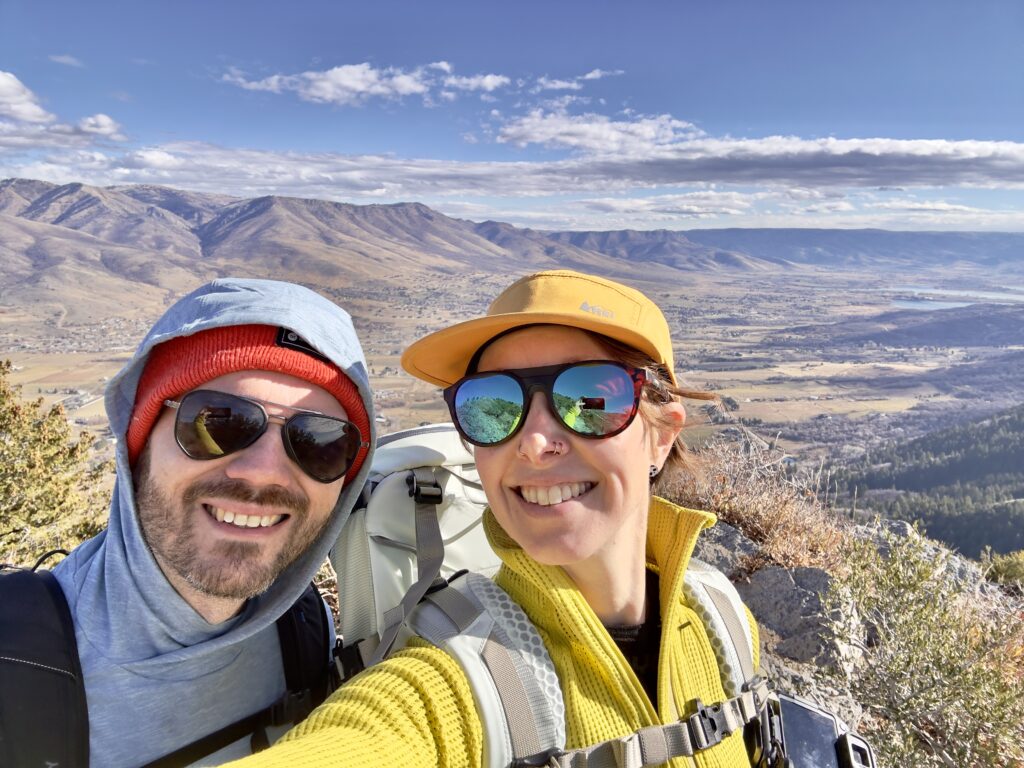
Last fall I finally got a pair of *nice* Smith sunglasses, prescription glasses and prescription sunglasses and they changed the way I thought about backpacking in glasses. Not only did they fit well, they were highly adjustable, made of bio-based resin, had non-slip nose pads and arms, crystal clear lenses, great lens color options for sunnies, and prescription and non-prescription sunnies can be had in photochromic options that start medium-dark and get darker.
What’s more, because they’re designed with outdoor recreation in mind, they have a fog- and scratch-resistant coating and come with a retainer strap and protective case. My favorite style, the Venture, even comes with a removable nose bridge cover and side shields to further reduce glare and protect your eyes. They’re not only my new favorite everyday sunnies, they’re my favorite prescription hiking and backpacking sunnies, too (I have a pair of each)! One ding: the lenses smudge super easily.
Were they cheap? No. But buy one pair at a time, take care of them, and you’ll be set.
Ombraz
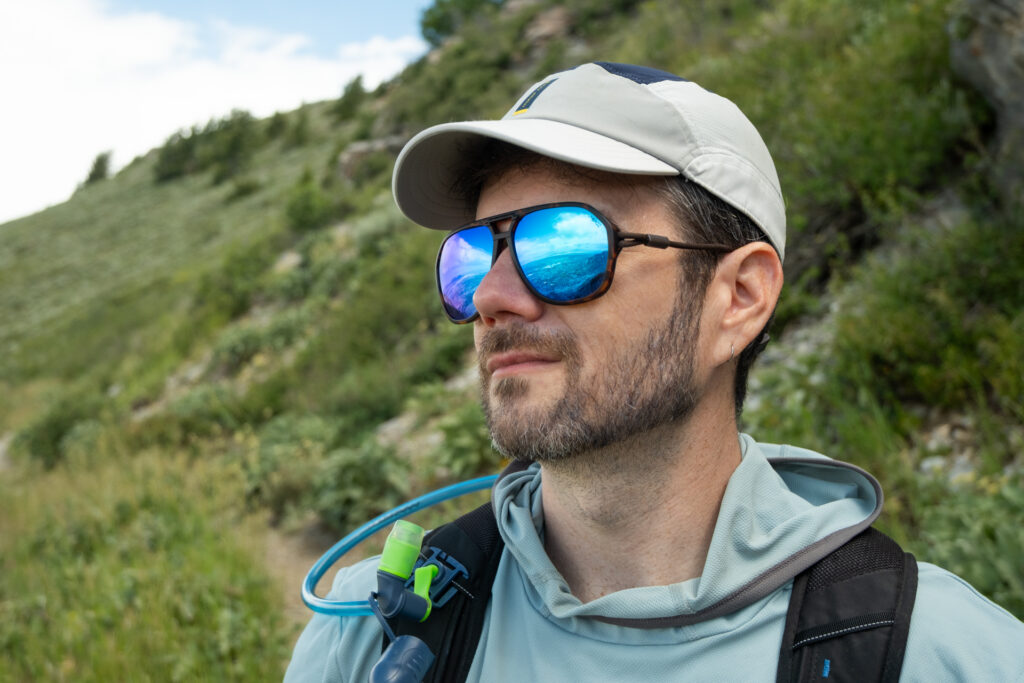
Ombraz, the original armless sunglasses have long been some of our favorites for everything from kayaking (they won’t fall off your face or hat into the water) to backpacking to mountain biking. There are styles for every type of person and outdoor activity. We love them for long days outside particularly because they don’t have arms, which means they don’t slip down sweaty faces or squeeze your temples.
But we haven’t tried the brand’s prescription options until now. Fair warning: the prescription versions are quite the investment, but the optics are crazy high-quality, lenses are crafted in the U.S. and every pair is technically carbon negative because Ombraz plants mangrove trees for every pair sold. And if you lose your glasses off your shirt/face/hat/head often, you may even end up saving money on glasses in the long run. Bonus: There are easily attachable side shields and nose pads sold separately for many styles.
Other glasses we love that offer prescription options:
- Vallon: The Howlin’ Style is perfect for larger faces and comes with a custom retainer strap. Vallon optics are excellent.
Backcountry Eye Care Tips
Here are a few more tips to protect your peepers:
- Wash your hands: With soap. I know, hand sanitizer is easier, but there are a few baddies it doesn’t kill, and since it doesn’t physically remove dirt or grime, that stuff is going right in your contact case. Wash your hands before inserting or removing if possible. Remember: keep soap out of natural bodies of water (biodegradable soap doesn’t biodegrade in water).
- Bring a case: Don’t stuff your expensive glasses into a backpack pocket with your knife and water bottle. Bring a padded or hard-sided case for extra protection.
- Sleep WITH your lenses (not IN your lenses): If it’s close to freezing outside, keep your contact case in your sleeping bag with you overnight, just like you would do with your water filter.
Bottom Line
Eye care in the backcountry is a very personal thing, so at the end of the day, you do you whether that involves glasses, contacts, or a mix of both. Hopefully we helped you decide what’s right for you. If you have more eye care tips, feel free to share them in the comments! Then see well and wander on (and don’t get an eye infection).