The 3 Best Barefoot Trail Running Shoes (That are Also More Sustainable)
Ready to hit the trail, move fast, and feel the ground beneath your feet? Barefoot trail running shoes are just the thing. They help strengthen feet, improve balance, and keep you connected with the ground beneath your feet (and the rubber side down). Plus, these types of shoes often last longer because the lack of cushioning means shoes don’t get packed-out after six months; you can keep wearing them until they fall apart!
Ready to make the switch? Or looking for a new pair for trail running? These are our very favorite truly barefoot trail runners with zero drop, wide toe boxes, no cushioning and plenty of flexibility, freedom of movement and groundfeel.
Looking for more trail running gear? Check out the best sustainable trail running vests here.
How We Test
We’ve tested dozens of barefoot shoes over the years and know what makes for solid, reliable, comfortable trail runners for those who prioritize groundfeel, natural movement and ultimate foot functionality over excessive squish.
We tested each of these shoes on short and long runs, took them traveling around the U.S., and assessed features, fit and functionality to see where each excelled and where they fell flat.
Barefoot Trail Running Shoes
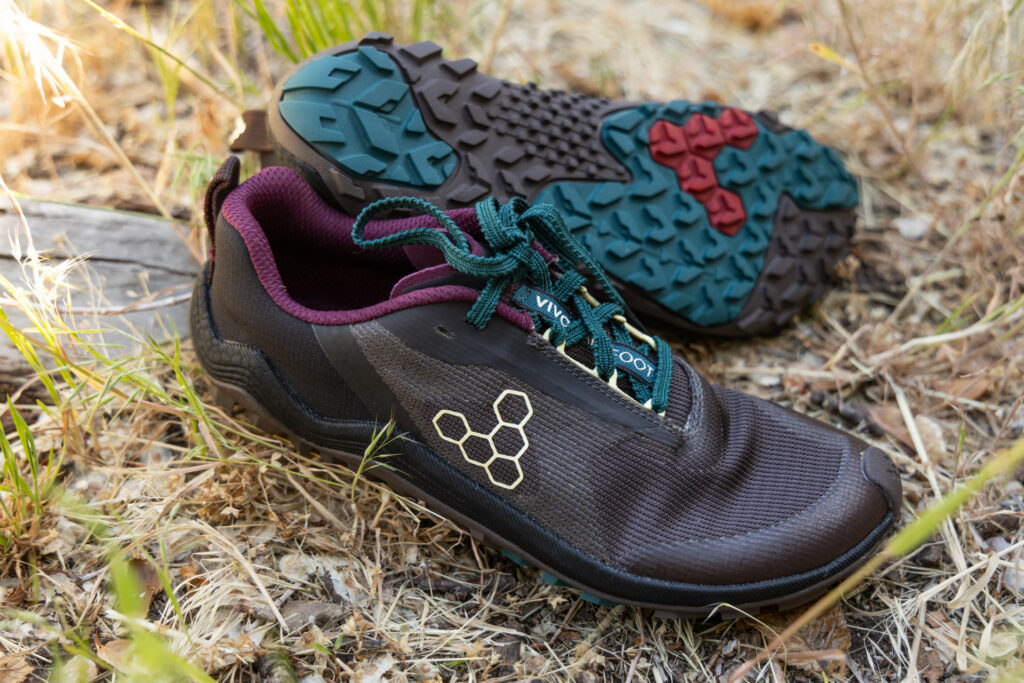
Vivobarefoot Primus Trail Flow: Best for Ultralight Speed
My new favorite barefoot trail runners are the Vivobarefoot Primus Trail Flow. They look fast, feel fast, and are super duper light, so they won’t weigh you down or slow you down. Plus they’re incredibly breathable, which makes them great for warm temps, and the soles are ultra flexible but still protective thanks to a denser sole where you need it most (I wasn’t bothered by running on gravel). Plus, the tread was aggressive enough to keep me stable on even steep and loose hikes and trail runs.
The toe box does slope off more aggressively than some of the brand’s other shoes, so if your toes are on the wide side or your second toe is significantly longer than your first, these may not be the best fit for you. But for everybody else, if you love your shoes to feel as much like being barefoot as possible, these are sure to please.
I ran my first 10k trail race at the GoPro Mountain Games in these and they felt awesome, even after only running in them once and hiking in the once prior to the race. They were soft, flexible, comfortable and a beautiful balance of ultralight and protective. I even loved the thin and soft tongue that laid flat and didn’t rub.
Ding: Wide and high-volume feet will likely find these too restrictive.
How it’s sustainable: Upper made of 100% recycled polyester mesh, 48% recycled TPU, 100% recycled polyester collar, 100% rPET laces, 20% natural rubber (latex) sole, Vivobarefoot is a certified B-corp and has a Revivo repair and refurbish program.
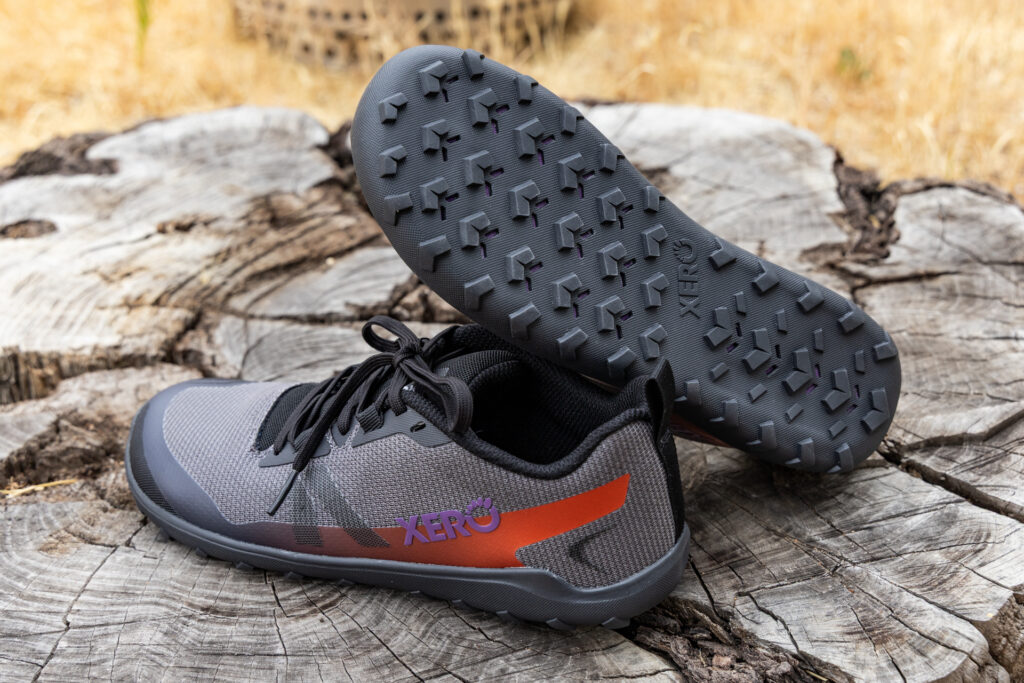
Xero Shoes Mesa Summit: Best for Extra Protection
If you like the idea of a trail runner with a wide toe box and a more protective sole but still want a close-to-the-ground feel (which promotes balance on uneven surfaces), check out the NEW Mesa Summit. The sole is flexible, the uppers are breathable, there’s plenty of room in the toes, and they’re durable (Xero has a 5,000-mile warranty on their soles). And unlike other Xero Shoes, the Mesa Summit incorporates a rock guard that protects feet from sharp surfaces underfoot without compromising flexibility.
Indeed, on a recent 5-mile trail run on rocky Utah trails, I had practically no issues with landing on rock edges that might otherwise be a bit painful. I especially love them because they require no break-in period. They just feel soft, flexible, and slipper-like from the moment you first put them on.
What’s more, traction was solid on wet and dry surfaces so I never had trouble keeping the rubber side down, as they say.
Ding: Soles may feel a touch firm for ultra minimalist enthusiasts.
How it’s sustainable: 5,000-mile sole warranty, no foam midsole means there’s nothing to get smashed out and need replaced after 6 months.
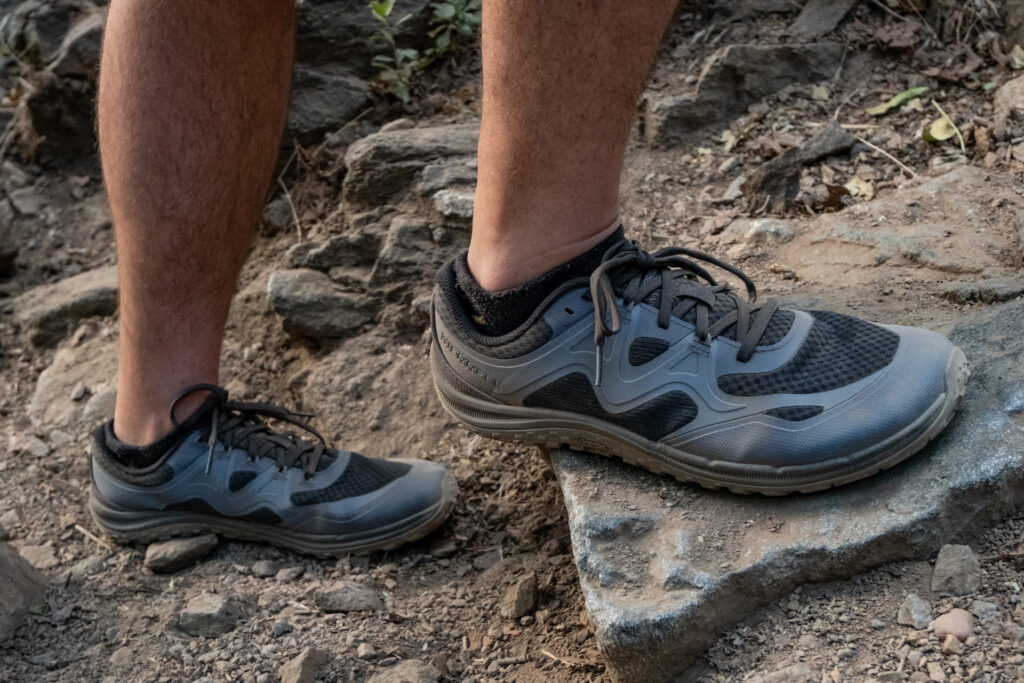
Merrell Trail Glove 8: Best for Transitioning
While most Merrell shoes aren’t minimalist, one of Josh’s perennial faves is the brand’s Trail Glove. He’s tested many iterations of the shoe over the years. The newest, the Trail Glove 8, fits like a, well, glove, features some arch support, which you rarely find in barefoot shoes, and a thin but moderately firm sole that still offers robust tread and protection.
In fact, on rocky trails, the soles were plenty protective and kept Josh from feeling every point or pebble underfoot. It is less flexible than the other options we tested, though, which will appeal to those who regularly run rough trails.
If you’ve worn other Trail Gloves, don’t expect the Trail Glove 8 to fit the same way the 7 or 6 did. Merrell keeps making modifications that you’ll either love or hate. But this one is an ever-so-slightly more comfortable shoe than the last iteration (at least in our opinion). It does take some breaking in, but only because it’s easy to over-tighten the laces, pushing the top of the single-tongue design into your ankle. But with a little trial and error––and a few runs––it wasn’t an issue for long.
Ding: The moderate arch support may be uncomfortable for those fully transitioned to barefoot shoes.
How it’s sustainable: 100% recycled laces, 100% recycled breathable mesh lining, 100% recycled mesh footbed cover, 30% recycled integrated EVA foam insole.
Bottom Line
These are some of our perennial favorite barefoot trail running shoes for short runs to big trail days. Heck, they’re great for hiking too! Just remember to keep trail surface and mileage in mind when choosing barefoot running shoes, transition slowly if you’re not already hiking and running in barefoot shoes, then hit the trail and wander on.