The 4+ Best Ultralight Sleeping Pads (That Are Also More Sustainable)

Consider yourself an ultralight backpacker? Or just want to trim some weight from your pack? Ready to upgrade from an old, leaky air mattress to something more reliable? An ultralight sleeping pad is the way to go. But choosing one can be a pain, especially if you’d prefer to buy from a sustainable brand or score a pad that’s made of more responsible materials.
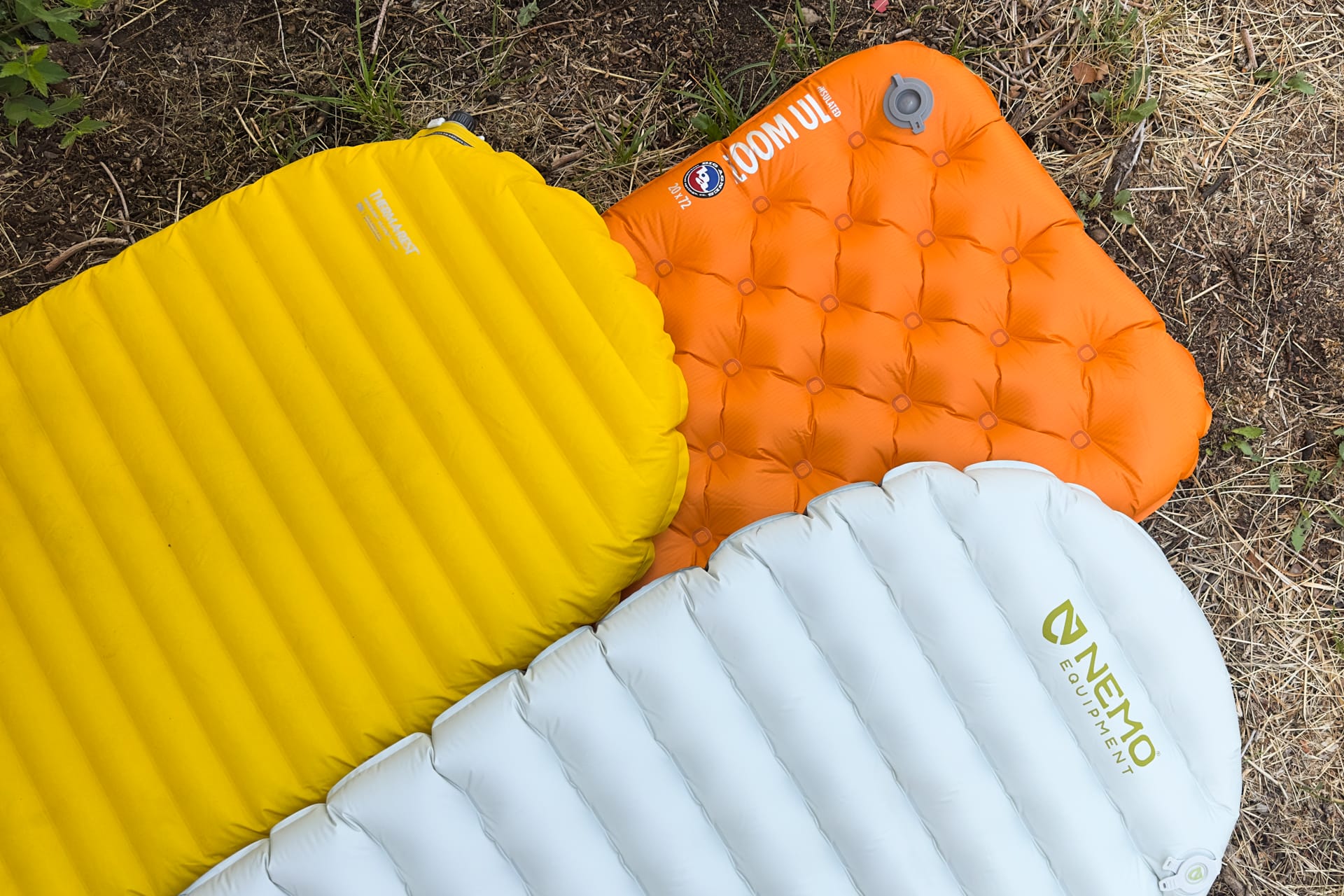
Fortunately, we’ve tested plenty over the years. Here are a few ultralight sleeping pads we love (inflatable and closed cell foam) that are perfect for all kinds of ultralight backpacking adventures–but that don’t sacrifice comfort. Don’t forget the ultralight pad pump!
Pro Tip
Remember that your sleeping pad plays a major role in how accurate your sleeping bag temperature rating is. Bags are generally tested using a pad with an R-value of 5, so if your bag is already pushing the limits when it comes to overnight lows, opt for a pad that has at least an R-value of 5. The higher the number, the warmer you’ll sleep. Find insulated sleeping pads for cooler weather here.

Nemo Tensor Elite: The UL Boss
Weight: 8.5 oz / 240 g +
R-Value: 2.3
This is our go-to warm weather ultralight inflatable sleeping pad. It is, after all, one of the lightest on the market. It’s also advertised as quiet, and indeed, there’s little to no crinkle when we roll over. But because the fabric is slick, there is a notable swish when we adjust or move around. It’s not a dealbreaker, but then again, no pad is as quiet as it claims.
This 3″ pad is quite comfortable, though; one of the comfiest in its weight class. Maybe that’s because of the lightweight material, maybe because of the unique baffles and thermal film for a touch of added warmth. It’s not that well insulated, though (it has just a 2.3 R-value), so on cooler nights, we’ll probably opt for something warmer. On the upside, it comes with a pad pump and repair kit for emergency punctures.
One downside: it’s the narrowest of the bunch, so won’t suit larger backpackers as well as other options and there isn’t a rectangular version (just a long version). We recommend using sleeping pad straps or sleeping with the pad inside the bag instead of outside to help keep you centered if you move around a lot like we do.
How it’s sustainable: The pad comes with a lifetime guarantee. Plus, NEMO’s offices are powered by renewable energy and they are measuring and reducing their emissions while innovating with circular gear.

Therm-A-Rest NeoAir XLite NXT: The Happy Medium
Weight: 13 oz / 368 g +
R-Value: 4.5
For a good balance of light weight and warmth, look no further than the NeoAir XLite NXT. It is more crinkly and louder than some other options here, but we can live with it, and frankly, we’ve slept on noisier pads. After all, for this level of insulation for this little weight, we’re willing to wear ear plugs.
It’s not the comfiest UL pad we’ve ever used, and the horizontal baffles don’t help keep us centered on the pad as well as other shaped baffles, but we sleep quite well on the 3″ pad when we play with the volume of air inside until we get it juuuust right. Plus, the material feels more durable than many UL options, so there’s a good chance we won’t puncture it as fast. It even comes with a pump sack and repair kit.
The mummy shape is narrow, so if you’re on the wide side, opt for the larger version of the pad: it comes in short, regular, wide and large, plus an NXT Max (which is rectangular instead of mummy-shaped).
How it’s sustainable: Made in the U.S. Therm-A-Rest is also measuring their emissions with a plan to be carbon neutral by 2050.

Big Agnes Zoom UL Insulated: The Comfy One
Weight: 14 oz / 397 g +
R-Value: 4.3
For those who prioritize comfort over a few ones of weight savings, the Big Agnes Zoom UL may be the best choice. After all, it’s both the thickest pad (3.25 inches) and the widest (20-25 inches), plus comes in wide, long-wide and regular to fit a wide range of body sizes and better suit those who tend to move a lot in their sleep. Plus, the outer edges are 3.5 inches thick, which helps you stay centered on the pad.
The rectangle shape does mean it will be a touch heavier than mummy-shaped options, but that also means it’s roomier and offers more space for comfy camp pillows. When we sleep on a rectangular pad versus a mummy pad, we definitely notice a difference.
While it’s billed as an insulated pad, it’s not winter-level insulated; just enough to make it suitable for shoulder-season and high alpine summer adventures. It is the noisiest of the bunch, however, and makes a louder than average crinkling sound when you sit, lay down, or turn over. So light sleepers take note (and maybe bring some ear plugs for you and your tent mate.
How it’s sustainable: Made of recycled nylon. Lifetime guarantee. Pad inflation sack made of recycled pad material.


Gossamer Gear Thinlight Foam Pad: The Multifunctional One
Weight: 3.3 oz / 94 g
R-Value: 0.5
First, a warning: this pad is for extreme ultralighters only (who can sleep literally anywhere) or those looking for a secondary pad to use as a seat pad, yoga mat, insulating sleep layer, etc. (that’s us). Because at 1/8-inch thick, it’s definitely not comfortable for sleeping on by itself. But I don’t think that’s what the folks at Gossamer Gear intended this pad to be used for.
On the contrary, we found it a much better piece of gear to use as a padded back panel for an ultralight backpack, a seat pad for rocky or snowy snack breaks, a clean surface for sitting on at dinnertime and on which to spread ingredients, and a solid stretching surface at the end of a long day of hiking, all for far less weight than a traditional folding closed cell foam pad (more of those options below).
It also works well as a protective layer under an inflatable pad to prevent punctures, but unlike other closed-cell foam pads, it doesn’t boost the warmth rating much: just 0.5 R-value. But since we often carry a foam pad just for sitting, stretching and dinner, we love this one because it’s lighter, smaller, and is easy to use. It also comes in a roll-up version if you prefer.

Closed Cell Foam Pads
There are a number of closed-cell foam pads available–they look kind of like egg crate foam–that are comfortable and lightweight. The benefits of these types of pads are that they won’t deflate if they get punctured, but they also make excellent seat pads, campsite yoga mats, and can boost the R-value of inflatable pads a smidge in cold weather (and help protect them from pokey plants).
Do keep in mind that most folks don’t prefer these pads on their own; they’re not thick and plush, they’re thin and minimalist. You certainly can use them on their own, though, especially if you’re the type of backpacker who can sleep anywhere and on anything.
•
Nemo Switchback
Weight: 10.5 oz / 298 g +
R-Value: 2
This pad has two sides: an orange one and a cozy reflective side! Plus more dimples in the same amount of space than some other options, which makes for about 15% more heat-trapping functionality, according to Nemo. It comes in two sizes, like most other foam pads, and folds up nice and compact so you can strap it to the top of your ultralight backpack. Bonus: it comes with a lifetime guarantee and is from a brand that’s pushing sustainable gear to a whole new level.
•
Exped FlexMat Sleeping Pad
Weight: 12.3 oz / 349 g +
R-Value: 1.5
This is the only folding foam pad on the list that comes in not just “medium,” but tall/wide, too. So you can’t trim a few extra grams by getting a short version and letting your feet hang off the end, but for tall and/or broad backpackers, the Exped FlexMat is the best option for full coverage. It’s also the lightest medium/regular size, though you will be giving up a tiny bit of warmth in exchange. EXPED calculates the climate emissions from the production and transportation of this pad and offsets them through certified carbon offsets.
•
Therm-A-Rest Z-Lite SOL
Weight: 10 oz / 283 g +
R-Value: 2
We dig this pad because it’s one of the thickest of the folding foam pads out there, which means it offers just a touch more protection from the ground. Only marginally, but still. It’s also the lightest of the three listed here. Again, only marginally. But we dig the reflective surface on one side that can reflect up to 15% more body heat back toward you than non-reflective pads. This pad comes with a limited lifetime warranty, but we think the brand can do better when it comes to sustainability.
What R-Value Should My Sleeping Pad Be?
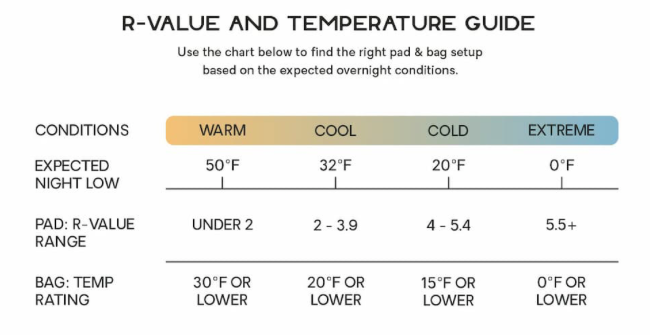
Not sure what R-value you should look for when choosing an inflatable sleep pad? Well, it depends. Largely on whether you sleep cold or hot. But Nemo made the above handy chart to offer some guidance. Keep in mind that these are a very general starting point. Here’s what Nemo recommends:
- 50º or warmer: R-value of 1-2.
- 32º-50º: R-value of 2-3.9.
- 20º-32º: R-value of 4-5.4.
- 0º-20º: R-value of 5.5+.
HOWEVER, as I mentioned earlier, sleeping bag ratings are chosen based on testing when paired with a sleeping pad with an R-value of 5. Meaning if you have a 35º bag but your pad has an R-value of 3.5, it’s not going to keep you warm if it’s 35º outside. Personally, as a cold sleeper, I bring a pad that’s rated at least 5 for anything under 50ºF. And I only bring one rated 2 or less if it’s 60º or warmer.

Bottom Line
Which ultralight sleeping pad you choose is up to you. Just remember before you throw your old one out that you can often repair small punctures (most pads come with a kit) and that many brands will repair or replace pads that fail at little or no cost to you! So reach out to the manufacturer before you buy a new one. Then take care of your gear, repair before you replace, and wander on.
Looking for more sustainable ultralight backpacking gear? Check out our favorite UL headlamps, sleeping bags, cookware, trekking poles and backpacks!