Adventure Road Trip Essentials: The Ultimate Packing List for Safety, Comfort, and Peace of Mind

We’re no strangers to a good road trip here at Terradrift. We’ve spent ten days driving all over Utah’s national parks with my parents, road tripped from Texas to Alaska, and love driving to both nearby destinations (hello, Montana!) and across the country (Oregon FTW!). Along the way, we’ve experienced tons of fun, but also flat tires, dead batteries, no water, dangerously empty gas tanks, and so much more.
Which means we’ve learned (sometimes the hard way) what is absolutely essential to bring along on a road trip of any length. Want to make sure your next long drive is the best it can be? These items (and a little preparation) can mean the difference between a fun and adventurous road trip and a roadside meltdown (or worse). So pack the car and hit the road with confidence and calm!
Road Trip Safety Essentials You Should Never Skip
Safety first, as they say! There are a few items you should always keep in your car no matter where you’re headed or how far you’re driving (a few are seasonal). Stocking up on all of them may require a bit of an upfront investment, but trust us: you’ll be glad you spent the dough when (not if) you need them.
Emergency Car Repair Basics
These may be a given, but we’re gonna list them anyway, just in case. Just as important as having these items? Knowing how to use them. So watch a YouTube video or read an article and get comfortable using safety gear before you’re stuck in the middle of nowhere with no cell service.
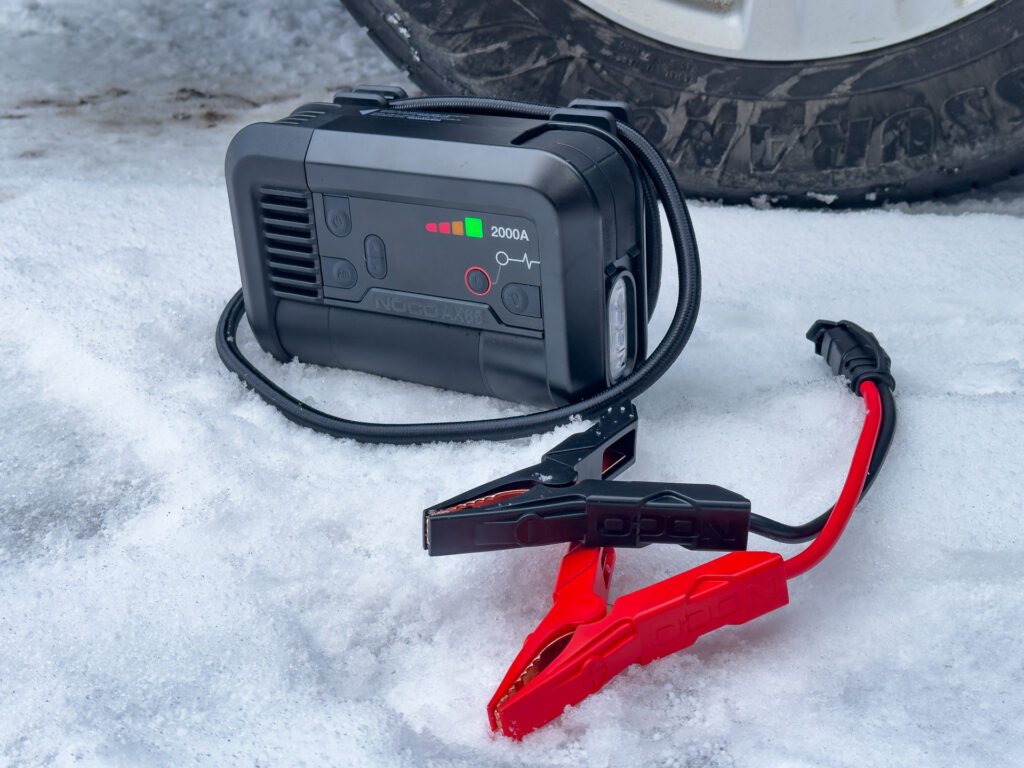
- Jumper cables: These are obviously a necessity. Most cars come with a set. But you know what’s even better than regular jumper cables? A portable jump starter. That way, if you’re way off the main road somewhere (like when dispersed camping) or have a dead battery on a lonely stretch of highway, you can jump your own car.
- Tire change kit: Our opinion? You shouldn’t be able to buy a car without knowing how to change a tire. Fortunately, do it is easy! Spend an hour learning one time and you’ll have a skill you can use for life! Make sure there’s a tire iron and jack with your spare tire at all times. We’ve had to use them more than once on the side of the road.
- Tire repair kit + portable air compressor: We once got a flat tire on day one of a two-month road trip. We were lucky there was a gas station nearby where we could buy a can of Fix-a-Flat. But you better believe we keep an extra in the car now. A flat repair kit also works but is a bit more advanced. Our favorite piece of gear is our NOCO Boost AX65 portable air compressor and jump starter in one. We used to have a cheaper inflator, but it was painfully slow. This one is far more efficient and has saved us from having to hobble to a gas station with too-low tire pressure.
- Traction boards: These are a must if you travel in winter (we have them in our trunk all winter long so even if we get stuck in a snowy parking lot we’re good to go), but also if you sometimes drive off-road, like to dispersed campsites. They can help you get unstuck from mud, sand, snow or ruts. There are nice expensive ones, but also more affordable options.
- Tire chains: Depending on where you live, tire chains might be a requirement when traveling on wintery mountain roads or when road-tripping through mountain passes (like on I-70 in Colorado in the winter). They’ve gotten us unstuck from icy parking lots, helped us down slick, snow-packed backroads, and so much more. If you’re traveling in the winter, absolutely have a set that fits your car’s tires.
- Headlamp or flashlight: If you’re on the side of the road at night or near dusk, you’ll be glad you have a headlamp or flashlight whether you’re trying to perform a repair or flag down passing cars for assistance. Consider keeping extra batteries with it (or use your trusty backup power bank–see more below) or check the batteries every month or two.
First Aid & Health Must-Haves
In addition to keeping your car safe, you should be prepare to keep yourself safe. Make sure to pack items for “just in case.” Remember, most of the time this stuff will be for you and your family, but I like to pack enough that I could help someone else stuck somewhere without necessary supplies, too.
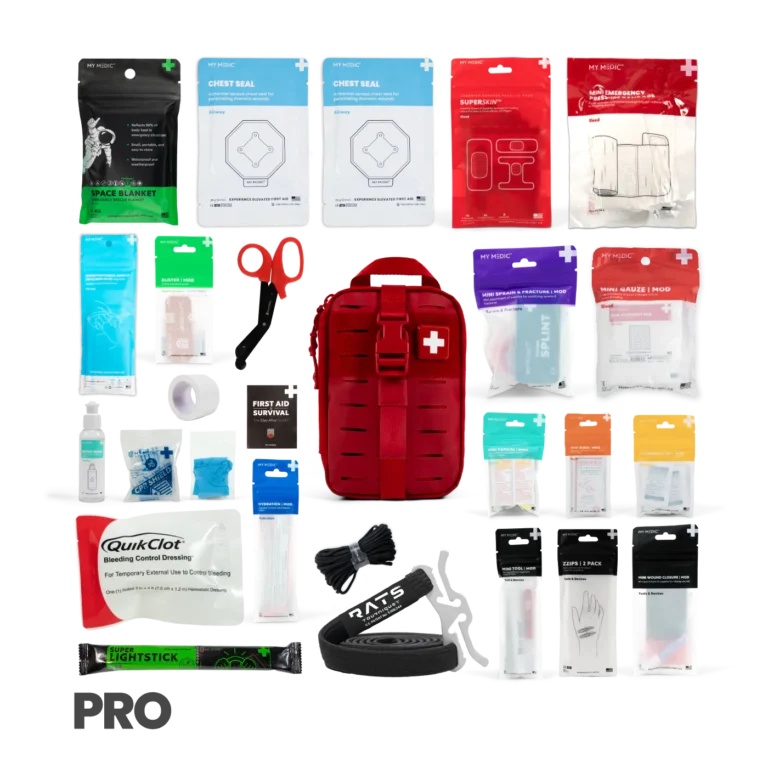
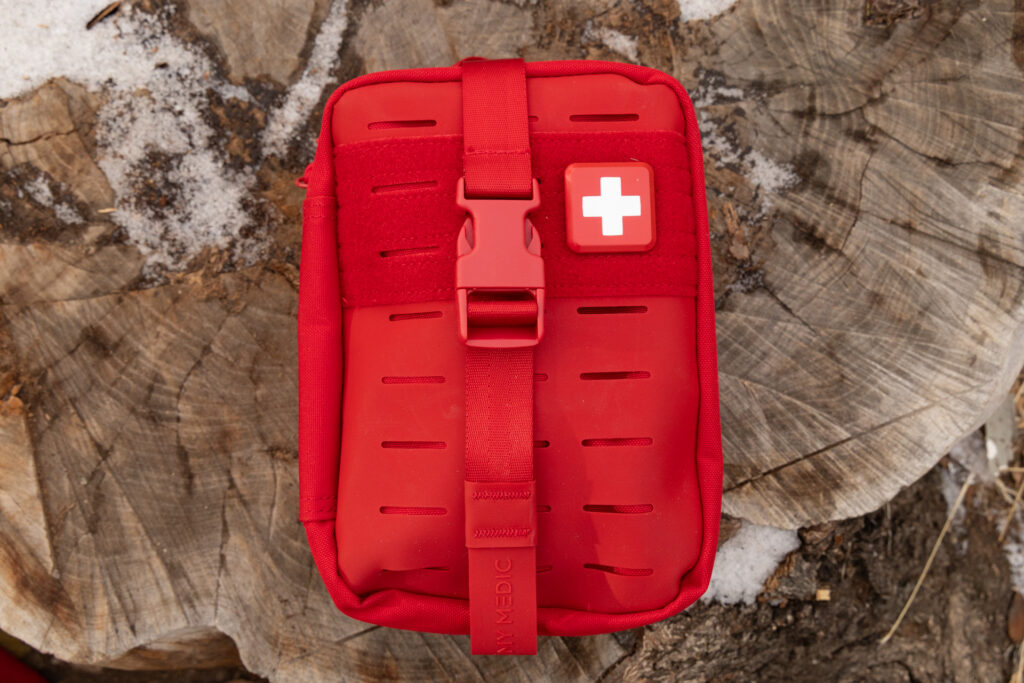
- First aid kit: A well-stocked first aid kit is vital. You can make your own, of course, but you can also buy one from a brand like MyMedic or similar. If you regularly road trip to hike, bike, or participate in other sports, make sure it has plenty of sport-specific supplies like gauze, KT tape for blisters, etc. I always carry a small first aid kit when I hike and bike, but when my dad wiped out on a mountain bike trail, the larger kit I keep in the car came in handy for rinsing his wound, offered additional tools and ointments, and brought major peace of mind.
- Medications: Not all first aid kits contain meds. They definitely don’t contain yours. Make sure you bring extras of prescriptions you take (including epi pens), but also over-the-counter items like pain killers, Pepto Bismol tablets, antihistamines, etc.
- Electrolytes: I don’t keep extra electrolytes in my first aid kit because I always have lots in my snack bag because I’m likely planning on hiking, biking and doing other fun and sweaty things while I’m road tripping. But if you don’t usually, put a few packets in your kit just in case you get stranded somewhere for a long time when it’s hot.
- Extra water: On any length road trip, I make sure to have plenty of spare Nalgene bottles or a reservoir filled with water in the backseat. I never want to run out of water if I’m stuck somewhere (or need to pour something into an overheated coolant tank in a pinch).
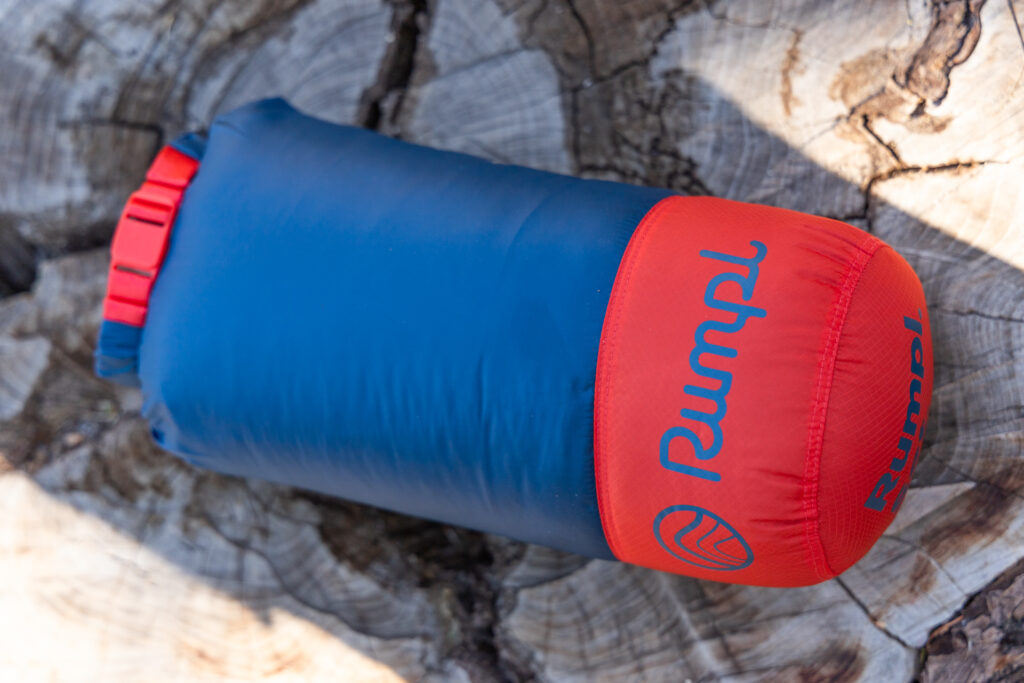
- Blanket or emergency bivy: I like a packable Rumpl. It does double-duty as a picnic blanket on an impromptu lunch outing and a cozy wrap if I get stuck somewhere when it’s cold (or just want to take a rest stop nap). If you’re camping or sleeping in your car, you probably have everything you need to stay warm and comfy, but if you’re not, toss one in, just in case.
Navigation & Communication
Not everywhere you drive will have cell service or wifi. Prepare for the worst and you’ll be ready for anything.
- Offline maps: Whether you plan to go off-road or not, get a paper map of the area you’re exploring and/or download digital maps before you leave home. These can be a life-saver if you unexpectedly lose connection in the middle of nowhere.
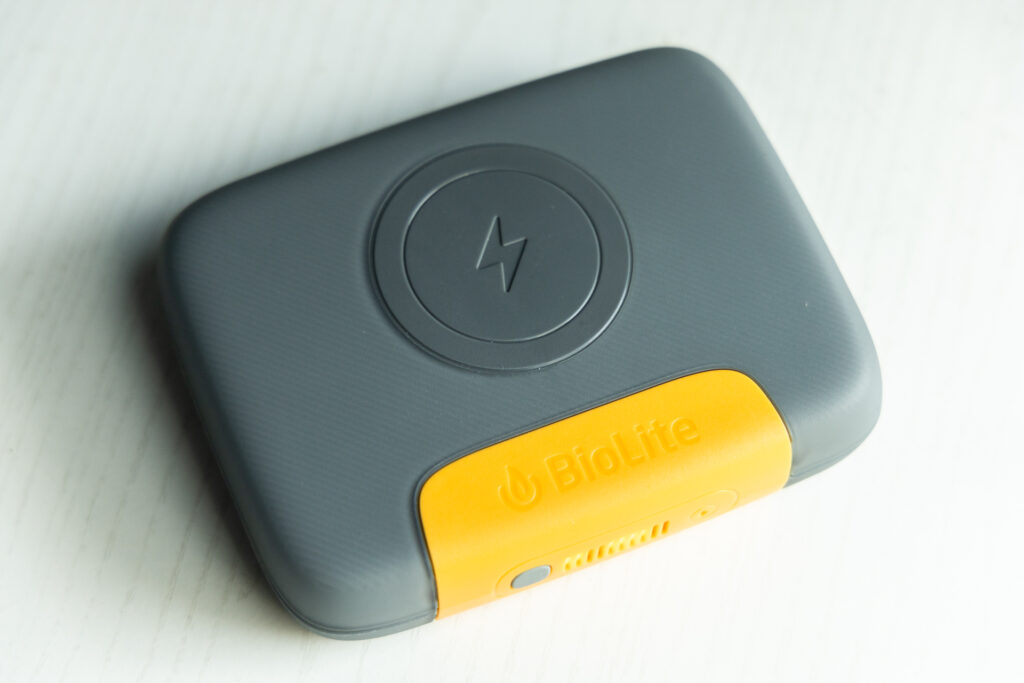
- Car charger + backup battery bank: Especially if you’re using downloaded offline digital maps, absolutely do not forget a charging cable for your phone. But ALSO bring a backup battery (these are our faves). That way, if your car battery is dead and so is your phone, you can still call for help or access your maps.
- Roadside assistance: Want to know a secret? We drive thousands of miles all over the country every year and don’t have AAA or similar services. But if subscribing brings you peace of mind, do it. We often are able to take care of things ourselves. If we can’t, paying for a tow truck once every 5-10 years is cheaper than paying a monthly fee for a membership we almost never use.
Comfort Essentials for Long Days in the Car
For us adventurous folks who are likely camping, sleeping in our car, cooking our own meals, etc. instead of relying on restaurants and hotels in cities, there are a few extra things that make adventurous road trips more enjoyable.
Sleep Comfort
Sleep is of the utmost importance. Always, but especially when spending long hours driving. So whether it’s a roadside nap when you get tired or a full car camping setup, rest easy when you travel.
- Travel pillow, blanket: I like to pack a camp pillow and blanket even when I’m not camping. It makes napping in the passenger seat that much more cozy and comfortable.
- Car camping setup: On a long road trip, we prefer to camp or sleep in our car instead of pay for a hotel. But depending on the season and where we’re driving, it can be tricky to find a place to pitch a tent. Enter our Pacific Adventure Works Hideaway platform. It offers a way to sleep in our vehicle, but rolls up for easy storage when not in use. Pair it with a comfy inflatable mattress and sleeping bag.
- Earplugs and eye mask: We’ve slept at many a noisy campground and rest stop. Ear plugs and an eye mask (I love the TRTL Glimpse) are a lifesaver.
Stay Clean(ish) on the Go
Staying clean when you’re road tripping and camping can be challenging. Here’s how to stay clean(ish). Remember that you should never use soap in a natural body of water. Even if it says it’s biodegradable, it doesn’t biodegrade in water. Do NOT wash yourself, hair or clothing with any kind of soap in rivers, lakes, streams or waterfalls.
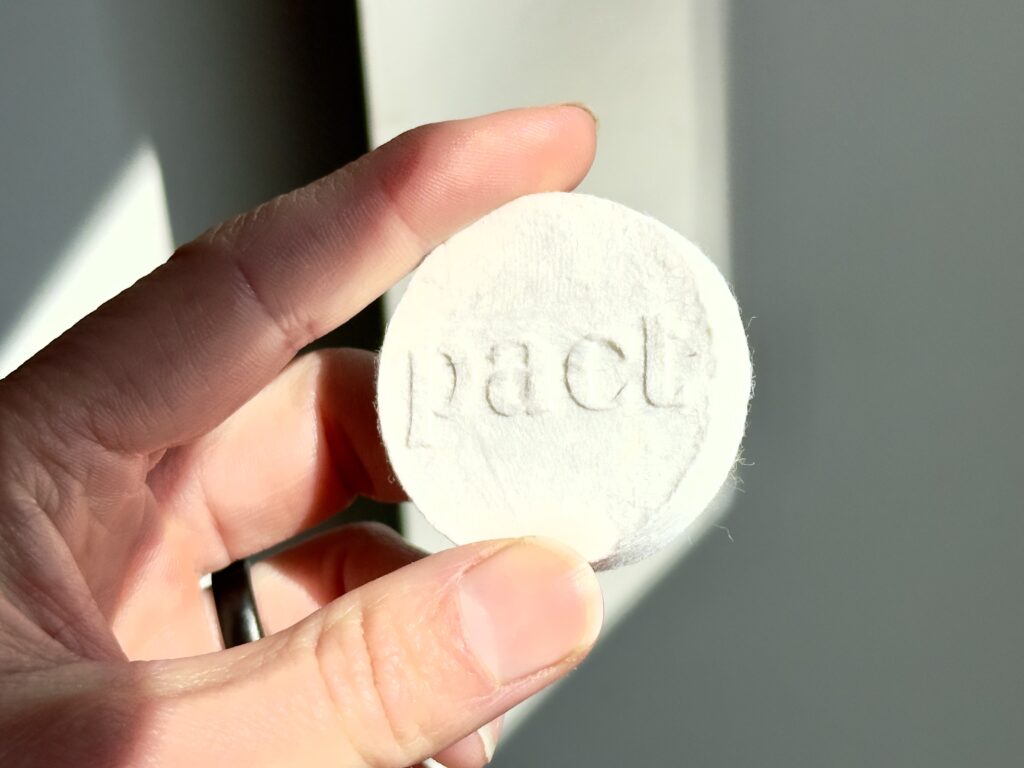
- Body wipes: In the absence of a proper shower, a body wipe will do in a pinch. We like Pact Outdoors Body Wipes. They weigh nothing, are compressed but expand to a 9×9 wipe with a few drops of water, and biodegrade readily in soil (but pack them out and dispose of them in a trash can, please). You can use them with just water or add a little soap for an extra clean.
- Soap and hand sanitizer: Bring soap for hand (and possibly body) washing, but also hand sanitizer for quick cleanups. Remember: hand sanitizer doesn’t get rid of all the baddies, so soap is always the cleanest choice.
- Trash bags: I cannot tell you how often I forget a trash bag on a road trip. You can reuse plastic or paper grocery or fast food bags, of course (we often do), just remember something in which to deposit banana peels, candy bar wrappers, etc.
- Towel: We always pack a towel. We can use it for all manner of cleanups or unexpected emergencies, but also, it’s a towel. It comes in handy if you find a shower, take a dip in a lake to rinse the dust off, or get caught in an unexpected downpour. My favorite is the PackTowl Changing Poncho that lets me change in parking lots after a long hike or bike ride without exposing myself.
Bottom Line: Prep Smart, Travel Better
Whether you’re planning a road trip to hike, bike and camp or are just driving long distances through barren lands, these are the road trip essentials you should always have in your trunk or backseat. That way, you’ll be prepared for anything no matter where you roam. Is there anything you’d add to the list? Happy trails and wander on!