The 5 Best Hikes in Chattanooga, Tennessee

When it comes to surprising outdoor destinations, Chattanooga, TN may be toward the top of the list. Not to folks who call the southern region of the state home, of course–they know how great it is–but certainly for those of us who haven’t spent much time in the Volunteer State.
We recently spent some time in the city and rounded up some of our favorite hikes, plus recruited some folks who know the area best–locals–to share their faves so we could share the 5 best hikes in Chattanooga and its surrounds.
America’s First National Park City
Chattanooga is also the U.S.’s first National Park City. Not because it’s home to national parks–it isn’t–but because it’s been dubbed a city with renowned outdoor access and community involvement by the U.K.-based non-profit National Park City Foundation. They exist to recognize destinations with longterm local grassroots movements that make destinations greener, healthier and wilder.
And that definitely defines Chattanooga where mountain bike trails, trail building orgs, river-based activities, hiking trails, urban green spaces, and local outfitters abound. What’s more, so much of it is easily accessible from the center of town. In fact, scores of trails exist within a 10-mile radius of the city center, including on lower-elevation mountains, along cliffs, beside rivers, past waterfalls, and through historic sites.
Ready to go? Here are a few trails to get you started.

Where to Stay: Dwell Hotel
Looking for the coolest stay in Chattanooga? Book a few nights at the Dwell Hotel. It’s giving bright Mid-Century Modern vibes in the hippest way possible. In a historic hotel, nonetheless! It has rad lounge areas, a colorful restaurant in the back, and a dark and moody lounge and cocktail bar with inventive drinks. And yes, the rooms are just as cool and comfy as they look. Book HERE
The 5 Best Hikes in Chattanooga, Tennessee

Sunset Rock via Cravens and Bluff Trails: 3.3 mi, out-and-back
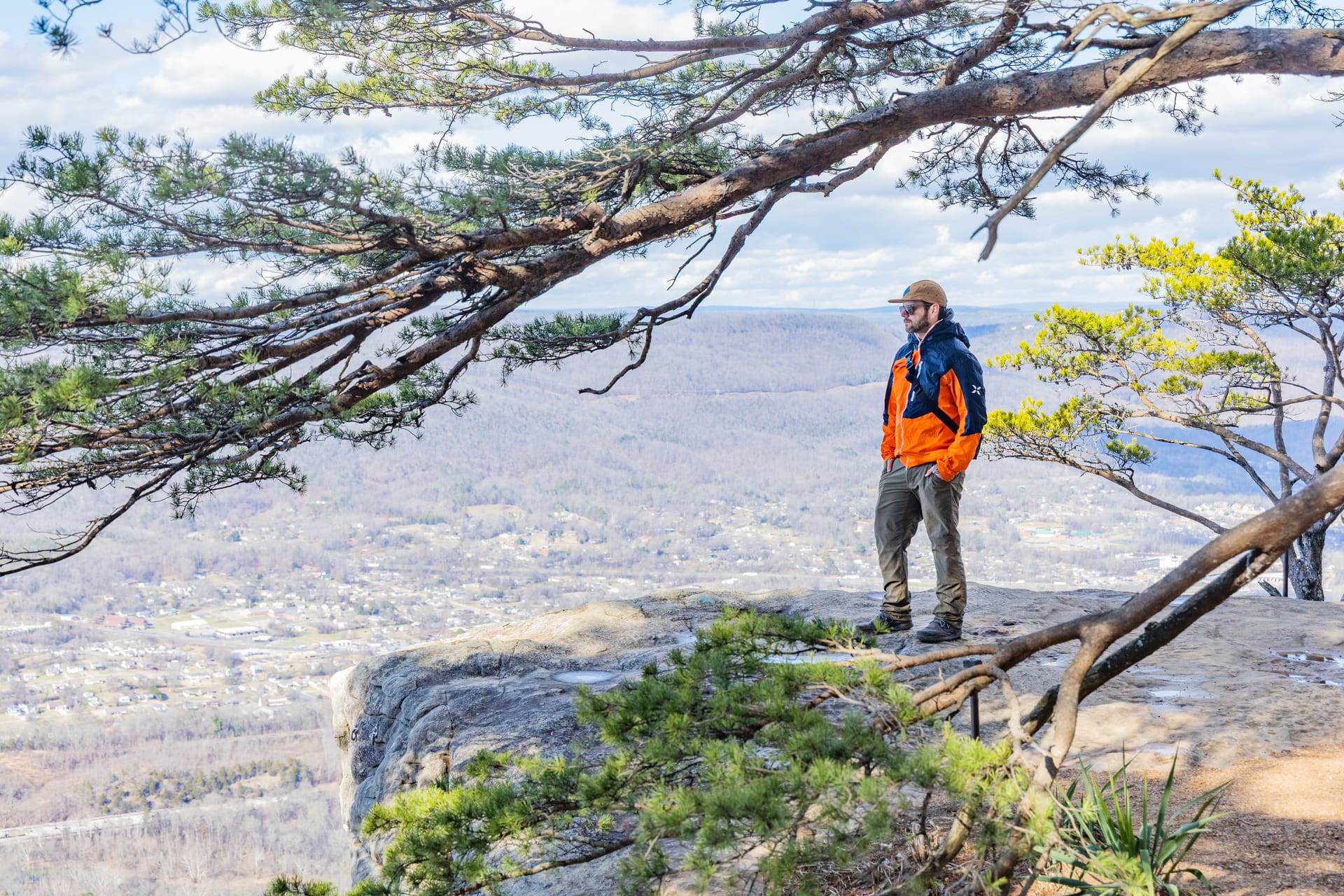
Jonesing for a view? Maybe a little Civil War history? This trail’s got both. You’ll start from the parking lot at the trailhead near the historic Cravens House, which also happens to be the site of several monuments to Union companies who fought on the mountain and quickly pushed back Confederate troops. There’s an Ohio, New York and Iowa monument, signage about the battle fought where you’re about to hike, and views of the city below.
As for the hike itself, you’ll journey up a moderate trail that’s mostly a gentle incline with sections of rock steps and chunky sections. You’ll pass caves and impressive rock features, wander through woods that are at least partially green year-round thanks to a mix of deciduous trees and evergreen plants like American holly and honeysuckle, boulders covered in vibrant moss and lichen, plus views of the river below through the branches.
One last push to the top is all rock steps, but once you get to the lookout, you’re in for a sweeping view of the city and river below. You can also continue to the top of Lookout Mountain if you’re keen and walk to National Military Park Point Park (an entrance fee is required if you don’t have a national park pass).
This is a popular trail with visitors and locals, so don’t expect to have the whole place to yourself. But on a chilly weekend afternoon in January we didn’t find it crowded at all.

Rainbow Falls via Signal Point and Rainbow Lake: 2.5 mi, loop
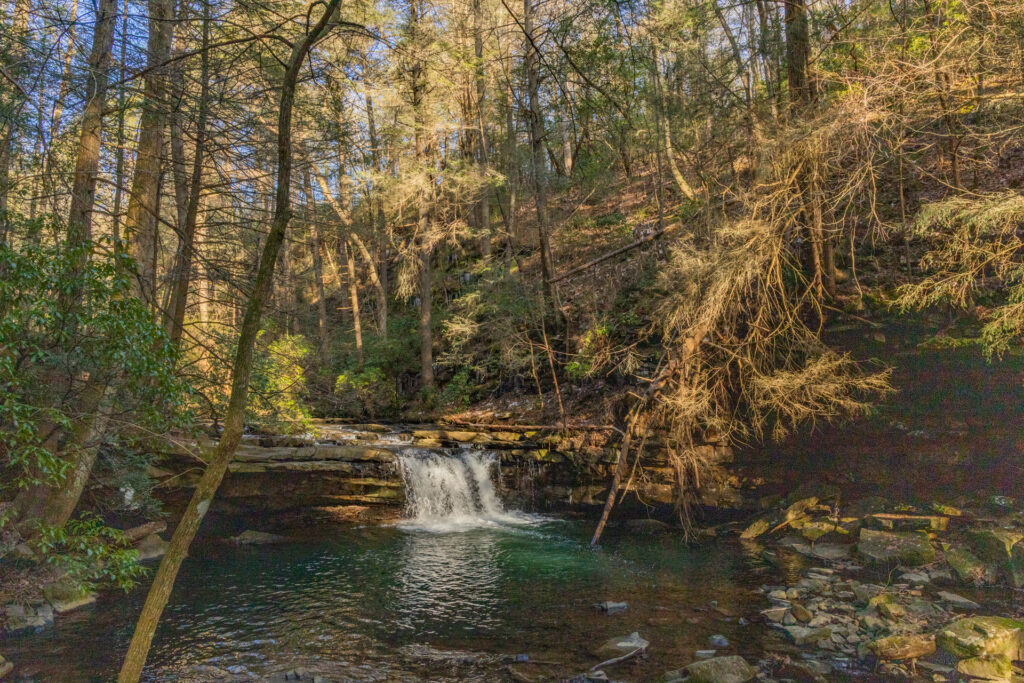
For a quiet experience in nature with plenty of varied scenery to keep you marveling, including Rainbow Lake, a small dam waterfall that pours into Middle Creek (pictured above), and Rainbow Falls (if you’re willing to work for it). And when I say “work for it,” I mean you can sort of see the falls through the trees in the winter when most leaves have fallen, but to really experience it you have to scramble down and back up a steep slope from the trail to the river. Locals have placed ropes to help aid in the quest, but use with caution and at your own risk.
Don’t want to climb up and down a forested slope? You’ll still get views of the creek, impressive rock features, uncrowded trails with a mix of deciduous and evergreen trees, and a few wide views toward the end of the hike. The hike is moderate and if you want to do it as a loop there’s a short road walk back to the starting point at Rainbow Lake Trailhead, but it’s a quick and easy one.
You can reach Rainbow Falls another way, too, via a quiet trailhead along Suck Creek Road where Middle Creek meets the road. It will require way-finding and more rock scrambling than actual hiking, though, so you’ve been warned. That said, you’ll get access to more falls and swimming holes.

Cumberland Trail, Possum Creek: 1-8.7 mi, point-to-point or out-and-back
Casey Hyde, a Chattanooga local and CEO of Chattanooga-based adventure travel apparel brand TEREN has spent countless hours exploring the Cumberland Trail and beyond.
“It’s hard to pick a number one hike for the Cumberland Trail because there are just so many good ones, but the diversity you find in the Possum Creek area from the ridges around Bare & Perkins Points into the Little & Big Possum Creeks is something truly special. The trail’s lush foliage keeps you layered in the forest, and no matter the season, whether spring flowers or fall leaves, it captures the true core of hiking in the Southeast.
“This Possum Creek section is great for all of the above: day hikes, quick overnighters with a few dedicated primitive campsites (don’t forget to register online) and of course thru-hiking the whole Cumberland Trail.
“Whether you’re hiking with friends or, in my case, my dog Meadow, be ready for varied terrain. Bring plenty of water (or a filter for the creeks), embrace the forest’s shade, and experience a trail that truly embodies hiking in the southeast.”
Fiery Gizzard Trail: 1-12.7 mi, point-to-point or out-and-back
Supposedly once named one of the best 25 trails in the country by Backpacker Magazine (we couldn’t find the original article online–just references to it), Fiery Gizzard Trail is an epic thru-hike/point-to-point route about 45 minutes outside Chattanooga. Located in a state park of the same name, the shady, challenging trail is popular with backpackers (there are backcountry campsites scattered along the way that require a backcountry permit to use), but also determined day-hikers.
It starts in the Grundy Forest section of the park and offers a surprising mix of views and terrain. Little Gizzard Creek joins up with Big Fiery Gizzard Creek, in which you may spot any number of salamanders if you slow down and keep your eyes peeled. In the summer green abounds, the trail is ablaze with color in the fall, and even in winter there’s green thanks to moss, lichen, and evergreen trees like hemlock. In fact, the area is home to the oldest hemlock in the state.
Start at the trailhead in Tracy City and if you’re going to hike the whole thing, plan to self-shuttle if you have two cars because It’s a tough hike, especially if you choose the route through the canyon, and you won’t likely feel like hiking another 12.7 miles back. Locals also recommend checking the trailhead signage for the phone number of drivers who will pick you up or using Uber–just be aware that Uber drivers in the area are limited. On the upside, there are 20 miles of trails or so within the state park if you’d rather hike a shorter route or a loop.

Where to Stay: Terralodge
If you want to spend some quality time exploring the Monteagle area and the state park in the vicinity (including Fiery Gizzard), book a stay at the comfiest “treehouses” (aka: tiny houses on stilts) you’ve ever seen. There are hot tubs on the back porch overlooking the woods, heated floors in the bathrooms, and super plush beds in the loft plus a full kitchen so you can prepare meals in instead of going out. Highly recommend. Book HERE
The Caverns
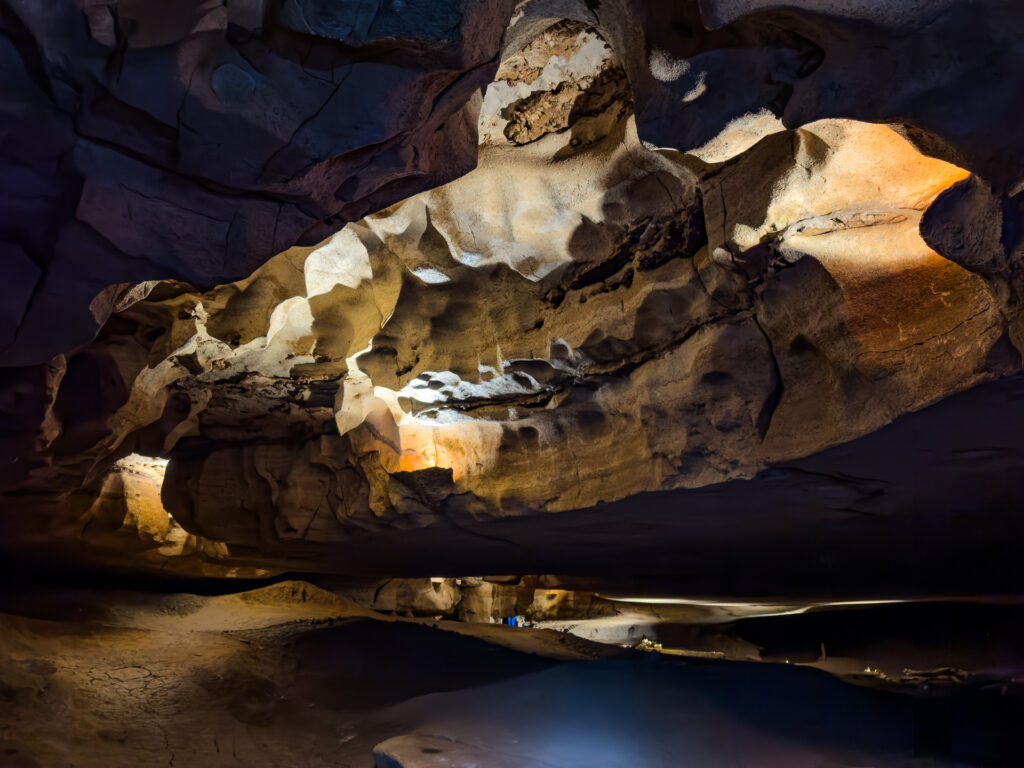
While it’s not exactly a hike, if you’re in the Monteagle area, take the opportunity to visit The Caverns. Yes, there are short trails around the property, but you can also take a guided tour of the caverns themselves. Several options are available, ranging from short and easy walking tours underground (Guided Cave Tour) to longer excursions (Adventure Cave Tour) where helmets and knee pads are required as you’ll be crawling through narrow passages.
We did the latter, my parents did the former. We all learned a lot, picked up some interesting facts from our excellent and knowledgable guides, and saw cool formations and bats!
The Caverns is also an underground music venue, so before you go, make sure there’s not a show going on (unless that unique experience is one you can’t pass up). Find more information about The Caverns HERE.

Bottom Line
America’s first National Park City is an outdoorsy, adventurous, cool place to spend a few days or a few weeks! Hiking (and biking) trails abound, other activities like rafting and kayaking are on offer in the summer, it has major college-town vibes (in a good way), there’s plenty of good food (definitely eat at Attack of the Tatsu), and outdoor recreation is easily accessible from downtown.
So pack your bags (don’t forget your hiking boots) and hit the trails in Chattanooga. You won’t regret it. Wander on.
Check out These Articles Next:
Best Hikes Near Austin
The 5 Best Hikes in Sedona, Arizona
Best Hikes in Rocky Mountain National Park