Wash Your Ski Jacket. It’s Gross. Here’s How.

Your ski jacket is filthy. Don’t think so? Is it shedding water like it should? Or does the inside feel clammy after one run? Then guess what…It’s dirty. But I have good news: you can and should wash your ski jacket.
But! There’s a right way and a wrong way to clean technical winter apparel like ski jackets and bibs. Do it wrong and you might remove some dirt, but simultaneously damage water repellency and breathability. Do it right, though, and you’ll be back on the slopes with a shell that not only looks refreshed but performs like it did right off the rack.
So if your jacket or ski pants are starting to look dingy or soak up water and snow instead of shedding them, don’t waste your money on new gear; wash your current gear! Proper washing is one of the easiest ways to extend the life of your ski shell, insulated ski jacket, or snow pants — whether it’s the start, middle, or end of ski season. (Not sure what the difference is between a shell and insulated jacket? Read this article.)
Here’s how to do it properly.
Why Washing Your Ski Jacket Matters
Yes, you can wash technical outerwear, including rain jackets, shell jackets and ski bibs. Many people avoid washing these items because they’re afraid of ruining them. Ironically, not washing them can be worse. But first, let’s clarify what we’re talking about when we say “technical outerwear.” It includes hardshells or synthetically insulated waterproof items like jackets and pants that feature:
- A waterproof/breathable membrane (like GORE-TEX) that keeps water out while allowing sweat vapor to escape.
- A factory-applied DWR (Durable Water Repellent) finish on the outer fabric that causes water to bead and roll off instead of soaking in.
Heidi Allen, Vice President of Marketing at Nikwax, explains how the two work together:
“[DWR] on its own, or paired with a membrane such as GORE-TEX, not only keeps the wearer dry from water coming in from the outside, but helps the fabric maintain its breathability. If the outer fabric is saturated with water, water vapor from the inside cannot escape.”
In other words: when the outer fabric “wets out,” membrane breathability and performance drops dramatically.
Why is this important and what does it have to do with washing your gear?
Dirt, oils from food or your skin, grime, and residue from sunscreen or grease and other contaminants on your gear can lead to:
- Materials attracting water instead of repelling it
- Compromising the DWR finish
- Preventing the membrane from venting sweat properly
The result? Leaky seams, clammy insulation, and that swampy feeling mid-run.
Proper washing cleans all that up and “keeps the DWR in tip-top shape,” Allen says.

When to Wash Your Ski Jacket
So how do you know when it’s time to launder? Some signs are obvious:
- Visible dirt, mud, or stains
- Stiff or grimy fabric
- Lingering odors
But other signs are more subtle:
- Water stops beading and starts soaking into the fabric
- Seams feel damp in wet weather
- You feel clammy or overheated inside
As a general rule:
- Wash when gear looks dirty or starts absorbing water.
- Most shells can be washed 3–5 times before needing re-waterproofing.
- Heavily used jackets may need washing several times per season.
- Wash at least once per season.
*But don’t just toss technical gear in with your regular detergent!*

Why Regular Laundry Detergent Is a Problem
Standard detergents leave behind residues that are intended to make everyday clothing feel and smell clean. But those residues are terrible for technical fabrics. They can leave behind water-attracting residues that reduce breathability and hamper DWR functionality. Fabric softeners especially are DWR’s worst enemy, so avoid them at all costs!
Even one wash with regular detergent can affect performance.
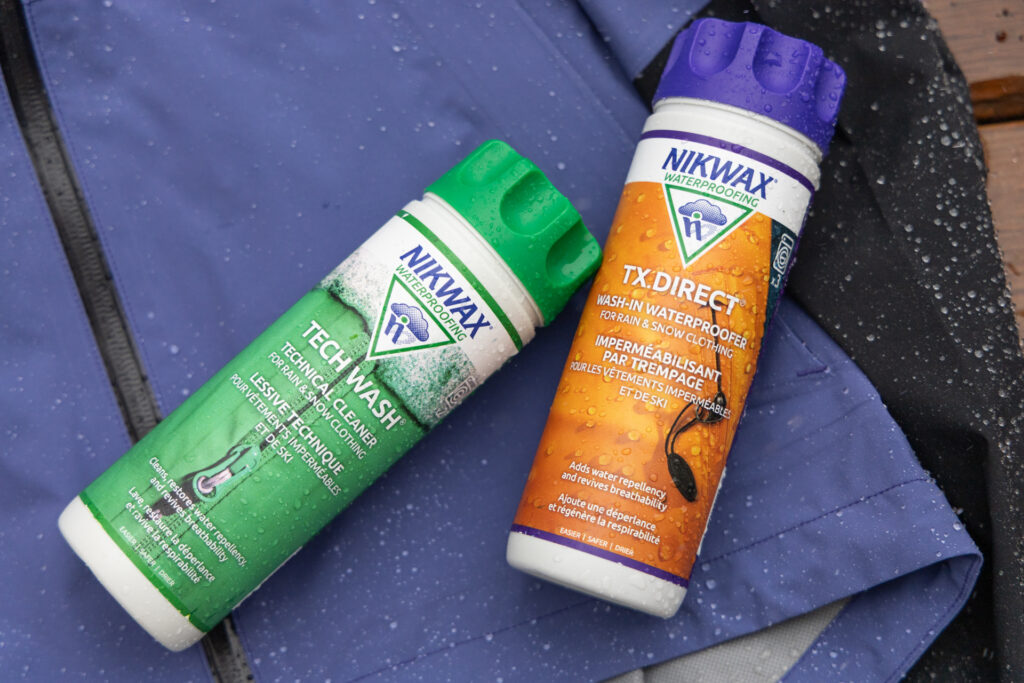
The solution? Use only gear-specific cleaning products formulated for waterproof fabrics. If you’ve already washed your shell in regular detergent, don’t panic. A thorough wash with a technical cleaner, like Nikwax Tech Wash, can remove harmful residues.
Why do we love Nikwax? It’s what we’ve used exclusively for years. Because it works, but also because the brand is committed to sustainability. Their formulas have been PFAS-free since the company’s inception and bottles cleaners come in are made of post-consumer recycled materials and they’re recyclable.

How to Wash a Ski Shell the Right Way
Grab your Nikwax and get ready to clean!
Step 1: Prep the Jacket
- Empty pockets
- Zip all zippers
- Close Velcro tabs
- Pre-treat heavy grime (like cuffs, collars, hems) with a stain-specific technical pre-wash treatment like Nikwax Stain Scrub that works without damaging DWR.
Step 2: Use a Technical Wash
Wash with a product designed specifically for waterproof outerwear. Our go-to: Tech Wash from Nikwax. All you have to do is add it to your washing machine’s detergent reservoir just like you would regular detergent (or a bucket of water if washing by hand). Then run a normal cycle.
This cleaner:
- Removes dirt and oils
- Leaves no residue
- Helps restore breathability
- Preserves existing DWR
Often, simply washing with a technical cleaner is enough to restore the water repellent coating so rain and snow bead right off.
If your outerwear contains down, use a down-specific cleaner like Nikwax Down Wash to preserve loft.
Step 3: Reapply Waterproofing (If Needed)
Remember: DWR stands for Durable Water Repellent — not permanent. Over time, it wears off.
So if water no longer beads up on your jacket even after washing, apply a wash-in waterproofing treatment like TX.Direct from Nikwax. Typically that involves adding it to your washing machine’s detergent reservoir and running a regular cycle.
When the cycle ends, you should have a shell on your hands that sheds moisture like it did when it was new.
Remember: Always clean gear first. Apply a waterproofing solution to a dirty jacket and it still won’t work properly.


Machine Washing vs. Hand Washing
Always follow the care label on your garment.
Pay attention to:
- Water temperature
- Spin settings
- Dryer instructions
- Whether it needs to be hand-washed
Some older jackets (15–20+ years old) may benefit from hand washing instead of machine washing.
And if you remember being told to toss waterproof gear in the dryer to reactivate the DWR, that’s mostly outdated advice that applies to older apparel that contains harmful PFAS chemicals. The dryer trick doesn’t work on more modern PFAS-free shells and treatments, Allen says.

Bottom Line
Washing your ski jacket doesn’t ruin it — dirt, grime, invisible oils and neglect do. Which can lead to passionate outdoorists tossing gear because they think it’s no good anymore. But many times, outerwear has years, if not decades, more life left in it. So keep good gear in play and save your dollars for aprés ski drinks.
Because keeping your outerwear clean:
- Extends its lifespan
- Restores breathability
- Maintains waterproofing
- Reduces the need to replace expensive gear
Technical outerwear is designed to perform in harsh conditions. It just needs the right kind of care. And that care starts with washing it properly. With Nikwax. Obviously.
Now clean your gear and wander on.
Read These Next
Sustainability Spotlight: Maintain your Gear with Nikwax and Keep it out of Landfills Longer
How to Repair Outdoor Gear from Jackets to Boots (A Comprehensive Guide for Beginners)
These Gear Repair Shops Can Make Your Old Gear Good as New
Is the New-to-the-USA Páramo Jacket Better than Gore-Tex?!