![The 5 Best Ways To Make Coffee When Camping [Ranked]](https://terradrift.com/wp-content/uploads/2020/04/Untitled-3-1-scaled.jpg)
The 5 Best Camp Coffee Makers for Backpacking

If you’ve been following Terradrift for any length of time, you know how we feel about coffee. (We really, really love it.) And while we have our preferred methods of making it at home, the best ways to make coffee when camping sometimes look a little different. Mostly because we don’t have access to things like electricity, induction cooktops and a ton of space in our backpacks.
But fear not! There are still many ways to prepare a stellar cup of coffee when you’re camping or backpacking. Here are our favorite methods and gear for brewing a quality cup at camp (with your own coffee) plus each one’s pros and cons.
Prefer the simplest, lightest option, no cleanup required? This article highlights 4 instant coffees that don’t suck.

GSI Outdoors Java Press: Best for Groups
If you enjoy French press-style coffee at home, you’ll enjoy it in the backcountry and at the campground, too. It generally makes a flavorful cup that leaves all the coffee oils, flavor and goodness intact (paper filter often filter some coffee oils out), is easy to prepare (just add grounds and hot water), and makes coffee for one or a whole group with little to no hands-on effort.
We like the GSI Outdoors Java Press when camping with a group of people because it makes about 6 cups. It’s a bit bulky for backpacking, but if you’re splitting up supplies between the whole group, it may be worth it. GSI makes a single-serve French press mug, too.
Pros:
- Inactive brew time
- Flavorful coffee
- Can make coffee for a whole group at once
Cons:
- Messy cleanup
- Water needed to thoroughly rinse press
- Bulky

GSI Mini Espresso Maker: For Packable Camp Espresso
We drink espresso at home almost exclusively, but doing so in the backcountry can be tricky and often requires bulky gear. That said, we wrote a whole article all about our favorite camp espresso makers that are portable and don’t require electricity! Most of them are better suited for car camping and frontcountry camping than backpacking, though.
However, the GSI Mini Espresso Maker is tolerably lightweight, compact, and makes a strong cup of espresso in a similar manner to a Bialetti (if you’re familiar with the concept). It’s available in 1-cup or 4-cup sizes so you can make enough for just you or a friend or two. Just fill the chamber with water, the basket with coffee grounds, and set it on your camp stove until all the water has boiled up, out, and into the included insulated demitasse.
Pros:
- Inactive brew time
- Strong coffee
- Can make a cup for one or two at a time depending on what size you get
Cons:
- Difficult cleanup
- Stays hot for a while after brewing
- Bulkier than other options

MiiR Pourigami Collapsible Pour Over: The Ultra Portable Pour-Over
This collapsible steel pour-over cone weighs a bit more than plastic or silicone pour-over cones, but it’s solid, should last a lifetime, and packs almost completely flat. It does require paper filters, but using them makes for much easier cleanup when backpacking. That means it’s an excellent choice for hikers with access to limited water and who appreciate their coffee ritual in the morning but prefer to avoid excessive cleanup.
It does only make 1-2 cups at a time, so if you’re brewing for a group, it’s a time-intensive method, but it is an easy one: just add coffee grounds to a filter placed in the cone and slowly pour over hot water. Too easy.
Pros:
- Makes quality coffee
- Easy cleanup
- Ultra slim and packable
Cons:
- Active brew time
- Only makes one cup at a time
- Paper filters required

AeroPress Go: The Versatile Coffee Champ
We love the AeroPress at home and on the trail (we use the new Steel version at home) and the compact and portable AeroPress Go accompanies us on many adventures. It’s super versatile, can make a wide variety of coffee styles, you can customize your strength preferences and grind size as you like, and it’s durable enough to get tossed in a backpack over and over again.
Since there are a ton of ways to brew using the AeroPress, it may take a little playing around to find your preferred method, but once you do, it’s easy to make a cup. Just add grounds, hot water, stir, and press coffee directly into the included cup when you’re ready. It is only big enough for one medium or two small cups at a time. On the upside, cleanup is practically instantaneous: the used coffee ground puck pops cleanly right out of the bottom when you’re done.
Pros:
- Makes a variety of coffee types
- Super easy cleanup
- Packable
Cons:
- Semi-active brew time
- Only makes one to two cups at a time
- Paper filters or a reusable metal filter required
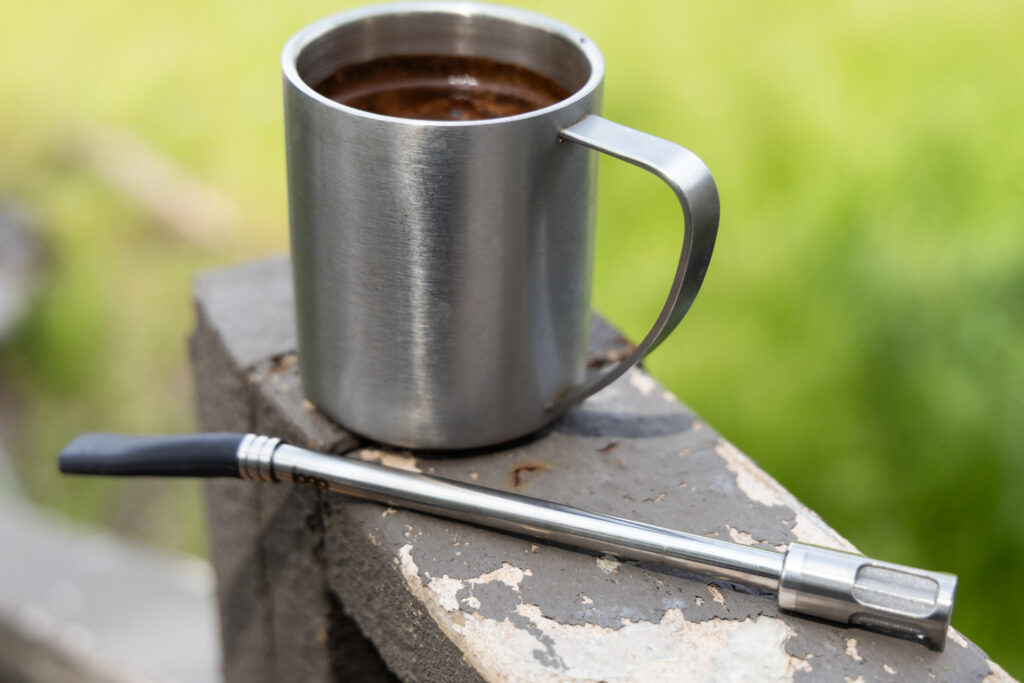
JoGo: For Ultralight Simplicity
For those who prefer as little fuss as possible when it comes to making coffee, the JoGo Coffee Straw is a unique solution. It won’t appeal to everyone, but if you want to be able to use any coffee, some control over the brew process, and make it using the most portable package possible, consider the JoGo, a little device that offers a surprisingly solid coffee drinking experience
It’s a straw with a removable fine metal mesh filter on the bottom so you can add coffee grounds and hot water directly to a cup, drop in the GoJo and sip. You can customize your brew strength via steep time and grind size (it works best with a medium to coarse coffee grind so your sips don’t get sandy), but take note: it will get stronger the longer it takes you to drink it. When it’s time to clean up, just give the straw and your cup a good rinse. You can use it with loose leaf tea, too!
Pros:
- Ultralight
- Inactive brew time
- Can be used for coffee or tea
- Zero waste
Cons:
- Hard to sip really hot coffee from a straw
- Designed for individual use
- Hard to get the last few sips from your mug
Leave No Trace (Pack it In, Pack it Out)
But what are you supposed to do with coffee grounds after you’ve imbibed your fill from your favorite coffee-making device? That depends. If car camping, there are likely trashcans nearby. Toss your grounds and filters in there and rinse your device in a utility sink if it’s available (or under a spigot–that’s usually fine). If, however, you’re backpacking or camping in the backcountry with no garbage bags or running water, disposing of coffee waste can be a little trickier.
If you’re packin’ instant, congratulations: All you have to do is pack out the trash. For any other methods, disposal will depend on your surroundings. If you’re in a forested area or wilderness where you can easily dig a cat hole (a 6″-8″ hole usually used for toileting purposes…) then the general consensus is that it’s OK to dump your coffee grounds in that. You should, however, pack out any paper filters used as they will take a while to break down, especially if an animal digs it up after you vacate the premises.
Another disposal option that’s generally viewed as acceptable is to scatter your grounds over a large area. This is best done in a forested setting where clumps of coffee grounds won’t be visible to other people on the trail (after all, we all want to feel like the only person who’s walked the trail that day). Grounds scattered over rock or desert are not only an eyesore but attract animals. If you are in rocky or deserty terrain, dump your grounds into a plastic bag (leave it open for a while to give them a chance to dry out if you can) and pack them out. In fact, packing out your grounds is never a bad idea and suggested by many outdoor pros.
Remember, the general rule of thumb is to leave no trace that you were ever there to begin with.

The 5 Best Ways to Brew Coffee While Camping: Bottom Line
Sure, we can share our favorite ways to brew coffee outdoors while camping or backpacking (including this handheld espresso maker from Wacaco we reviewed), but it really comes down to taste, doesn’t it? (Don’t forget to use fresh grounds via one of these portable manual coffee grinders for the best flavor.)