The 5 Best Vegan Waterproof Barefoot Hiking Boots and Shoes! [2026]

We’re all about barefoot and minimalist shoes here at Terradrift. We love them for all seasons: summer, winter, in snow, sun and rain. And while we tend to prefer more breathable barefoot hiking boots when it’s warm, sometimes waterproof barefoot hiking boots are required. Fortunately, we’ve tested plenty over the years and these are some of our favorite minimalist, zero-drop waterproof boots designed for hiking and outdoor adventure (they’re also all vegan and PFAS-free).
Prefer barefoot sandals? Check out our faves here.
The Best Waterproof Barefoot Hiking Boots
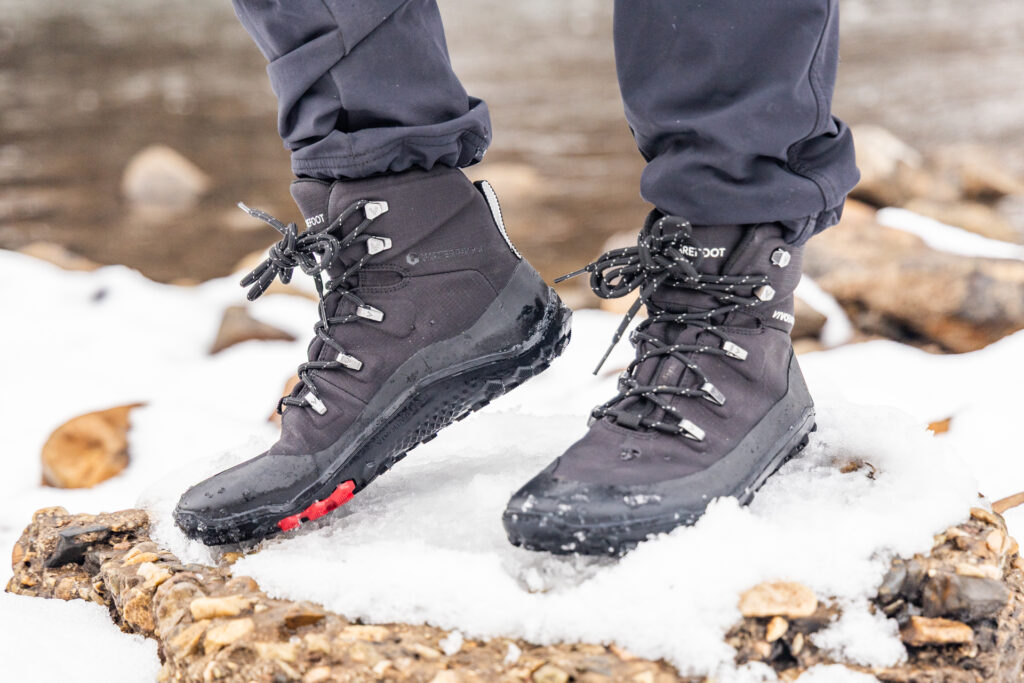
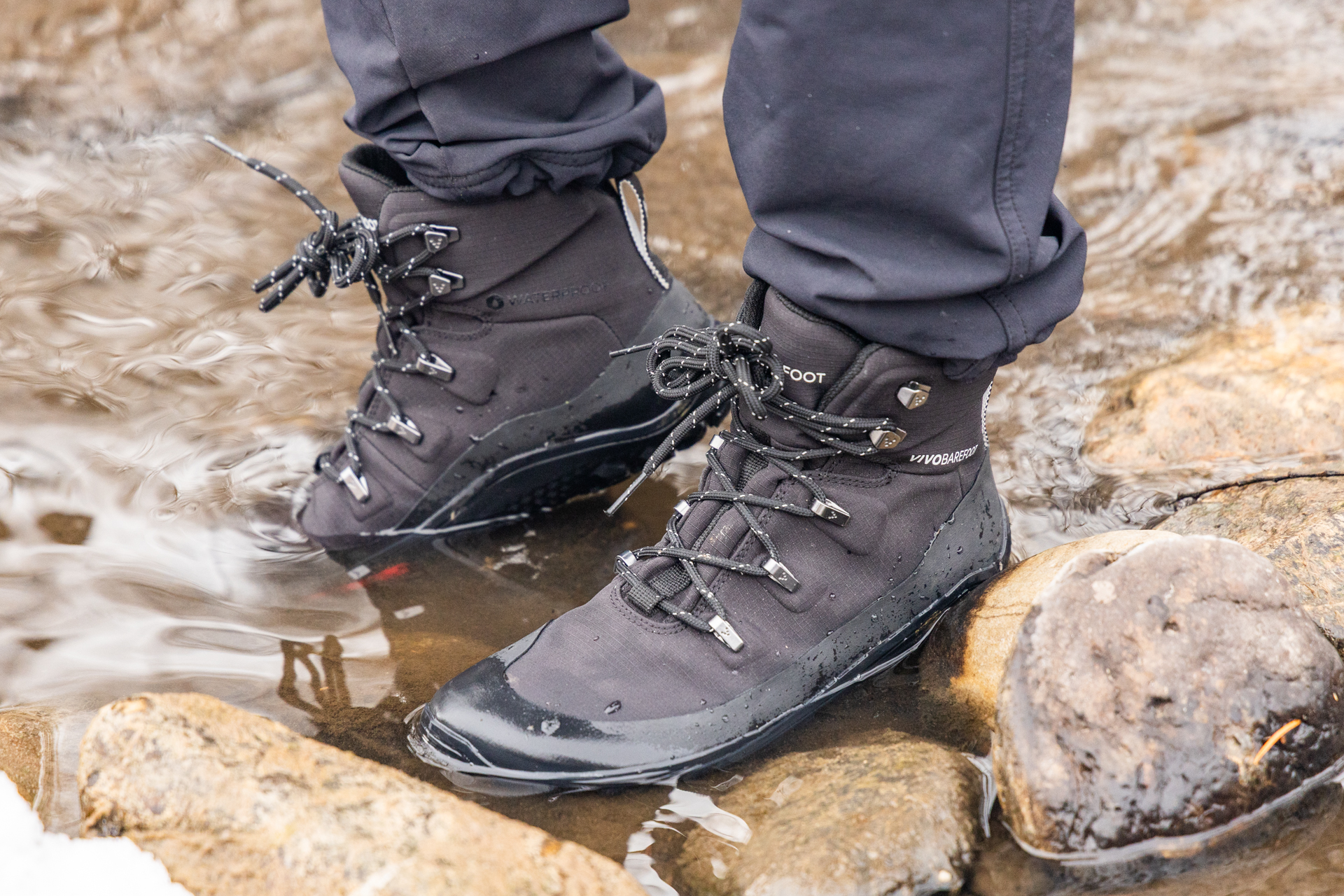
Vivobarefoot Tracker Textile AT
Frankly, I’ve always liked the look of Vivos more than many other barefoot shoes, and that goes for Vivobarefoot hiking boots, too. They’re sleek, they’re stylish, and the whole brand is not only super focused on the science and health of natural foot function, but also sustainability. And the new Tracker Textile AT is no exception. It looks serious but without being clunky and overbuilt.
They may require a bit of a break-in period as the uppers seemed stiff out of the box and the tongue created a few pressure points on my ankles, but in other Vivo shoes we’ve tested, that has faded with time and use. The Tracker family of boots have a different groundfeel than some of our other favorite Vivo boots like the Magna Lite. While those are light, breathable, and ultra flexible, the Tracker Textile is designed to be more robust, especially in the sole, which is less flexible than on most of the brand’s other footwear designs. On the upside, that denser sole means it’s also more protective. Which means if you don’t want to feel every single rock or deviation in the terrain, these may be a better fit for you.
I like to feel it all, so I found the soles a bit dense and inflexible. But that’s me. The traction was excellent, though on dry or wet terrain. Find a more in-depth review here.
Sustainability: The uppers and laces are made with almost entirely recycled materials, Vivo is a B-Corp, has a repair and resale platform, and is transparent with their mission and efforts.
Sizing and more: Available in sizes 4.5-11 for women and 7-15 for men. Black for women, black or green for men.
Pros
- Street smart style
- Durable sole
- Good traction
- Waterproof
Cons
- Less ground feel and flexibility than other options
- May need broken in
- Expensive
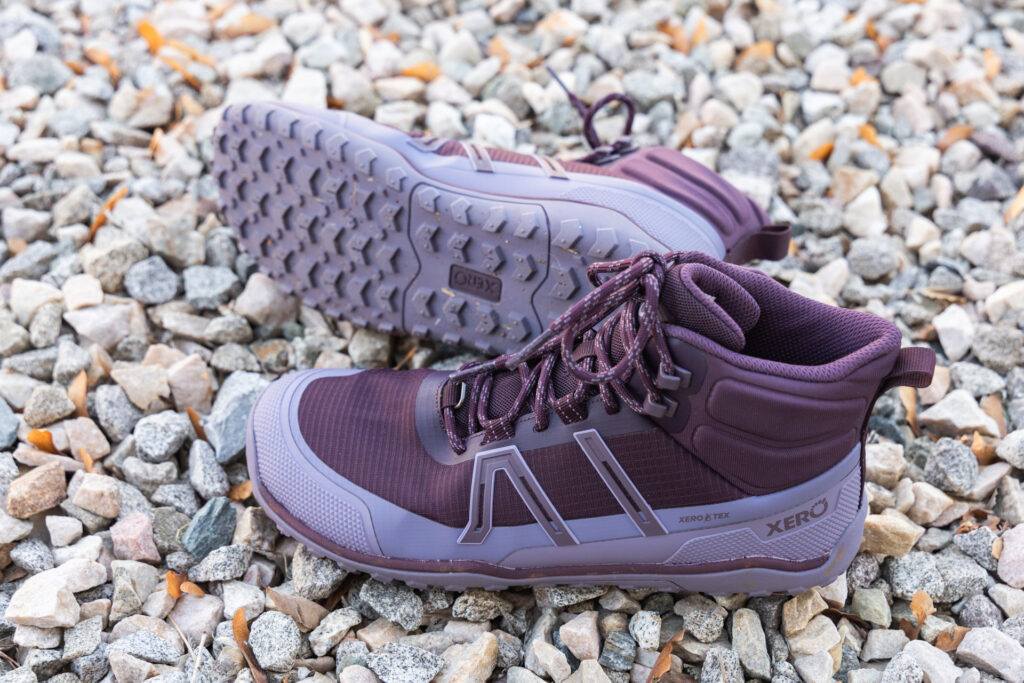
Xero Shoes Scrambler Trail Mid WP
The Scrambler Trail Mid WP is a more affordable alternative compared to the Scrambler Mid II WP we reviewed last year. This one doesn’t have the eVent membrane or Michelin sole, but honestly, we can’t tell a difference. These use Xero’s new XeroTex waterproof membrane and the soles seem just as durable and grippy.
The soles and uppers offer plenty of flexibility while still offering adequate protection from the ground up. The soles are more dense than some other Xero Shoes we’ve tested, but still move freely and are solid enough to keep us from feeling every little pebble underfoot.
Plus, they look super sleek. They come in three colors for men and women and a wide range of sizes. They’re not designed for super wide feet, but they have more wiggle room than some other barefoot shoes we test that seem to suit narrow feet better (like Vivobarefoot). Find a more in-depth review here.
Sustainability: Xero’s main focus is on making shoes that last; they come with a 5000-mile sole warranty. Plus the brand supports the Tarahumara Children’s Hospital in Mexico and is transparent about their carbon emissions. PFAS-free and vegan.
Sizing and more: Available in sizes 5-12 for women and 6.5-15 for men, including half sizes. Three colors available for each.
Pros
- Comfortable right out of the box
- Decent flexibility and groundfeel
- Several colors available
- Waterproof
- Good tread
Cons
- Less sustainably made than other options
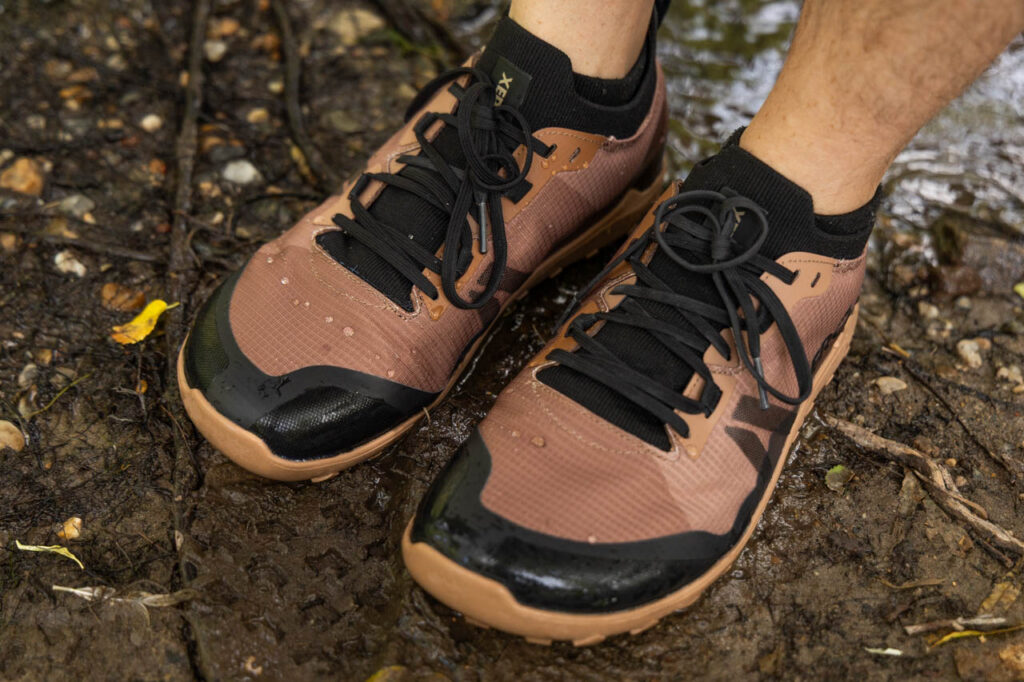
Xero Shoes Mesa Summit WP
This lightweight, flexible low hiking shoe is a new favorite around here. Not only is it comfy right out of the box, but it’s fully waterproof and looks sleek, to boot. The soles and uppers offer flexibility but lean more protective thanks to a built-in rock plate in the sole. It does make the soles a bit denser than some other Xero trail shoes we’ve tested, but it did mean we didn’t feel every sharp pebble underfoot.
They come in two colors for men and women and a wide range of sizes. They’re not designed for super wide feet, but they have more wiggle room than some other barefoot shoes that seem to suit narrow feet better (like Vivobarefoot). Plus, they have a soft and stretchy debris collar to help keep out dust and a bit more precipitation. The tread was solid, too.
As for waterproofing, so far so good. The shoes feature the brand’s proprietary XeroTex waterproof membrane and when hiking in shallow water they did an excellent job at sealing out any and all water. That did come with a decrease in breathability on warmer days, but that’s common with most waterproof shoes.
Sustainability: Xero’s main focus is on making shoes that last; they come with a 5000-mile sole warranty. Plus the brand supports the Tarahumara Children’s Hospital in Mexico and is transparent about their carbon emissions. PFAS-free and vegan.
Sizing and more: Available in sizes 5-12 for women and 6.5-15 for men, including half sizes. Two colors are available for each.
Pros
- Comfortable right out of the box
- Good balance of flexibility and groundfeel
- Several colors available
- Waterproof
- Solid tread
Cons
- Less sustainably made than other options
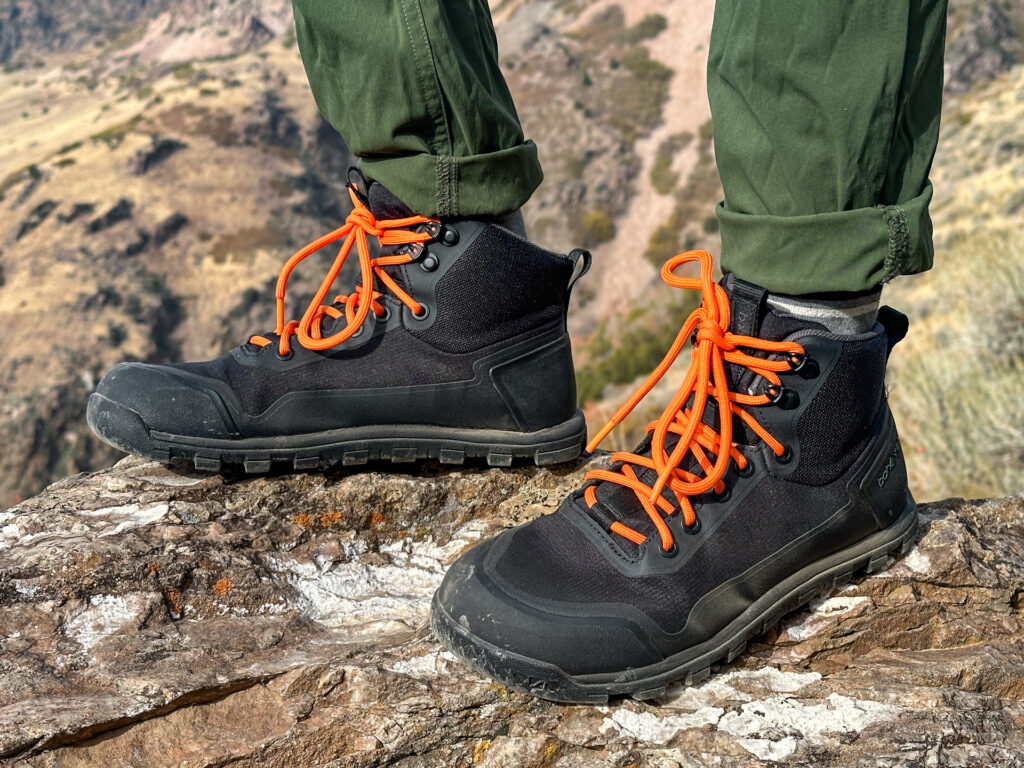
Bahé Rediscover Grounding Boot
The Bahé Rediscover boots are a solid workhorse of a waterproof barefoot boot. They feel durable and like they’re going to stand up to plenty of seasons of abuse, are rugged, protective, have dense soles, and while they’re not as light or flexible as other barefoot boots, still offer a zero-drop sole and wide toe box for functional movement and foot-shaped comfort. Plus they’re pretty dang warm in the cold, and waterproofing is solid.
However, the main feature is that they’re grounding boots, which means you can practice earthing even with your boots on thanks to conductive material in the sole and footbed. Find a more in-depth review and explanation of grounding here.
Due to a wider footbed, heel cup and toe box, they may be better suited for those with average or wider feet, but they still functioned fine for smaller feet. They weren’t as flexible as other options, but if you’re looking for a solid pair of protective boots for the winter, you could certainly do worse than the Rediscover. Especially if you’re OK trading a bit of ground feel for an extra sturdy sole.
Sustainability: Outsole made of 65% natural rubber, Insole EVOCO’s FATES Bio-foam with 72% bio-content, Upper 100% recycled nylon ripstop /polyester mesh, recycled polyester laces, rubber heel and toe reinforcements. PFAS-free and vegan.
Sizing and more: Available in sizes 5-14 for women and 4-13 for men, four neutrals available.
Pros
- Grounding/earthing capabilities
- Extra wide toe box
- Good traction
- Waterproof
Cons
- Less flexibility and ground feel than other options

Bahé Rewild Waterproof Grounding Shoe
The Bahé Rewild shoes are a hiking shoe designed to tackle trails without the extra weight, warmth and restrictions of full-on boots. And what they’re designed to do they do well. Theripstop upper and TPU overlays feel durable and like they’re going to stand up to plenty of seasons of abuse. Plus they have slightly denser soles, meaning they’re not as light or flexible as other barefoot shoes we’ve tested but are a bit more protective.
They’re also grounding shoes, just like the Rediscover above. They feature a slightly wider profile, so they may be better suited for those with average or wider feet, and were surprisingly comfy. The toe box is spacious, but lugs aren’t deep, so we preferred them for more casual hikes than highly technical pursuits.
As for waterproofing, we didn’t experience any issues with water ingress whether hiking in the rain or crossing shallow creeks and the high splash guards around the shoes helped protect from moisture and scrapes.
Bahé also offers the Rewild with Modes midsole options. Translation: you can order a pair in the ultra thin Flex sole, the middle-thickness Adapt (which we tested) and/or the cushy Endurance, all of which are zero drop and minimalist. Find out more about how the Modes options work and how to choose in this video. During testing on hikes around Utah, the Adapt midsole felt more cushiony, conventionally comfortable and protective than some other barefoot options, making them a solid option for folks still transitioning.
Sustainability: Outsole made of 65% natural rubber, Insole EVOCO’s FATES Bio-foam with 72% bio-content, Upper 100% recycled nylon ripstop, recycled polyester laces. PFAS-free EcoElite™ bio-based water-resistant finish and vegan.
Sizing and more: Available in sizes 5-14 for women and 4-13 for men, four neutrals available.
Pros
- Grounding/earthing capabilities
- Extra wide toe box
- Good traction
- Waterproof
Cons
- Less flexibility and ground feel than other options

Vivobarefoot Primus Trail Flow WP
For those who prefer more protection than groundfeel, I present the Vivobarefoot Primus Trail Flow WP. While the original non-waterproof Primus Trail Flow is delightfully light, breathable and flexible, the waterproof version leans more robust. The sole is much stiffer, which means there’s less freedom of motion, but if you don’t like feeling every pebble underfoot, that may not be a bad thing. What’s more, the tread is deep and aggressive, which offers excellent traction on muddy trails, loose scree and soft soil.
The shoe does take longer to break in than many other waterproof shoes we’ve tried, so don’t expect them to be slipper-comfy right out of the box, but the waterproofing is top notch and kept our feet dry during rainy hikes, creek crossings and puddly trails.
Bonus: they look sleek as all get-out. Read a more in-depth review of the Primus Trail Flow WP here.
Get 25% off by using code TERRADRIFT250FF!
Sustainability: The uppers are made with 95% recycled polyester, the lining is 65% recycled polyester (post consumer), laces are 100% recycled and the outsole contains 21% natural rubber. Plus Vivo is a B-Corp, has a repair and resale platform, and is transparent with their sustainability mission and efforts, which we love.
Sizing and more: The Vivo Primus Trail Flow WP is available in 4.5–11 for women and 7–15 for men and in two color options for each.
Pros
- Good traction on wet soil and mud
- Super protective sole
- Stylish
- Great waterproofing
Cons
- Very stiff for barefoot shoes
- Needs extensive breaking in
Bottom Line: Waterproof Barefoot Hiking Boots
No mater what your trail style or what sort of functionality you’re looking for, one of these barefoot waterproof hiking boots is sure to do the trick no matter what season you’re playing outside. If you need more details before making your decision or you own one or two pairs and care to share your personal experience, drop your thoughts in the comments! Then head outside and wander on (rain, snow, or sun)!