The 5 Best Barefoot, Wide Toe Box Hiking Shoes for Women So You Can Stop Abusing Your Toes [2026]
Hiking shoes with a wide toe box are a god-send. Foot-shaped shoes that let your toes splay and move naturally mean they won’t get smashed on long downhills, you’ll benefit from better balance, there’s less chance you’ll lose a toenail after big effort days and you’re practically guaranteed to enjoy more comfortable hikes.
So if you’re ready to stop torturing your toes and let your feet function like they’re supposed to, these are the best wide toe box hiking shoes for women (in our experience). The best part: they’re all barefoot, vegan, and more sustainable, too.
Prefer full foot freedom when you hike? Check out our favorite adventure sandals instead.
The 5 Best Wide Toe Box Hiking Shoes for Women
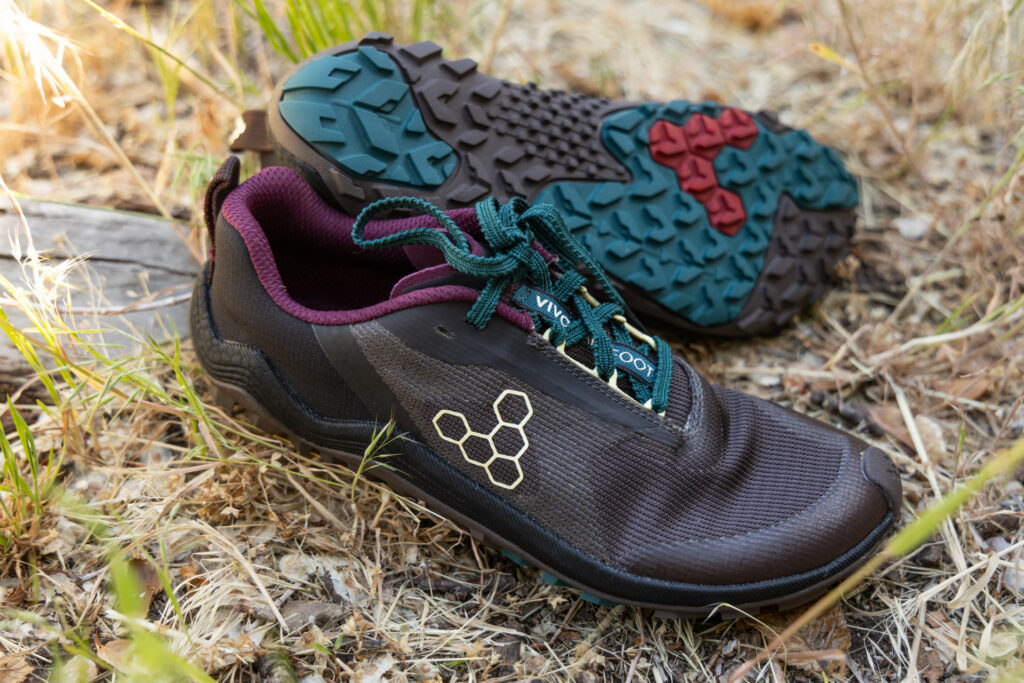
Vivobarefoot Primus Trail Flow: For Ultralight Flexibility
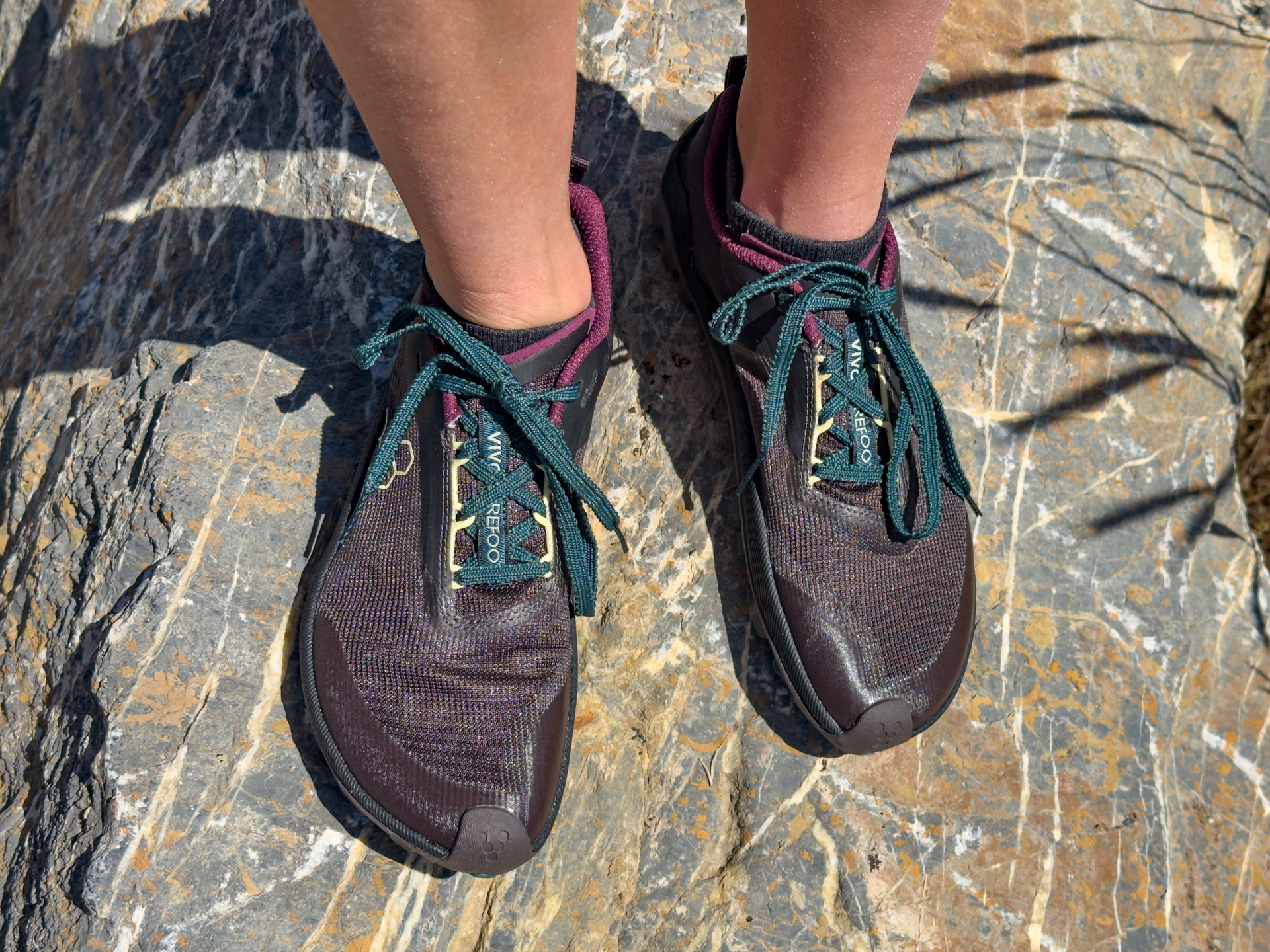
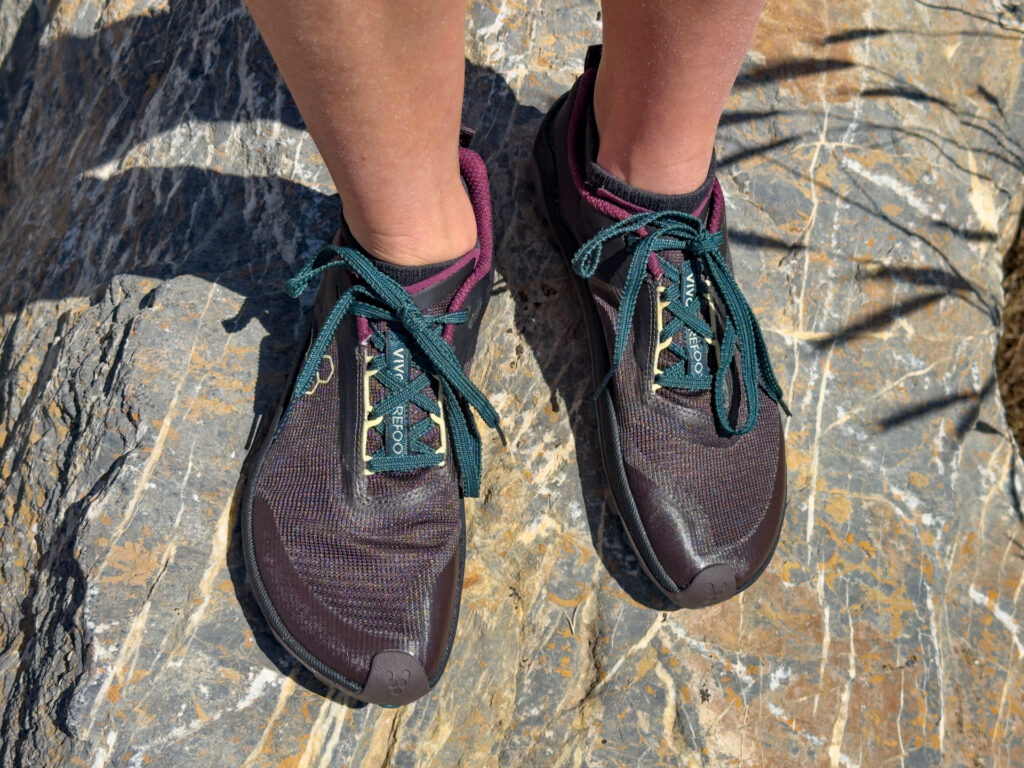
My new favorite hiking shoes/trail runners/race day shoes are the Vivobarefoot Primus Trail Flow. They look fast, feel fast, and are super duper light, so they won’t weigh you down or slow you down. Plus they’re incredibly breathable, which makes them great for warm temps, and the soles are ultra flexible but still protective. Plus, the tread was aggressive enough to keep me stable on even steep and loose hikes and trail runs.
The toe box does slope off more aggressively than some of the brand’s other shoes, so if your toes are on the wide side or your second toe is significantly longer than your first, these may not be the best fit for you. But for everybody else, if you love your shoes to feel as much like being barefoot as possible, these are sure to please.
How it’s sustainable: Upper made of 100% recycled polyester mesh, 48% recycled TPU, 100% recycled polyester collar, 100% rPET laces, 20% natural rubber (latex) sole, Vivobarefoot is a certified B-corp and has a Revivo repair and refurbish program.
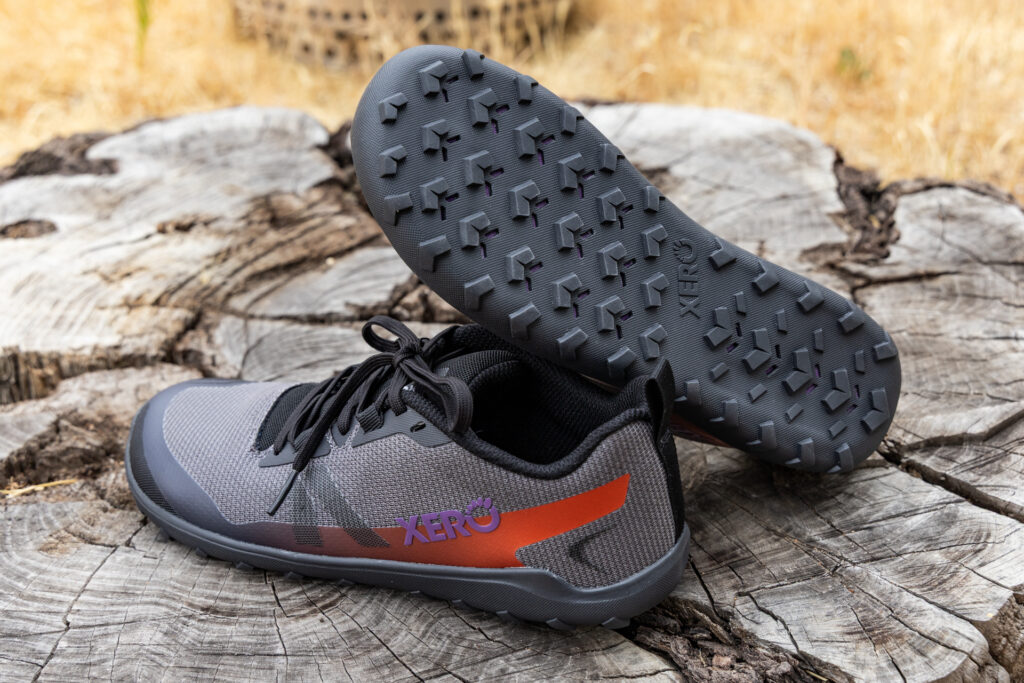
Xero Shoes Mesa Summit: Best for Extra Protection
If you like the idea of a trail runner with a wide toe box and a more protective sole but still want a close-to-the-ground feel (which promotes balance on uneven surfaces), check out the NEW Mesa Summit. The sole is flexible, the uppers are breathable, there’s plenty of room in the toes, and they’re durable (Xero has a 5,000-mile warranty on their soles). And unlike other Xero Shoes, the Mesa Summit incorporates a rock guard that protects feet from sharp surfaces underfoot without compromising flexibility.
Indeed, on a recent 5-mile trail run on rocky Utah trails, I had practically no issues with landing on rock edges that might otherwise be a bit painful. I especially love them because they require no break-in period. They just feel soft, flexible, and slipper-like from the moment you first put them on.
What’s more, traction was solid on wet and dry surfaces so I never had trouble keeping the rubber side down, as they say.
How it’s sustainable: 5,000-mile sole warranty, no foam midsole means there’s nothing to get smashed out and need replaced after 6 months.
Xero Shoes Scrambler Trail Mid WP: For Mid-Rise Waterproof Protection
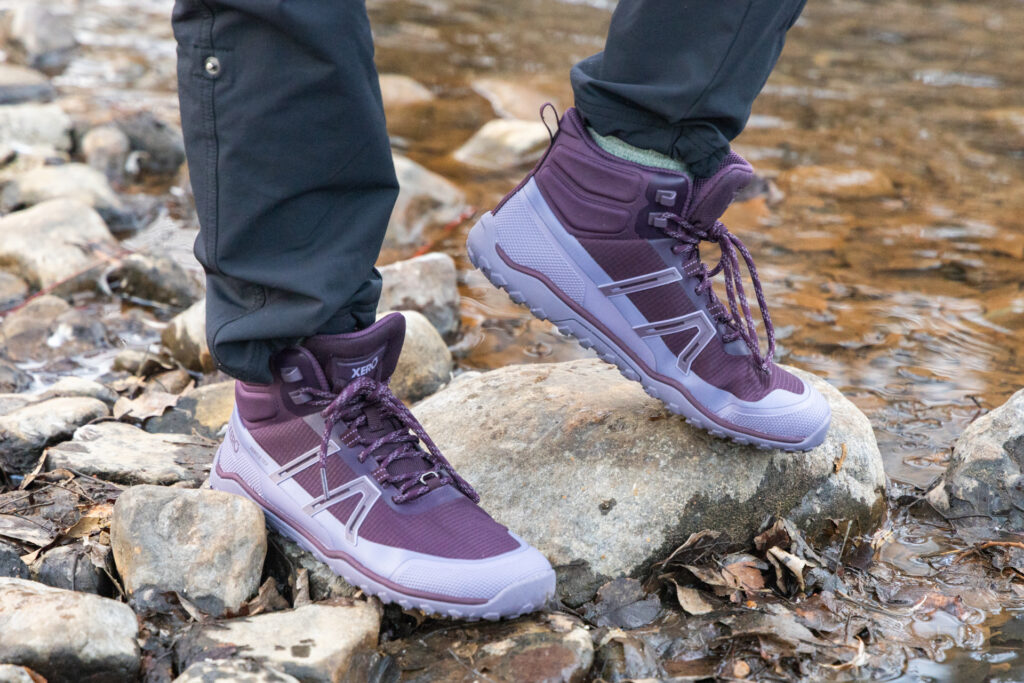
I totally dig the waterproof version of the Xero Scrambler Trail Mid (full review here) and they’ve certainly become my go-to for wet weather or muddy adventures, especially in cooler temps! While the WP version isn’t as breathable as the non-waterproof option, these keep your feet dry no matter what and feature a thick, padded ankle and sticky soles with solid tread to help you keep your footing on slick trails.
They do tend to be a bit stiffer in the flexibility department because of the rubber, but some folks prefer a more protective sole on rocky trails. And a higher ankle helps keep rocks and dirt out, which is a plus.
Naturally, the wide toe box offers plenty of room for toes to splay, meaning no more black toenails on prolonged downhill slogs.
How it’s sustainable: 5,000-mile sole warranty, no foam midsole means there’s nothing to get smashed out and need replaced after 6 months.
Vibram FiveFingers Spidrwalk: For Ultimate Foot Freedom
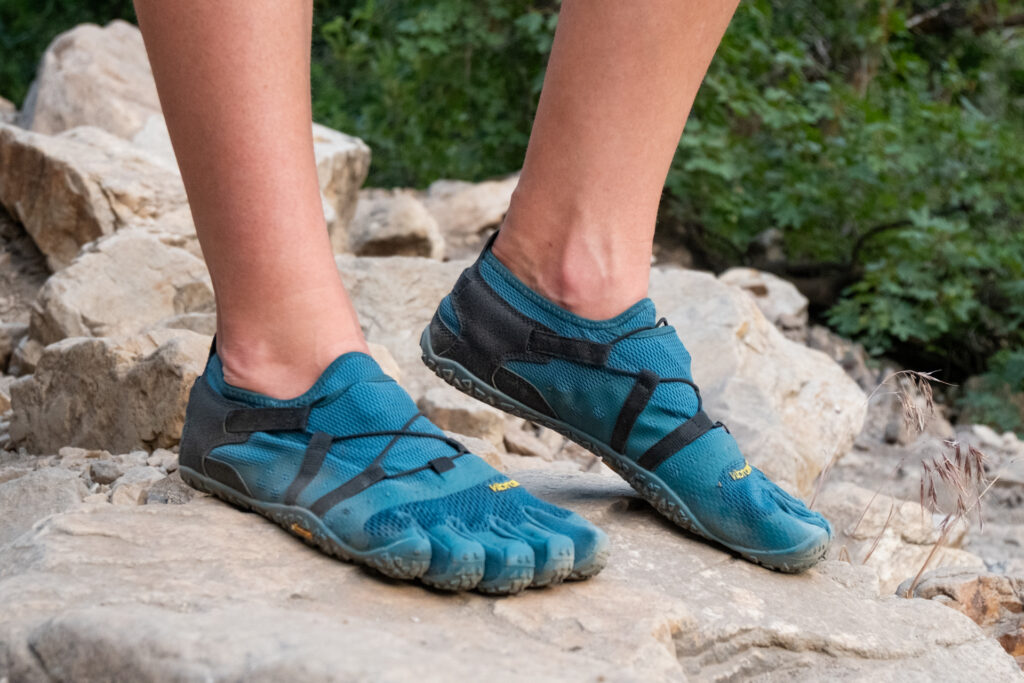
OK, so these don’t have a wide toe box as much as they have individual pockets for each of your toes, but your tootsies won’t experience more spread, freedom and movement than this. And yeah, I know, FiveFingers shoes look…unique. People are definitely going to notice them. But hear me out: They actually kind of rock.
I put off trying these shoes for a decade, but now that I’ve finally succumbed, I gotta say, I’m kinda a fan. They offer serious toe spread, unparalleled balance on uneven trails, and even enough protection underfoot to keep small rocks from digging into your soles (but they are still some of the most barefoot shoes on this list).
The tread is solid on rock and dirt and each toe is free to move independently, which aids in balance and flexibility. They’re excellent for wet trails, too: after crossing creeks or puddles the uppers dry fast and drain immediately thanks to tiny holes in the soles. Hiking doesn’t get more barefoot than this. Find our full review here.
How it’s sustainable: Vibram publishes an annual sustainability report, measures emissions and impact with bold goals to reduce.

Bahé Modes Revive: For Grounding on Chill Trails
If you’re looking for a hiking shoe that can handle uneven surfaces but prefer something a bit more trail-to-tavern, check out the Bahé Modes line. These shoes have grounding technology built-in so you can continue your earthing practice while you hike. But whatever you think about the science of grounding, the Rewild line of shoes is also available in several sole thickness options––flexible, balanced and cushioned––so you can choose from more barefoot or more cushy options depending on your preferences. Bonus: the tread just aggressive enough for leisurely day hikes.
That makes these shoes perfect for folks transitioning to barefoot shoes, but also for those who like the idea of zero drop, wide toe boxes, and sole flexibility but maybe want a bit more cushion or protection underfoot. Check out the whole Modes line here, including the waterproof Rewild hiking shoe.
They are better suited for less aggressive trails as the tread isn’t super deep or excessively sticky, but they’re more than capable for plenty of outdoor adventures, including gentle trail runs on groomed paths.
How it’s sustainable: Outsole is 65% natural rubber, midsole is 5% sugarcane EVA, insole is 72% bio-content, upper is 100% recycled polyester, lining is 20% recycled polyester, recycled polyester laces, EcoElite™ bio-based and non-fluorinated water-resistant finish.
Bottom Line
Barefoot hiking shoes with wide toe boxes that are also sustainable aren’t hard to find. What’s more, they’re often longer lasting, often more durable, better for your long-term foot health, and provide better balance and foot function and flexibility on trails.
Just remember to transition slowly if you’re new to barefoot shoes, let those toes spread, then hit the trails and wander on.
And if you’re looking for more shoes like this, check out our list of hiking shoes with wide toe boxes for men here!

![REI 4th of July Sale: The 11 Best Deals On Outdoor Gear [2025]](https://terradrift.com/wp-content/uploads/2025/06/the-11-best-REI-4th-of-july-sale-deals-768x432.jpg)