Winter Barefoot Boot Showdown: Vivobarefoot Gobi Hiber vs Xero Alpine
We love a barefoot boot. Yup, even in the winter. Yup, barefoot winter boots DO exist (check out some of our favorite winter barefoot boots here)! Meaning you can keep wearing flexible, functional, versatile, foot-health-promoting shoes even when it’s cold and there’s snow on the ground. And two of our favorite barefoot shoe brands make cozy options for the fourth season, so we put them to the test: the Vivobarefoot Gobi Hiber and Xero Alpine boot.
We tested them side-by-side (both brands offer barefoot winter boots for women and men) to see what each is best for, how they fit, and who’s gonna love each one the most. They’re both zero drop winter boots, vegan and PFAS-free, btw.
Want to learn more about what makes barefoot shoes so great and good for your feet? Read this article on how to transition to barefoot shoes.)
Vivobarefoot Gobi Hiber vs Xero Alpine
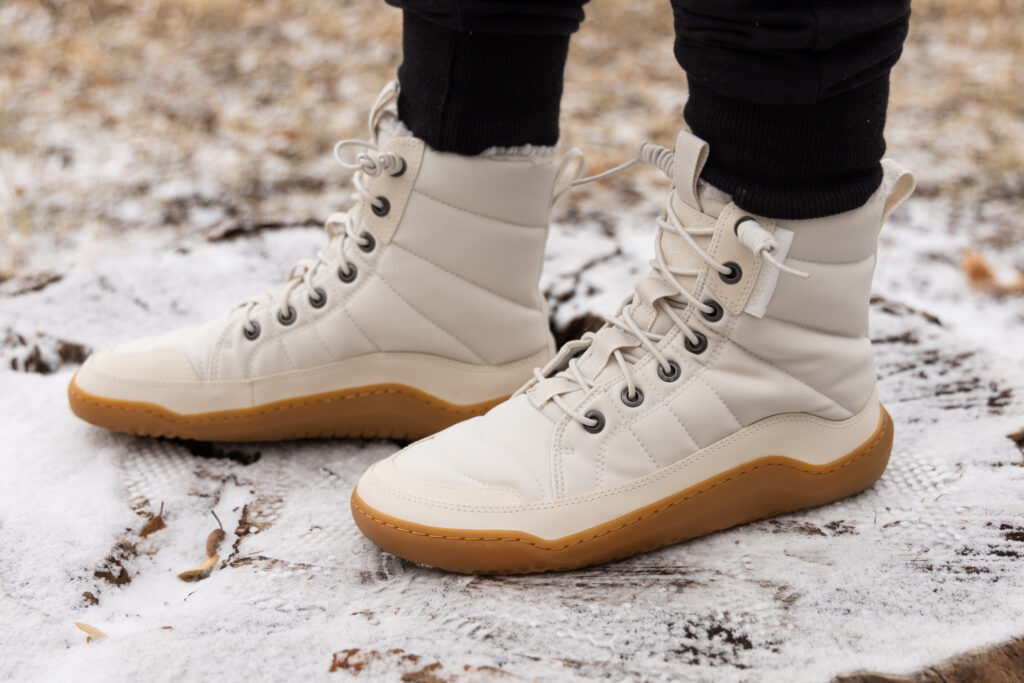
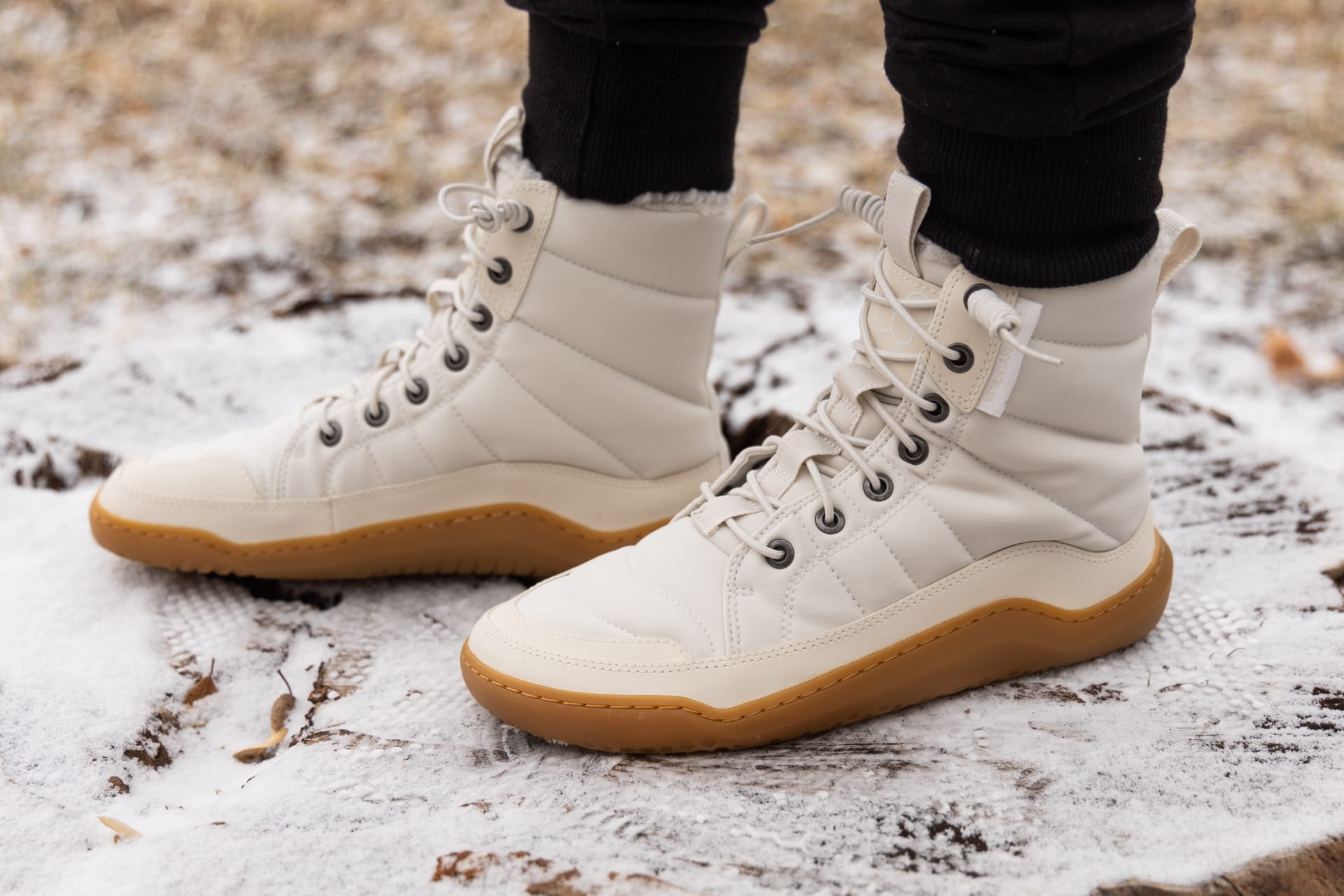
Vivobarefoot Gobi Hiber
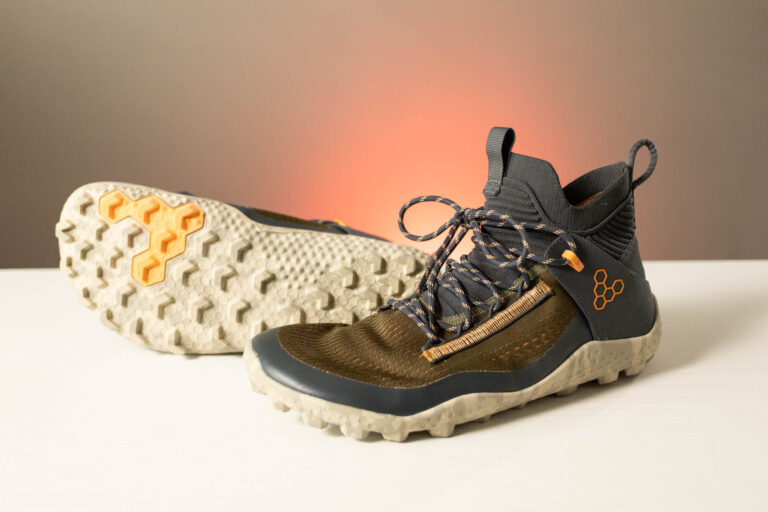
Looking for a warm boot with plenty of flexibility in the sole that ALSO looks as good as it is functional? Look no further than the Gobi Hiber. Vivobarefoot calls it a “lifestyle boot” but frankly, we found the Gobi Hiber more than suitable for easy winter hikes in addition to chilly wanders around town. Really chilly. In fact, on a walk when temps were around 20ºF, we didn’t feel a lick of cold in our toes. That’s thanks in part to the quilted outer material and the faux shearling lining inside, which is super dense and cozy. It extends from the ankle of the boot all the way down to the toes for ultimate warmth and protection.
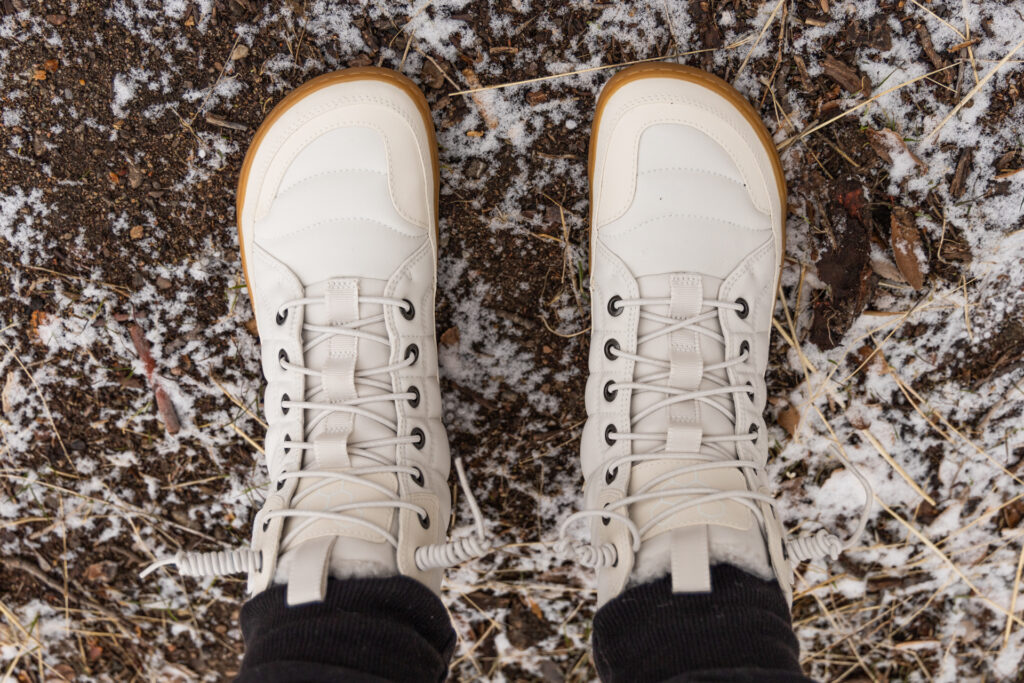
That does mean they felt a little snug at first, but with time, that loft should soften up and offer a bit more wiggle room. But in the meantime, they feel like a soft hug for your feet (more on fit in a sec). What’s more, bungee laces make the boots excessively easy to pop off and on, which means no tying or untying required (though if you frequently hike in them you may wish to replace the cords with actual laces for extra security).
The sole is flexible and allows for plenty of range of motion, plus can be made more flexible by removing the included thermal insole. But when it’s cold, we recommend leaving it in for extra warmth from the bottom up (there’s reflective material in the insole that helps insulate). Do take note: the tread on these isn’t aggressive, so they may not feel as secure on loose, sloppy slopes, but on relatively flat terrain we had no issues with traction.
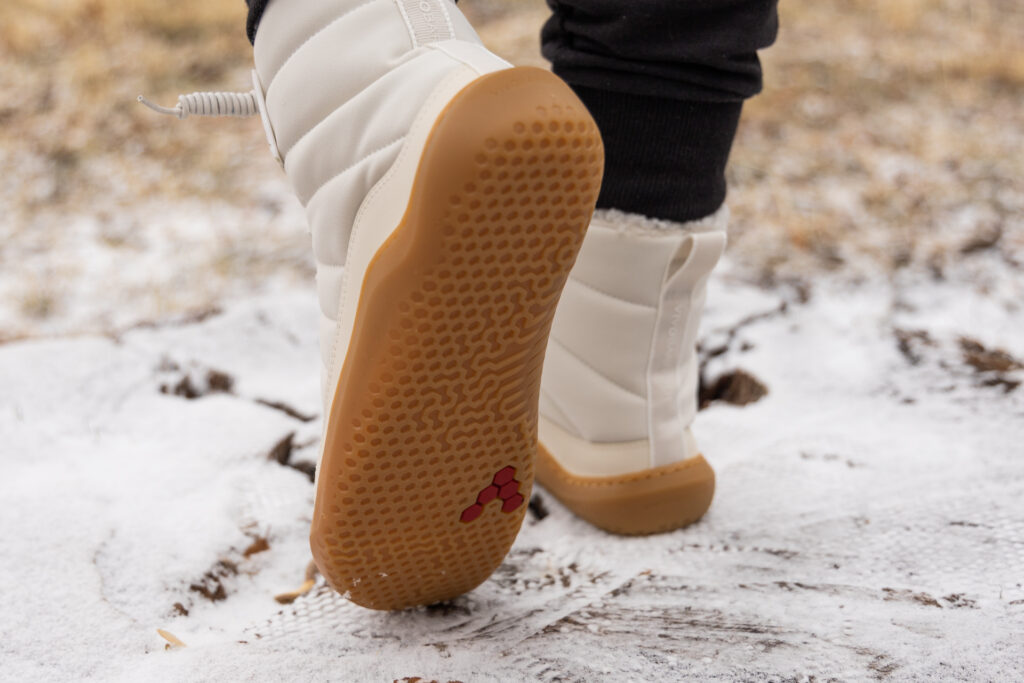
The boots are water resistant, but not waterproof, so if you plan to tramp around in the snow for more than a few minutes, consider treating them with a waterproofing spray like one from Nikwax. That said, the thick layer of material kept out any moisture from snow or puddles during an hour-long walk. However, the tongue isn’t gusseted, so it won’t stop snow or water from getting in the boots as effectively as with other winter hiking boots if snow is deep.
As for fit, the Gobi Hiber is narrower than some other barefoot boots we tested, so if you have wide feet, consider sizing up or take a look at another shoe as these may be too snug for comfort (also, too-tight boots can reduce circulation and make your feet feel colder). The toe box also isn’t as wide as in other barefoot shoe brands, so if you have wide toes or really like them to be able to spread, you may find them a bit restrictive. Either way, we recommend ordering a half-size larger than you typically wear in Vivos. We ordered the same size we were in other Vivo boots and found them a bit snug when paired with thick socks.
Basically, we love how these boots look whether we’re strolling through town, sitting through a mid-winter event outdoors, or taking an easy hike on level terrain. They look dope, are stylish and functional, super warm, and easy to pop on and off. Vivo is also a sustainably-minded brand and passionate about foot health. And yeah, while they may not be waterproof, they’re water resistant and can be treated to repel water further. The only major downside in our book is the price: they’re some of the most expensive barefoot winter boots we’ve tested.
- Weight: 326 g/11.5 oz (for a women’s 7.5)
- Sizes available: Women’s 4.5-11 (including some half sizes), Men’s 7-15
- Colors: 5 neutrals for women, 1 color (black) for men
- Price: $210
- Fit: Narrow
How it’s sustainable: Boots are vegan, uppers and lining are made of almost completely recycled polyester (including insulation) and the outsole is 22% Natural Rubber. Vivo also has a ReVivo recycling program where they repair and resell used footwear.
Xero Shoes Alpine Boot
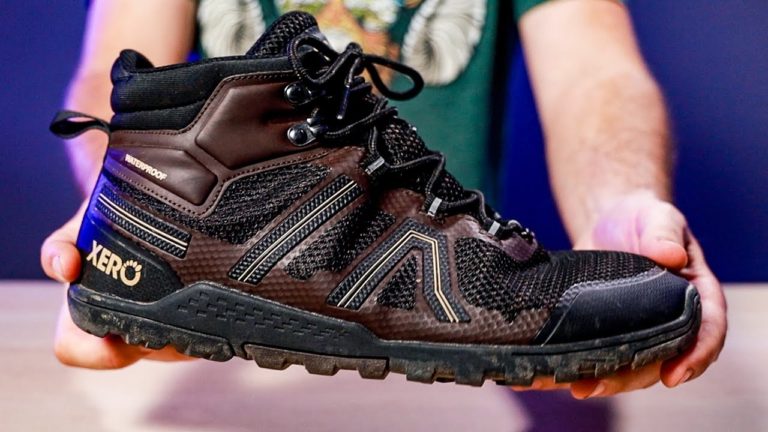
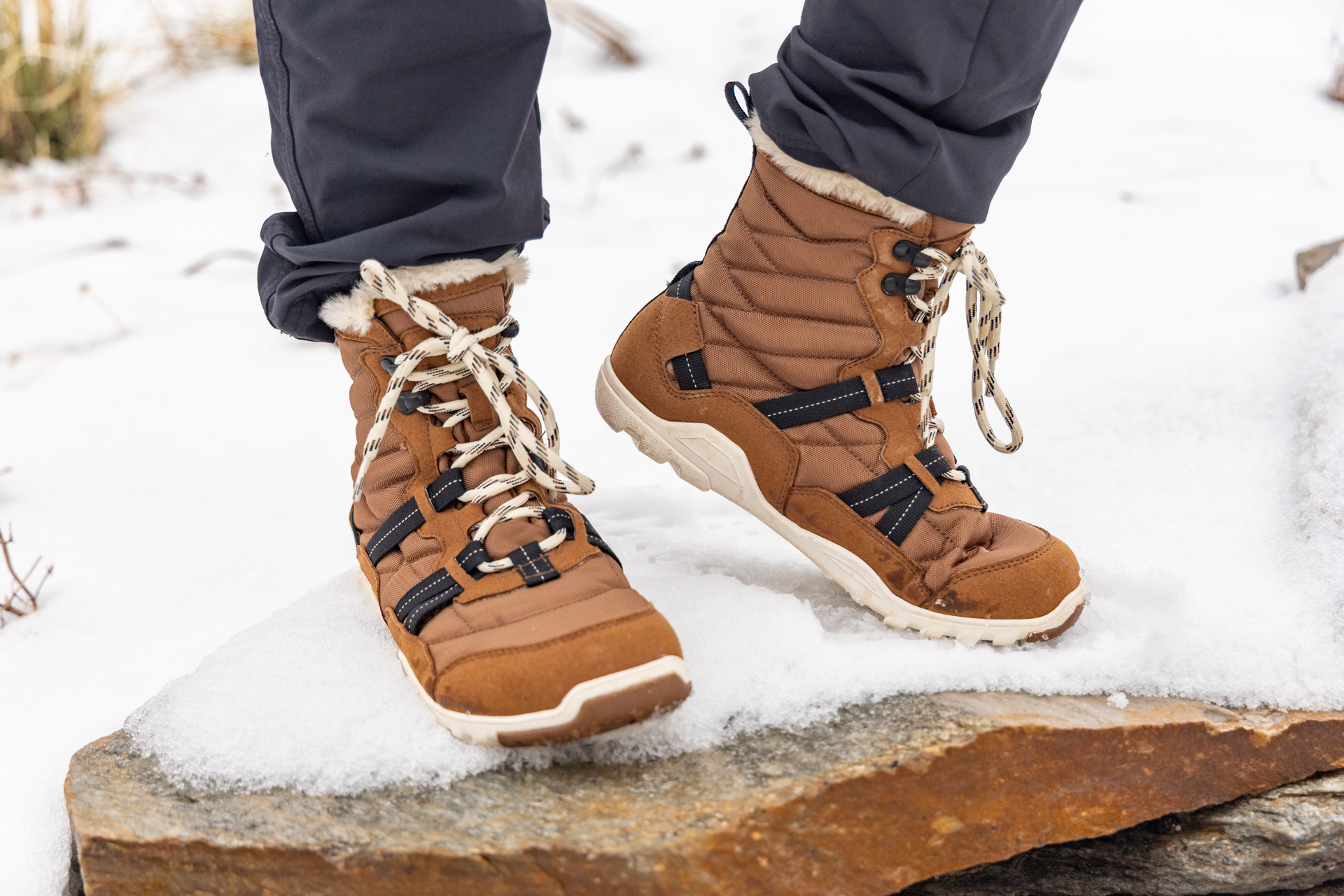
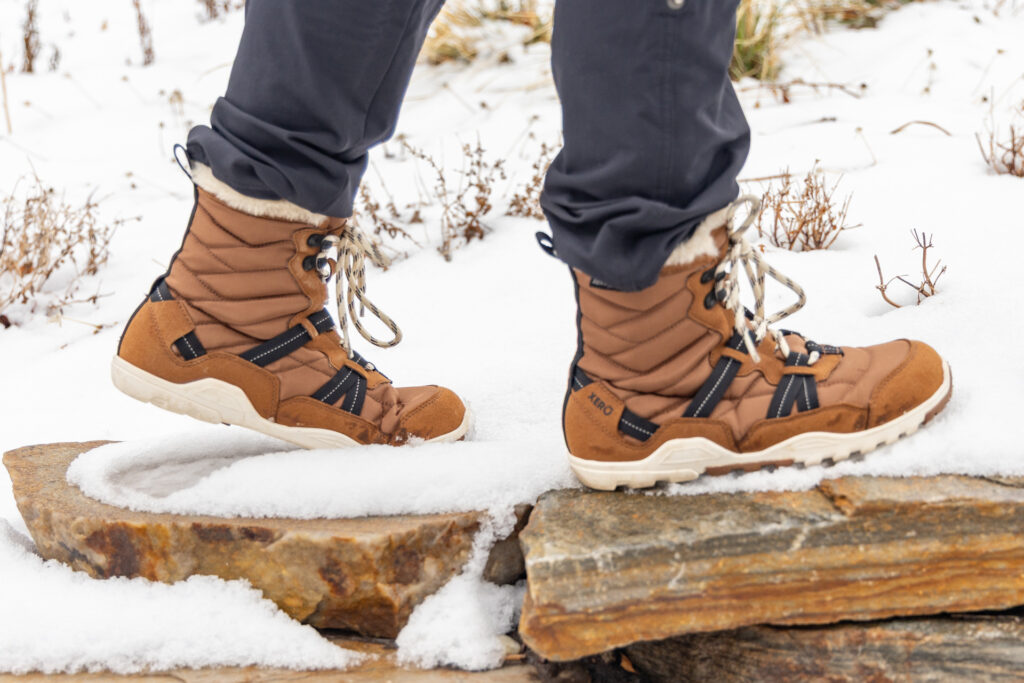
From the first moment we put on the Xero Alpine, we were smitten. They’re comfortable, flexible, durable and plenty roomy in the toe box. In fact, they almost feel like wearing a perfectly broken-in pair of slippers right out of the box. Bonus: they’re pleasantly lightweight while still being plenty protective from both the cold and snow.
There’s a faux-fur lining in the ankle of the boot for added coziness on top of the quilted exterior. The lining doesn’t extend to the foot of the boot, but we still found it warm on snowy hikes. On extremely cold days, say when temps dropped into the teens (F), we still wanted nice thick socks and maybe some toe warmers, but as long as we kept moving, our feet fared just fine in the cold. Xero’s website says the insulation is intended for use down to -25ºF, but we don’t buy it. We think it’s best for temps at or above 0ºF. But depending on whether your feet run cold or warm (mine run cold) your mileage may vary.
The soles are stupendously flexible and allowed an impressive range of motion and weren’t at all stiff when walking. The tread is moderately aggressive so we felt like every step offered the purchase we needed to keep us upright in the snow.
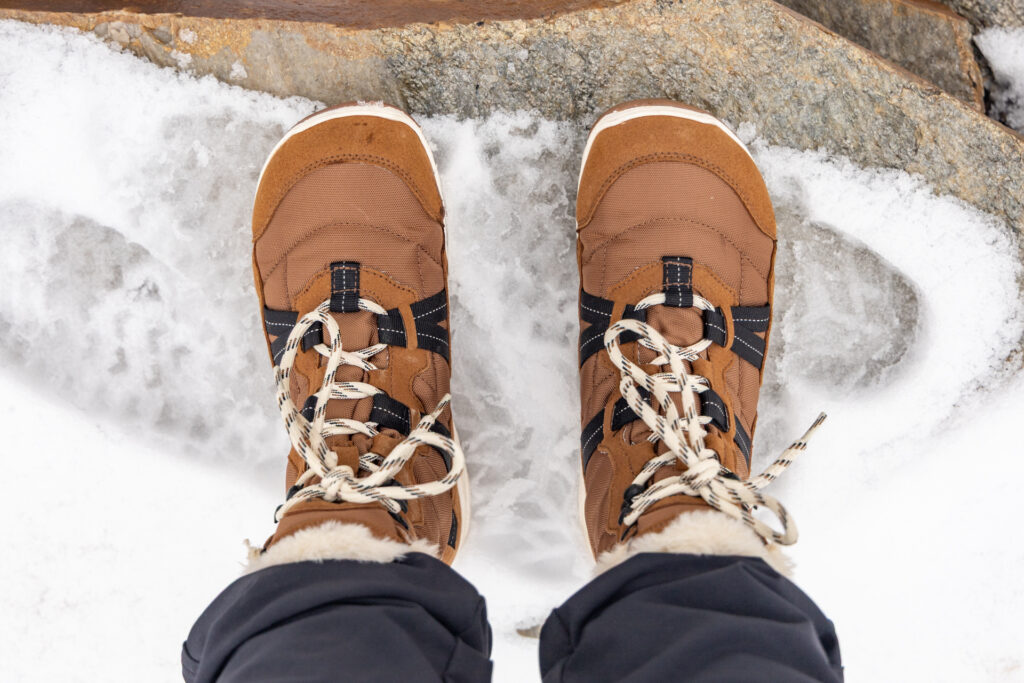
Speaking of snow, our feet stayed dry on powder days, including when wearing the boots with snowshoes thanks to a waterproof membrane and waterproofing on the exterior fabric. After two seasons of wear, they’re starting to show signs of needing to be re-waterproofed, but that happens with all boots and is easy to do.
The Alpine may offer the closest-to-barefoot experience of either of these shoes, which we appreciated. After all, just because it’s cold or snowy out doesn’t mean we want to clomp around in overbuilt boots. What’s more, there’s plenty of room in the toe box for freedom of movement and the boots are wide enough to average to wider-than-average feet.
As for sizing, we still recommend ordering a half-size larger than you would in Xero sneakers (so, your regular boot size). That way you have room for thick socks and some extra space for your toes to move in the name of better circulation. Bonus: They’re the more affordable option.
- Weight: 346 g/12.12 oz (for a women’s 7)
- Sizes available: Women’s 5-12 (including half sizes). Men’s 6.5-15
- Colors: 5 neutrals, some with patterned accents
- Price: $112
- Fit: Medium
How it’s sustainable: Vegan, 5,000-mile sole warranty.
Bottom Line
Which barefoot winter boots are right for you depends on you and your feet. But both of these will keep your tootsies toasty when you’re out in the cold.
The Vivo Gobi Hiber is better suited for those with narrow feet and who want to look stylish but aren’t planning any aggressive hikes while the Alpine has carried us over miles of frosted terrain and fits slightly wider feet. They’re both excellent options for minimalist footwear, so it really comes down to your budget, sustainability, and style.
Either way, wander on in barefoot shoes this winter and stay cozy out there.