The 5 Best Synthetic Hiking Socks – Hiking Socks Without Wool
When most people head to their local outdoor store to stock up on socks, one thing you’ll see everywhere is wool, which is a no-go for vegan hikers who eschew animal by-products on an ethical, environmental, or animal welfare basis (check out our post on why we avoid wool) or those who prefer a quick-dry sock option. Fortunately, we found plenty of synthetic hiking socks made entirely without wool–all of which we’ve personally worn–so you can explore with happy feet.
Why not hike in cotton socks? Read about why here.
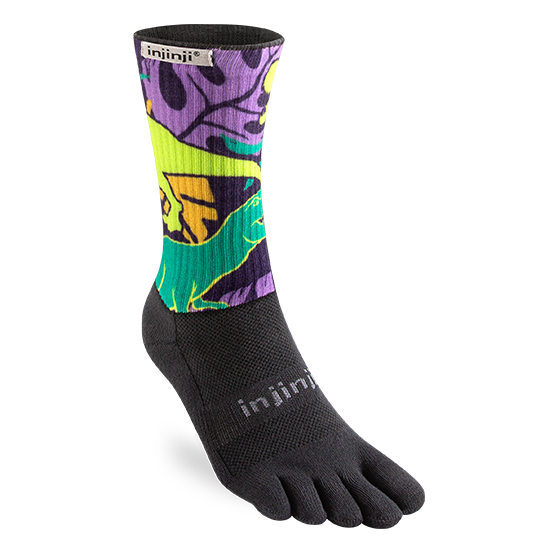
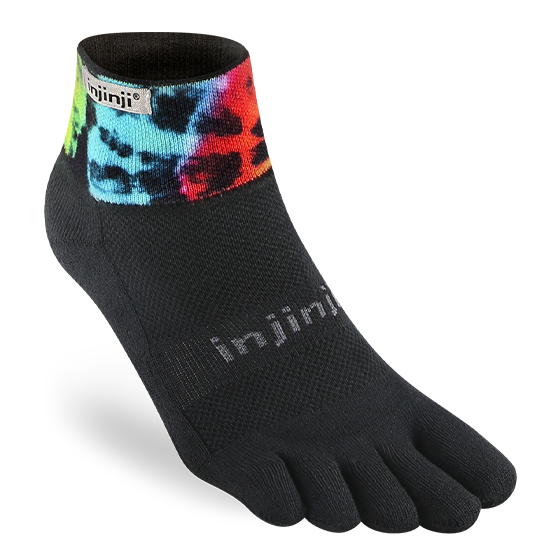
Injinji Trail Socks (COOLMAX)
Listen, you know I’m all-in on barefoot shoes, so I’m not sure what took me so long to convert to toe socks, but now that I have, I’m never looking back. Especially since I found some that are not only comfortable and sustainable (the yarn is made of recycled materials), but wool-free AND available in fun colors and patterns! Do you know how hard it is to find fun synthetic hiking socks?! Really hard! But now that we have, you better believe these socks from Injinji are gonna be what’s in our packs (and sock drawers) from here on out. Order a pair here.

Uyn Runners Five Socks
Another toe sock option we love is the Runners Five collection from Italian Brand Uyn. They’re lighter and thinner than some Injinji socks and also come in specific sizes for the perfect fit, but their most notable attribute is that they’re made of entirely plant-based materials. Instead of synthetics made of petroleum, they’re made of castor bean oil and some other natural fibers, so they perform like synthetics (quick-drying, moisture wicking) but are made of better stuff. Read about how the material stacks up to other fibers in this article. The toes do tend to be smaller, so if you have extra long digits, these might not be for you. We prefer the Grip Socks because they keep our feet from sliding around in our shoes as much.
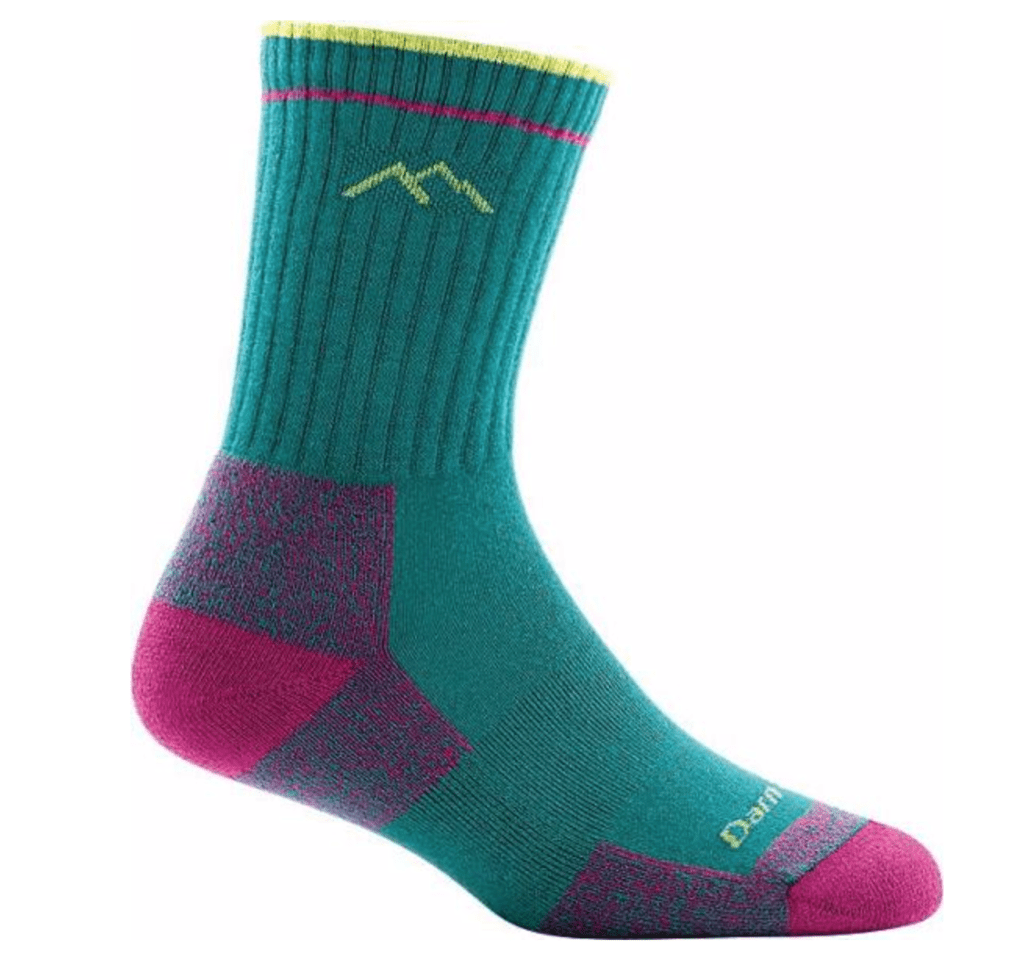
Darn Tough CoolMax Hiking Socks
Make sure to read the labels as Darn Tough makes mostly wool socks, but does offer a small selection of non-wool socks. The CoolMax socks, are made of the brand’s proprietary polyester, so no animals were harmed in the making of these socks. And they’re comfy, to boot. Order a pair of women’s here and men’s here.

Feetures Elite Eco Socks
We honestly forgot how comfortable socks could be until we put on a pair of Feetures. You order the size you need, not some generic one-size-fits-all, and the super cushy soles are no joke. Plus they come in fun colors and are nice and snug, so there’s no bunching. Grab a pair of no show tab socks.
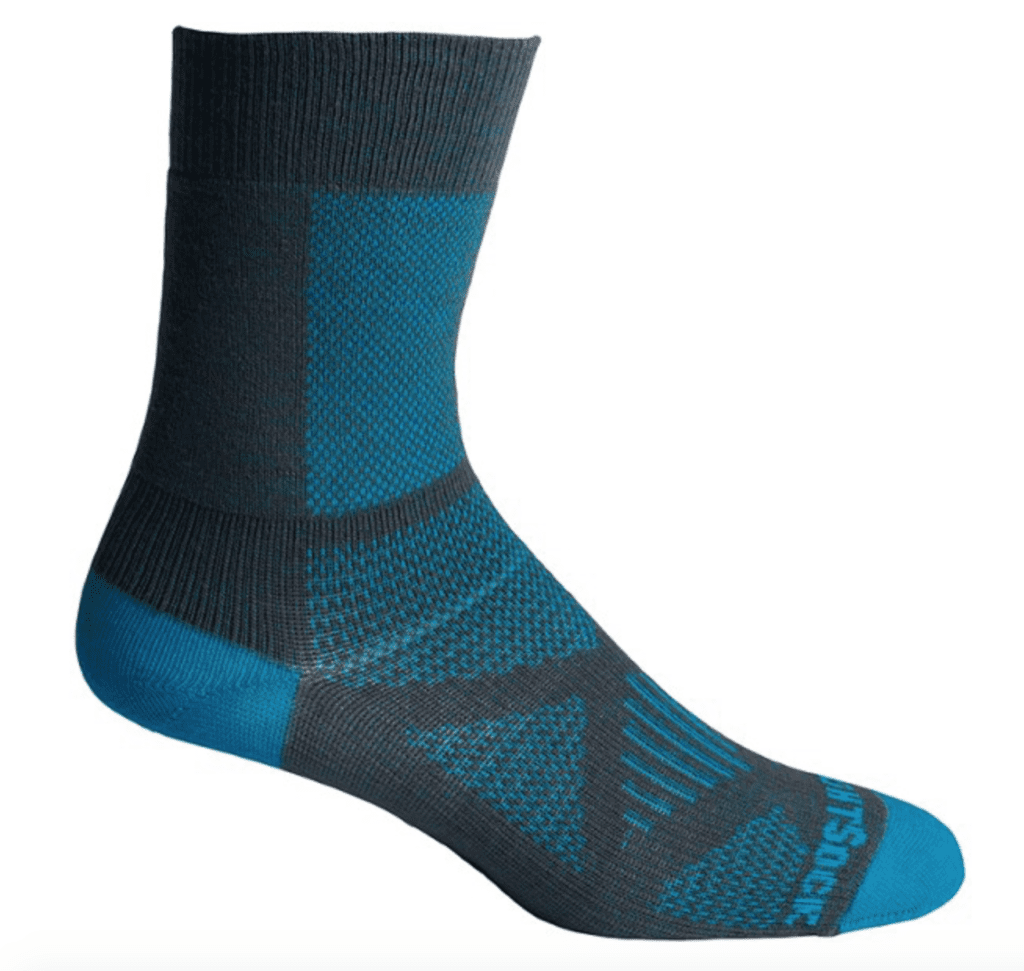
Wrightsock Hiking Socks
Wrightsock makes at least three vegan socks: the Double-Layer Silver Escape with silver woven in there for anti-bacterial properties, the Escape made with their patented polyester, and the Coolmesh II for a sleeker, cooler foot feel. They do come in sizes, but we found they run a bit large, so consider sizing down, especially if you’re on the line between sizes. Check out the whole line here.
Bottom Line: Synthetic Hiking Socks
Are those enough synthetic hiking socks to get you started? I should hope so. Grab yourself a pair or two and ditch the wool. You don’t need it. Then grab yourself a pair of one of these leather-free vegan hiking boots or our favorite hiking sandals while you’re at it. Wander on!
Not all hiking socks are vegan. In fact, most are not because they are made of wool, which is harvested from animals. However, many manufacturers offer wool-free hiking socks that are considered vegan.
Because wool is harvested from living animals, wool is not vegan and most vegans avoid it.
Check the label. Packaging will state what the socks are made from. You’ll most likely find the words wool or merino, but other terms for wool are cashmere, angora, mohair, pashmina, shearling, and shahtoosh.
The animal agriculture industry (including farming sheep for wool) is one of (if not the top) contributor to harmful greenhouse gases and climate change. In addition to environmental reasons, the wool industry is considered unnecessarily cruel and inhumane.