The Best Vegan Hiking Boots and Shoes: Non-Leather Options Perfect for Rugged Trails
Looking for a quality new pair of hiking boots or shoes sans leather? We’ve got you. We’ve tested lots of vegan hiking boots and shoes over the years and these are some of our favorites, boots that we keep coming back to again and again and have stood up to the rigors of the trail. Naturally, they’re also all minimalist hiking boots and shoes. Because we believe in letting feet be feet (just make sure to transition properly if you’re new to barefoot shoes).
Not sure why you might want to avoid leather? Read this article. And for help finding hiking boots that fit perfectly, check out this post.
Check out these posts if you’re looking for barefoot hiking boots, barefoot hiking sandals, Trail Runners that are perfect for hiking, or the best vegan boots for travel.
The Best Vegan Hiking Shoes
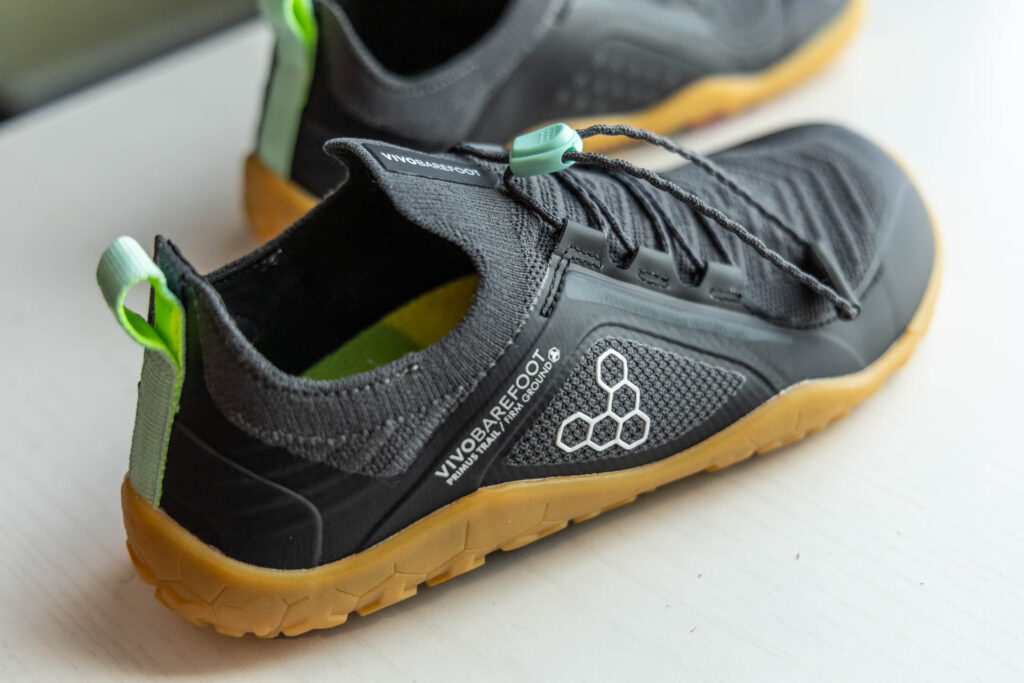
Vivobarefoot Primus Knit Trail FG
Lightweight, flexible, and easy to wear, these low-profile hiking shoes are just as perfect for hiking as trail running (and biking…and going to the gym…). The sock-like uppers are thin and breathable plus they’re plenty stretchy to accommodate for movement.
There’s a bit more room in the forefoot and toe box than in some of the brand’s other shoes, so you may want to consider getting a half size smaller than usual unless you have wide feet. But we dig the fast-lacing system, because who wants to fuss with shoe laces anyway? Bonus: they’re made of partially recycled materials (upper: 81%, laces and insole: 100%).
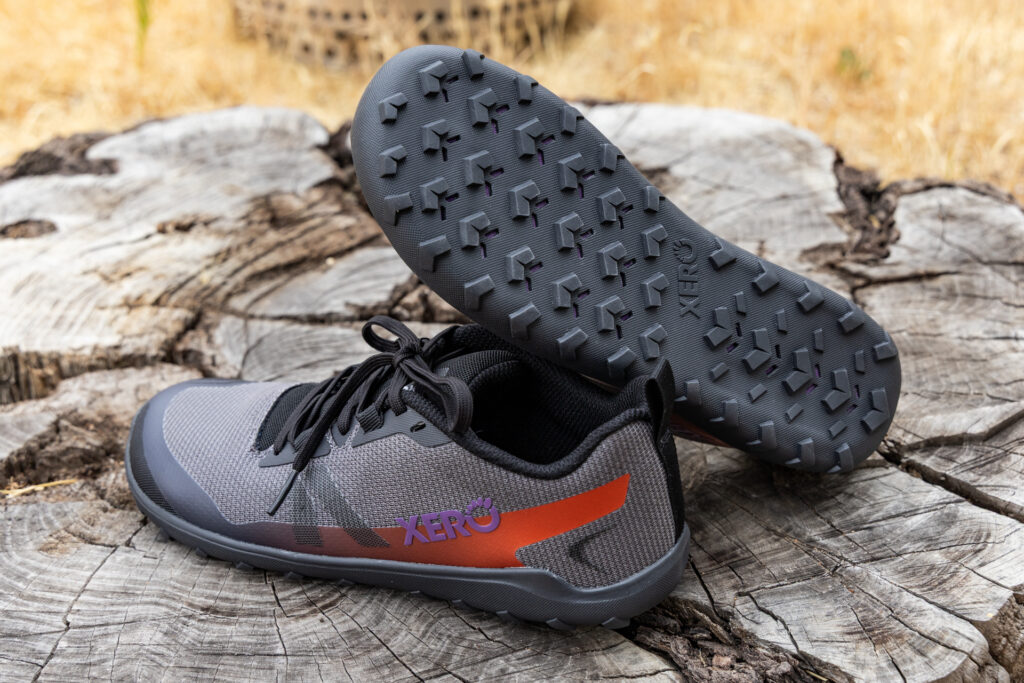
Xero Shoes Mesa Summit: Best for Extra Protection
If you like the idea of a synthetic hiking shoe with a wide toe box and a more protective sole but still want a close-to-the-ground feel, check out the new Mesa Summit. The sole is flexible, the uppers are breathable, there’s plenty of room in the toes, and they’re durable. And unlike other Xero Shoes, the Mesa Summit incorporates a rock guard that protects feet from sharp surfaces underfoot without compromising flexibility. There’s also a waterproof version.
They feel soft, flexible, and slipper-like from the moment you first put them on and traction is solid on dry and wet surfaces. Bonus: they feature a 5,000-mile sole warranty and no foam midsole means there’s nothing to get smashed out and need replaced after 6 months.
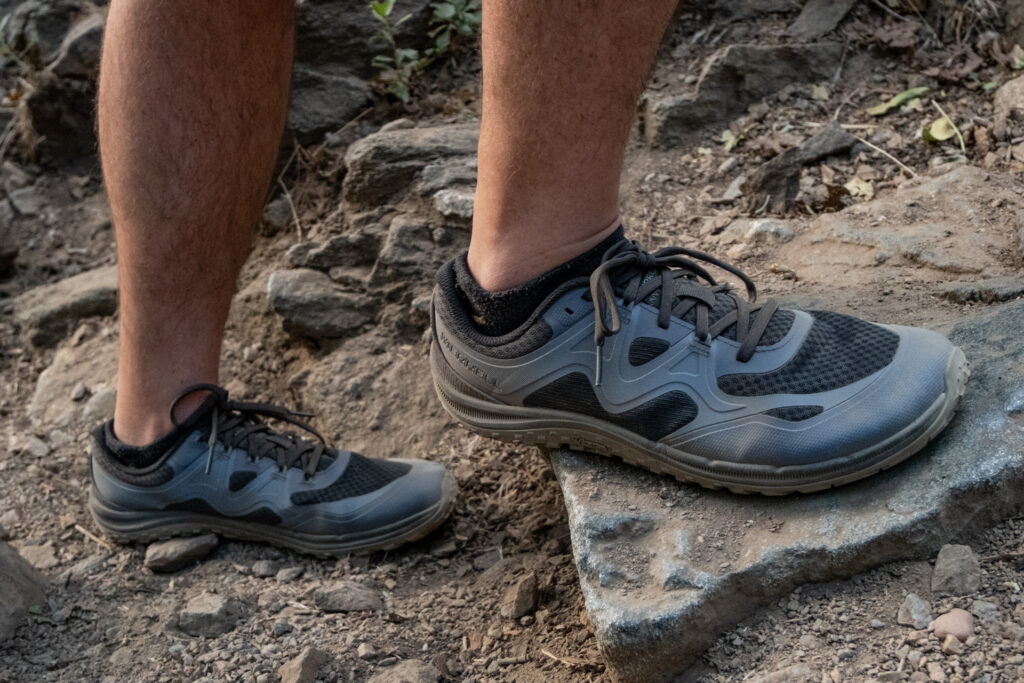
Merrell Trail Glove
We’ve reviewed several versions of this trail shoe that’s perfect for hiking. We like it for its low-profile aesthetic, breathable upper and high percentage of recycled materials. It’s a bit less barefoot than some other options on this list thanks to a bit of structured arch support, a slightly narrower toe box, and slightly stiffer sole, but it continues to be one of Josh’s favorite barefoot trail shoes.
Plus, it’s available in a slew of colors and offers solid traction and protection.
The Best Vegan Hiking Boots

Vivobarefoot Primus Trail Flow Mid
These are my favorite barefoot boots for hiking in mild weather by far. Yes, they’re sort of mid-rise boots, but they wear more like a shoe since they’re incredibly light, they have a stretchy and flexible knit ankle, are breathable, ultra flexible, a tiny bit water resistant, and have plenty of traction for hiking on all sorts of terrain.
And they don’t look like clunky, overbuilt hiking boots, so I’m also happy to wear them around town or when traveling. Plus, they’re made of mostly recycled materials. They’re perfect for warm weather and those who prioritize stellar groundfeel. Read our in-depth review here.
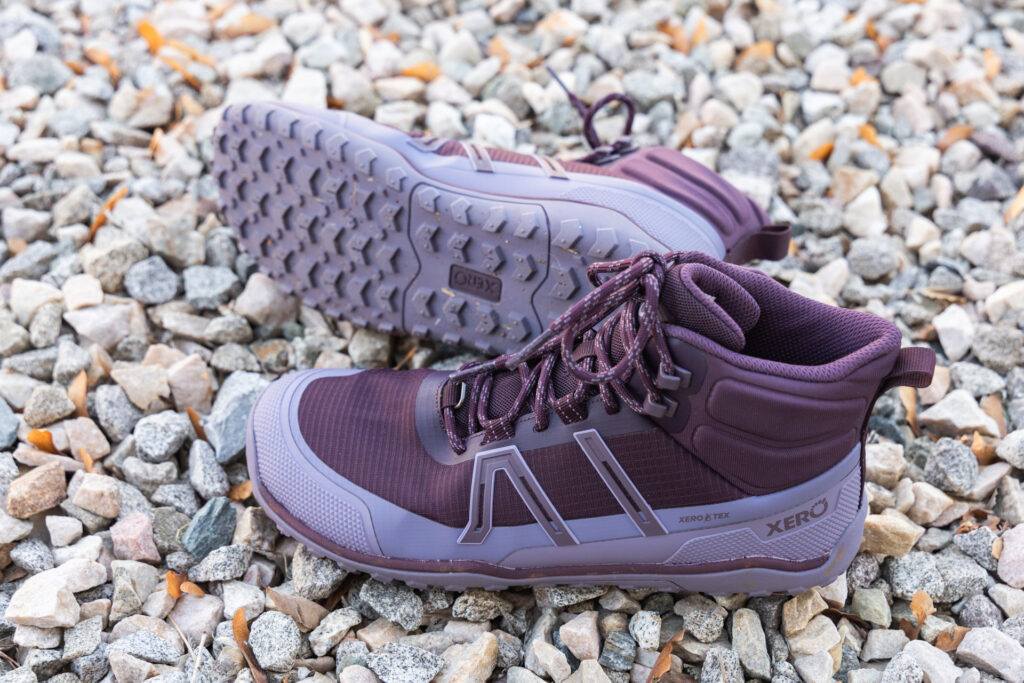
Xero Shoes Scrambler Trail Mid WP
The Scrambler Trail Mid WP is a more affordable alternative to the Scrambler Mid II WP (which is also a standout hiking boot). These use Xero’s new XeroTex waterproof membrane and the soles seem just as durable and grippy. The soles and uppers offer plenty of flexibility while still offering good protection from the ground up. The soles are more dense than some other Xero Shoes we’ve tested, but still move freely and are solid enough to keep us from feeling every little pebble underfoot.
They’re not designed for super wide feet, but they have more wiggle room than some other barefoot shoes we test that seem to suit narrow feet better (like Vivobarefoot). Find a more in-depth review here. Plus, they have a 5,000-mile sole warranty.
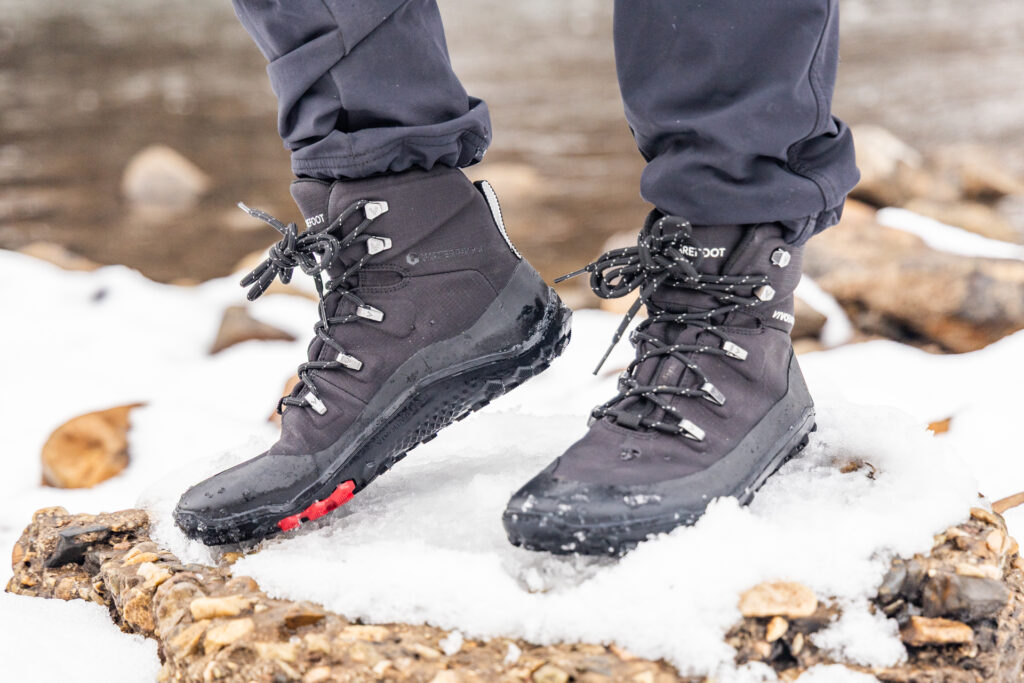
Vivobarefoot Tracker Textile AT
The Tracker Textile AT is a waterproof vegan hiking boot that performs in cool conditions but without being clunky and overbuilt. The Tracker family of boots have a stiffer groundfeel than some of our other favorite Vivo shoes, but the Tracker Textile is designed to be more robust. On the upside, that denser sole means it’s also more protective. Which means if you don’t want to feel every single rock or deviation in the terrain, these may be a better fit for you. Find a more in-depth review here.
Bonus: The uppers and laces are made with almost entirely recycled materials, Vivo is a B-Corp, has a repair and resale platform, and is transparent with their mission and efforts.
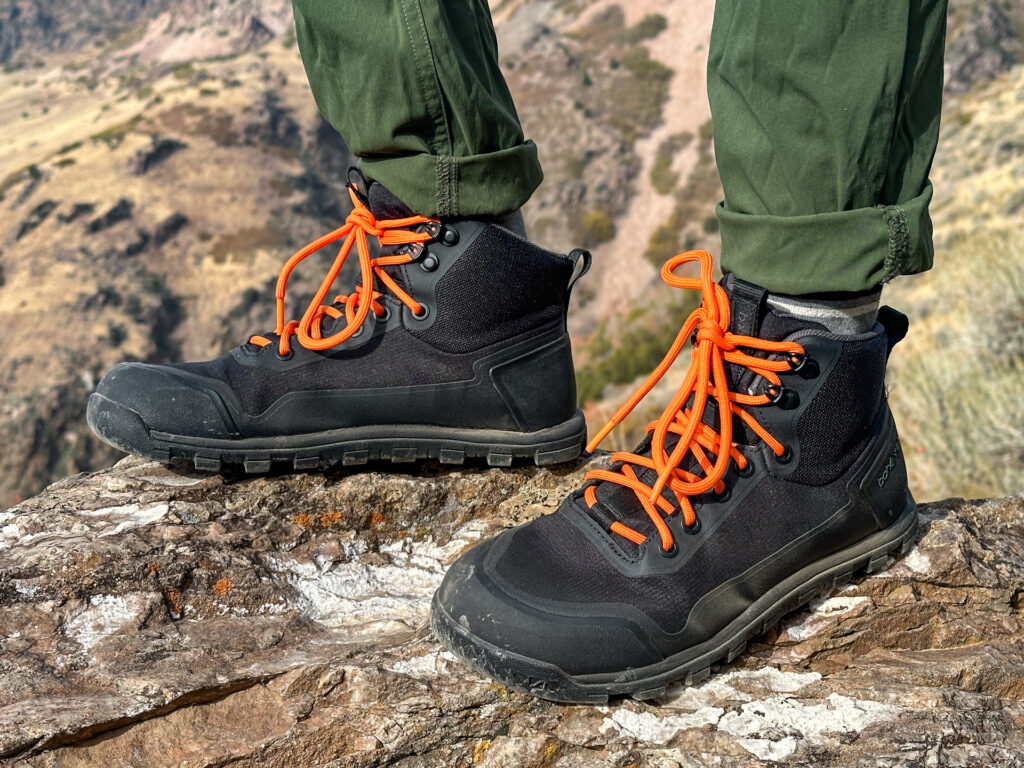
Bahé Rediscover Grounding Boot
The Bahé Rediscover vegan hiking boots are a solid workhorse of a waterproof barefoot boot. They feel durable and have stood up to plenty of seasons of abuse, are rugged, protective, have dense soles, and while they’re not as light or flexible as other barefoot boots, still offer a zero-drop sole and wide toe box for functional movement and foot-shaped comfort. Plus they’re pretty dang warm in the cold, and waterproofing is solid.
However, the main feature is that they’re grounding boots, which means you can practice earthing even with your boots on thanks to conductive material in the sole and footbed. Find a more in-depth review and explanation of grounding here.
Bottom Line: Vegan Hiking Boots
There are other vegan hiking boots out there, of course. If you find a pair you like, check the product description to see if they’re advertised as vegan. If the product listing doesn’t specify, reach out to the brand via email or chat on their website to find out. Most brands are happy to let you know.
Need some socks while you’re at it? Check out these Vegan Hiking Socks without wool and our favorite vegan toe socks and then learn how to fit your hiking boots properly with our beginner’s guide to buying hiking boots!
Did we miss any brands of vegan hiking boots that you know and love? Share them so we can all shop happy (and cruelty-free) together! Wander on.
Most hiking boots contain leather and therefore are not vegan. Some styles and brands that don’t contain leather are not necessarily vegan as they often use glues made from animal bones.
If there’s no leather, fur, or wool on a pair of hiking boots but you’re still unsure if they’re vegan, contact the manufacturer. Most brands will give you a detailed answer regarding which of their products are vegan and which aren’t.
Absolutely. The animal agriculture industry is a number one (if not THE number one) contributor to harmful greenhouse gasses and climate change. The manufacture of leather alone is highly resource-intensive and requires harmful chemicals and excessive amounts of water. Synthetics aren’t perfect either, but they’re much less harmful to the environment.