How to Know if You Should Get a Women’s Hiking Backpack (and the Sustainable Brands that Offer Them)
I may identify as a woman, but throughout my life, I’ve often eschewed the idea of women-specific backpacks. I always assumed they were designed for people with curves (which I don’t have) and who prefer their packs come in colors like pink and violet. No thanks.
But I learned the hard way that women’s hiking backpacks aren’t for one type of body and unisex or men’s packs truly aren’t designed for me (and paid the price in sore shoulders, shifting packs, and uncomfortable hip belts). After all, the outdoor industry has long been guilty of the “shrink it and pink it” movement where brands just make things slightly smaller and in “feminine” colors.
But not anymore (for the most part). These days, many outdoor-specific packs are designed entirely differently to fit a body type that’s not the “standard” tall, trim, broad-shouldered male. And once I embraced the fact that “women-specific” didn’t just mean girly, curvy, or busty, trail miles became so much more comfortable.
Wondering if you should be wearing a women’s pack, too, what makes them different and why it matters? Keep reading.
A Note on Terminology
When we say “women’s packs,” we are using a common marketing term that refers to packs designed for body types with features like boobs, short torsos, narrow shoulders, hips, etc. But you don’t have to identify as a woman to carry a women-specific pack. Hes, shes and theys are all welcome here and we want everyone to find the best pack for your body type.
Notably, some brands are trying different, more gender-neutral terms for pack designs, which we love.

What’s the Difference Between Men’s and Women’s Hiking Backpacks?
Technically speaking, women’s backpacks for hiking often feature slightly different designs compared to their unisex or men’s counterparts. Women’s packs to to feature:
- Curved straps
- Contoured hip belt
- Shorter torso
- Shorter shoulder straps
- Narrower dimensions
According to Matthew Connors, director of product creation at Gregory Mountain Products, “Women’s packs are built around the anatomy of the female body. We look at three design elements: the hipbelt, shoulder harness and torso. The hipbelt is angled to match the shape of a woman’s hipbones, and the shoulder harness is shaped to better accommodate a woman’s bust line. The torso length will also be shorter.”
And yes, torso length is a big deal for any body because it determines pretty much everything about how a pack fits, from how much you can adjust the shoulder straps to where the hip belt sits.
That said, not all packs marketed to women are all that different. Sometimes they feature a single design difference, like a shorter torso or curved straps. Sometimes they’re just smaller overall. And smaller doesn’t make up for real anatomical differences. So before you buy, look into what makes a brand’s women’s pack different from any others they offer.
Why Get a Women’s Specific Pack?
Bodies are different. Like, really different. Between the sexes but also between members of the same sex. In fact, statistically speaking, there’s a much larger spectrum of variation between all (AFAB) female bodies and between all (AMAB) male bodies than there are between male and female bodies.
Those variations make a difference when it comes to choosing the right pack, but so do anatomical differences, as in, bone structure and where on the body fat is located. That’s how anthropologists can tell if a skeleton was a male or female, after all. Women have differently shaped and tilted pelvises, sometimes narrower shoulders, and yes, frequently boobs. Backpacks designed for us can better accommodate those dimensions.
That said, those who identify as women should never feel weird about carrying a men’s or unisex pack if it fits their body better or is more comfortable. And those who identify as males shouldn’t be afraid to wear a women’s pack for the same reason. If someone on the trail judges you for it, tell them you’re sorry they’re stuck in such a rigid definition of gender and to kindly go kick a cactus. 🌵😁

When to Consider a Women’s Pack
Should all women use a women’s pack? Not necessarily. And can men wear women’s backpacks? Absolutely. Because not every woman needs a women-specific pack and many who don’t identify as women may prefer one. It all comes down to how a pack fits, which if far more important than gendered labels or color scheme (I know, that’s important, too). What features should you look for in a women’s hiking backpack?
Try a women’s pack if:
- You have a shorter torso. Measure from the bone that protrudes from the back of your neck to the top of your hip bones. Look for a pack that includes that measurement.
- Hipbelts tend to sit too low on your hips. They should wrap around your hipbones, not sit above or below them.
- Shoulder straps are always too long or wide. They should wrap snugly around your shoulders and upper torso.
- Packs tend to bounce around. Your pack should feel stable and snug with no bouncing or pressure points.
Women’s packs are often a better fit for anyone with a slim frame, narrow shoulders, or who finds hipbelts, shoulder straps and frames too wide for their body or shoulder straps too long to fit snugly. If you have to cinch them down all the way, you may need a smaller pack or a women-specific pack.
That said, I’ve worn non-women-specific packs that fit well (hello, Mountain Hardwear Alakazam). Though more often than not, they fit poorly (looking at you, Gregory Kiro––Josh loves this one, though). So it’s always worth it to try a few on with some weight in them to see how they work on your body.
Brands that Make Women’s Hiking Packs
Think you might need a women’s pack? These brands offer packs truly designed for women. We’ve tested options from all of them and can attest to the fact that they fit entirely differently from their unisex offerings. These are some of the best women’s hiking backpacks from our favorite brands.
Symbiosis Gear
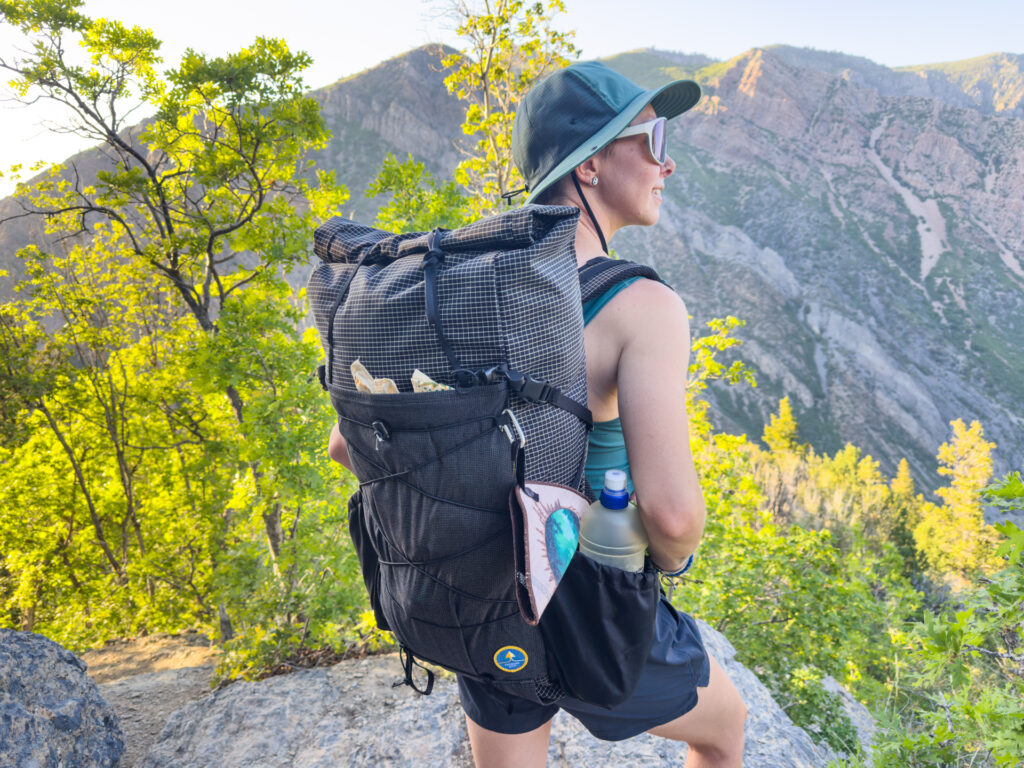
Symbiosis Gear gets listed first because all the brand makes is one pack designed by a woman and specifically crafted for people with boobs (though people without them also find it comfy). It’s an overnight backpacking pack, but at about 43L with compression straps and a roll-top, it’s totally usable for travel and big day hikes, too.
The straps are curved, the hip belt is webbing to fit a wide variety of bodies, and it’s ultralight. What’s more, it fits a woman’s body snugly and is one of the best-fitting packs we’ve backpacked in. It only comes in one color right now, but we appreciate that that color is black, not pink or light blue or something that won’t appeal to a wide array of people. Find a more in-depth review of the Symbiosis Aspen here.
How it’s sustainable: The brand is committed to sustainable and responsible labor practices, the bag is PFAS-free, it’s a woman-owned brand, repairs are available, and the pack is ultra durable.
Deuter
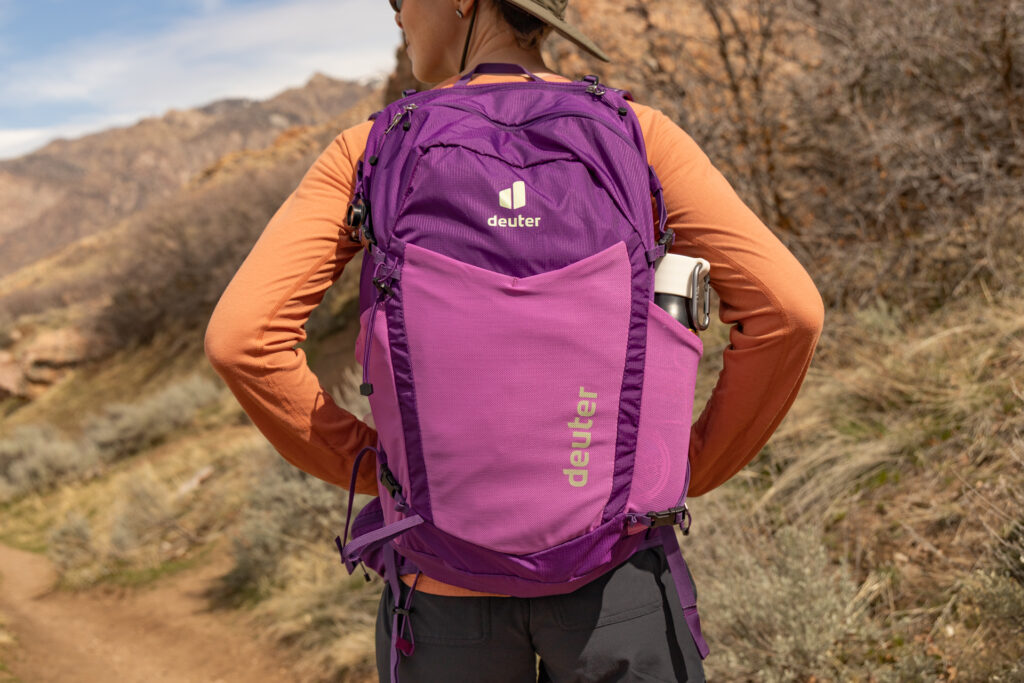
Deuter makes some of my personal favorite daypacks for women. They make backpacking packs, too, but as an ultralight backpacker, they’re on the heavy side for me. That said, they are very comfy. But Dueter packs just fit. Our favorite: the Speedlite Pro, a 23L daypack with all the features, bells and whistles you could ever want and all for remarkably little weight.
Deuter’s women’s backpacks are named the same as their unisex packs, but with an “SL” on the end (which stands for “Slim Line”). They also used to come with a removable fake flower so you could spot them immediately, but now include a more subtle adjustable band that can be used as a bracelet.
Bonus: Hydro versions of the packs come with our favorite HydraPak reservoirs).
How it’s sustainable: Packs often made with 100% recycled materials, Bluesign Products, Green Button certified, come with a lifetime repair warranty.
Rab
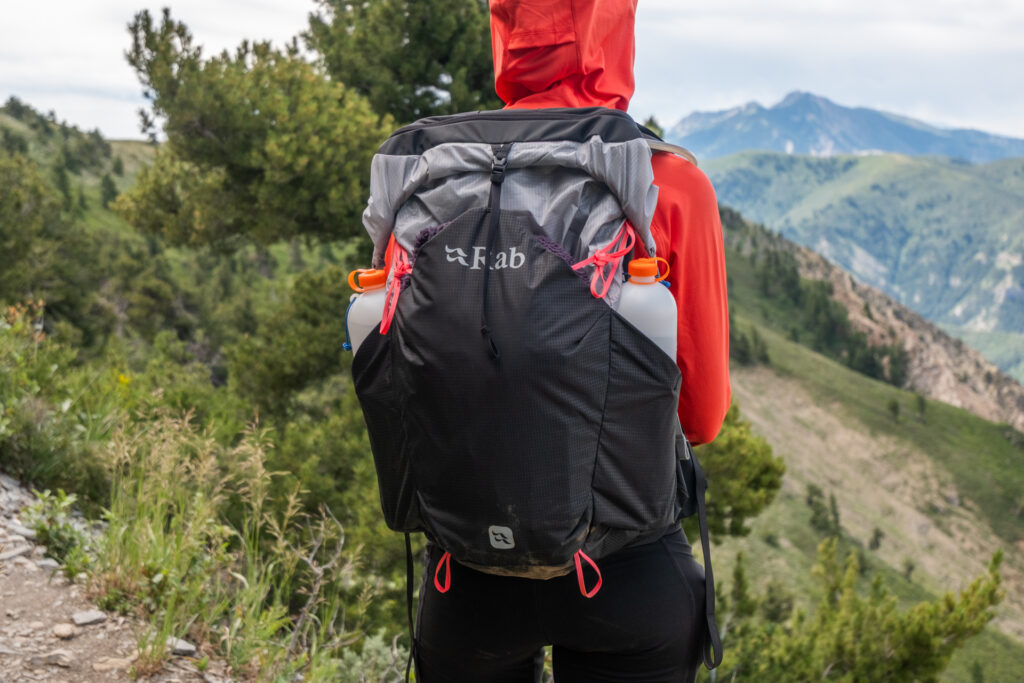
We tested our first Rab backpack this summer and I have to say, I was impressed. Not only was the Rab Syclon ultra comfortable, lightweight and waterproof, but it fit my body like a favorite sun hoodie. The straps were curved just right, the hip belt was comfy, and the pack was functional. Read a more in-depth review of the Rab Syclon 28 ND here.
Rab names their women’s packs the same as their unisex packs, but with an “ND” at the end, which stands for “narrow dimensions.” They have more curved shoulder straps and a tweaked design to better fit narrower torsos.
Bonus: The brand offers ND packs for dashikis and backpacking.
How it’s sustainable: Rab is a Certified B-Corp and publishes detailed materials “ingredient lists” for every product.

Gregory
This brand crafts packs for every type and length of hiking adventure, from backpacking to short hikes on familiar trails, lightweight daypacks to heavy gear-haulers. In fact, Gregory packs are some of Josh’s favorites for hiking. But the unisex packs he wears have always been far too big for me. Their women’s offerings, on the other hand, are designed for shorter torsos.
Gregory uses a completely different naming convention for their women’s and unisex packs. For example, a unisex pack might be called “Baltoro” while the same pack in a women-specific design is the “Deva.” Some of the shoulder straps still run a touch on the wide-set side (for me at least).
Bonus: Gregory offers a line of plus-size backpacks, too.
How it’s sustainable: Many packs are made of recycled materials, support several social and conservation alliances and non-profits, use some Bluesign approved hardware, and Gregory offers a lifetime guarantee and parts and repair services.

Osprey
My first real daypack as an adult was an Osprey. Come to think of it, my first real backpack was, too. And though most of their packs are a bit on the heavy side for me now (their Eja Pro is still an impressively strong contender), I’ve always respected Osprey’s fit, construction, All Mighty Guarantee, and sustainability ethos. Plus, packs are well-designed, comfortable and feature-rich––there’s a reason you see so many of them out in the wild!
And Osprey makes plenty of women’s hiking backpacks. They name their packs differently based on whether they’re unisex or women-specific. For example, the Aether is a popular unisex backpack while the Ariel is the women’s version. Fortunately, you can search specifically for one type or the other on their website and product tags in stores make them easy to spot.
Bonus: The brand offers plus-size packs in many styles, too!
How it’s sustainable: Most Osprey pack are made of recycled materials, the brand offers an impressive lifetime warranty, and they’re a Bluesign System Partner.
Bottom Line
Whether you should buy a unisex or a women’s pack depends on your frame, body size and shape, and fit preferences. Not all women prefer a women’s pack and not all men fit best in a unisex. No matter how you identify (he, she, or they), fit is important when it comes to a comfortable hiking experience. So try both, see which suits, and shoulder your pack proudly no matter what you choose.