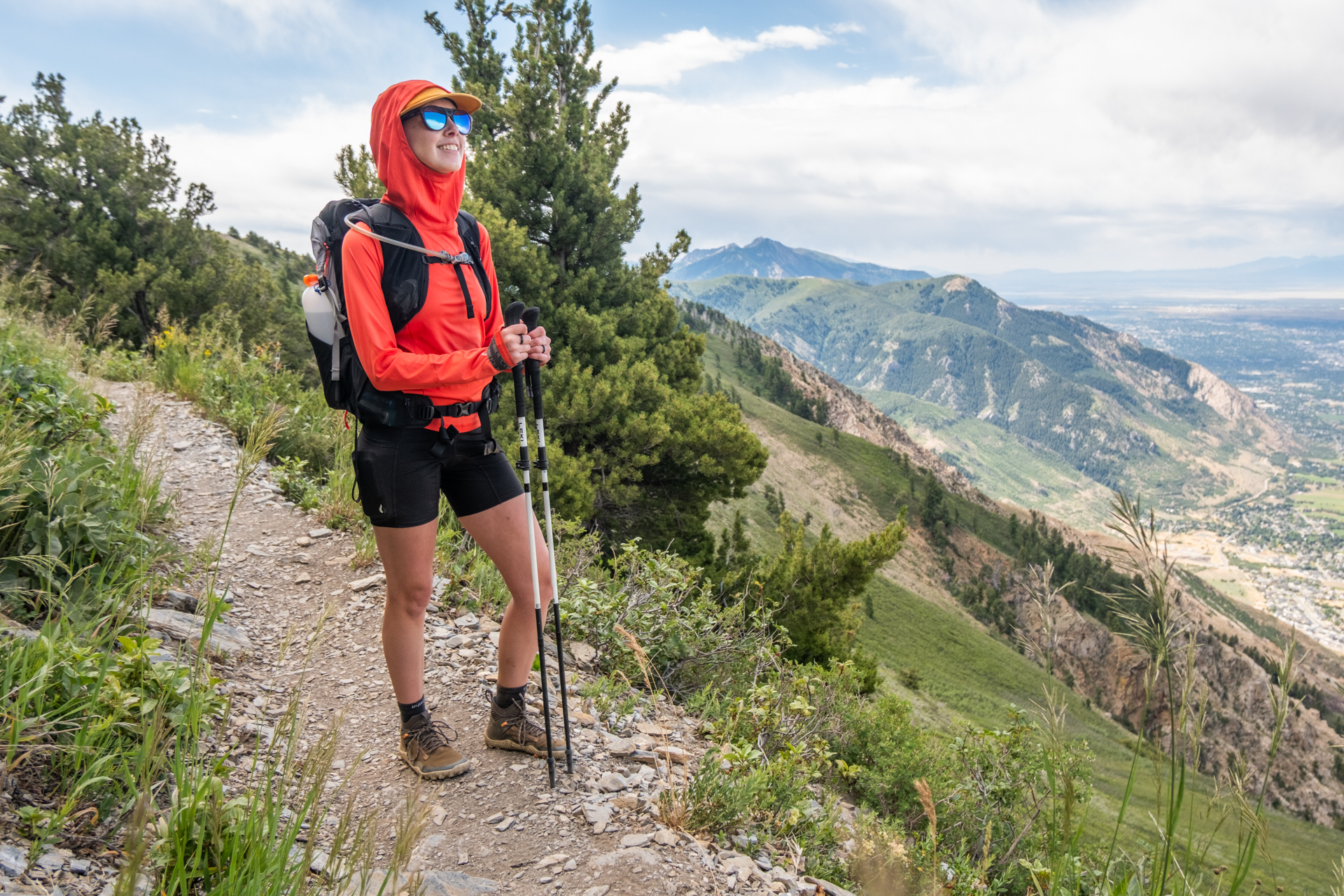
The 5 Best Ultralight Daypacks for Hiking so You Can Go Farther Faster
A comfortable, functional, purpose-built daypack is a beautiful thing. When features just work and a pack sits on your shoulders just right…it can make every hike more enjoyable. Double that if it’s an ultralight daypack, which can take pressure off your knees, shoulders and hips.
But what makes a good sustainable ultralight daypack for hiking? We’ve tested plenty of packs over the years and these 5 ultralight hiking daypacks offer an excellent option for just about everyone (depending on your preferences, of course).
Why Ultralight Daypacks?
Often, ultralight gear is reserved for multi-day backpacking or trekking trips when you’re covering lots of miles over an extended period and want to reduce the weight you’re carrying as much as possible. But if you’re regularly logging big miles in a single day, it absolutely still makes sense to reduce the amount of weight you’re carrying as much as possible.
Do so will be easier on your joints, feet, muscles and energy levels, meaning you can go farther, faster, and with less pain (or farther, faster OR with less pain…you don’t have to be setting FKTs or setting distance records to carry an ultralight daypack).
What Defines an Ultralight Daypack?
While there’s no specific weight that qualifies a backpack as ultralight, generally it includes daypacks that are constructed of lighter materials and under a pound or two. Heavier options may have frames and be designed to carry slightly heavier loads. Lighter options are frameless. UL packs could be made of Dyneema, nylon, polyester or any number of materials.
But they’re all designed to carry lighter loads than their more traditional counterparts. So if you opt to carry an ultralight pack, most of the gear inside should be ultralight, too. Check out our article about 5 mistakes new ultralighters make here.
What sizes do we consider a “daypack?” Generally anything between 12 liters to under 30 liters. Anything smaller is more of a trail vest. Anything larger is overkill for most day hikes and is leaning into ultralight backpack territory.
What to Look for in an Ultralight Daypack
When choosing an ultralight daypack for hiking, keep these things in mind to help you select the right one for you.
- Features: Do you need exterior lash points? Accessory pockets? Consider closure systems, the presence of a hip belt or whether water bottle pockets are accessible on the move.
- Frame: If you plan to carry heavy loads, even sometimes, consider a pack with a frame or at least some built-in structure like panel padding to help distribute the load.
- Packability: If you plan to travel with your pack stuffed in luggage or a larger backpack, look for one that packs flat.
- Weight: The lightest weight packs are often best for minimalist hikers who have their packing list dialed. But don’t be afraid of a few extra ounces of pack weight if you prioritize comfort.
- Materials: If you regularly bushwhack or hike through thorny brush, opt for a pack made of more durable materials like Dyneema or dense rip-stop.
- Personal preferences: Do you prefer an outside stash pocket? Storage space for specialty gear? Compatibility with accessories like ultralight hip packs? Choose the pack that suits your hiking preferences best.
The Best Ultralight Daypacks for Hiking

REI Flash 22: The Budget Pick
Need a packable ultralight daypack that is comfortable, functional, and packs nearly flat for easy travel or multi-day trips that call for day hikes from base camp? The REI Flash 22 is the perfect option (also the most budget-friendly on this list).
It’s frameless, so packs flat when empty, plus has webbing attachment points on the shoulder straps and loops on the front of the pack to lash more gear. A zippered pocket on the top flap and the side (behind the water bottle pocket) make it easy to keep essentials organized. A sternum strap and ultra breathable and easily stashable hip belt make stabilization a breeze.
It’s a great ultralight daypack for backpacking. By which I mean we’ve carried this one on day hikes close to home, packed it as a personal item for air travel to adventurous destinations where we plan to hike, crammed it in our luggage, and more. While the extremely minimalist straps can get uncomfortable if the bag is overpacked and the back panel has minimal padding and no structure, we love all the attachment points, spacious water bottle pockets and storage it offers.
Pros:
- Packs nearly flat for travel
- Stashable hip belt
- Comes in a slew of colors
- Several organizational pockets
Cons:
- No shoulder strap pockets
- No structure for heavier loads
- No front quick-stash pocket
How it’s sustainable: Made of recycled nylon, Bluesign approved, REI is Climate Neutral Certified.
- Weight: 14 oz
- Capacity: 22L
- Price: $60
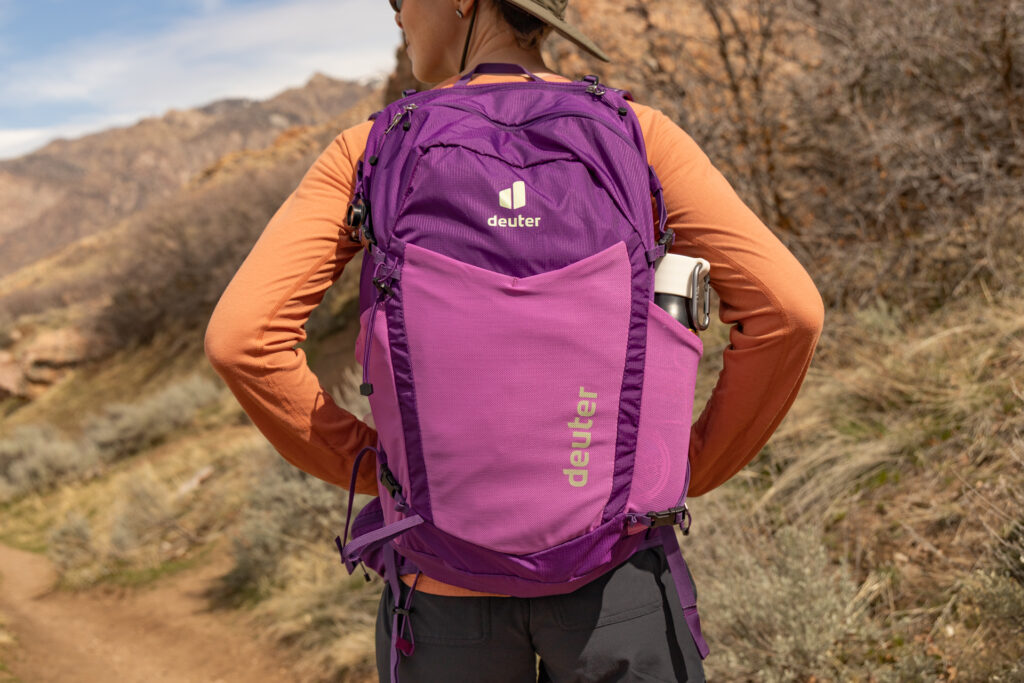
Deuter Speed Lite Pro 23/25: The Do-It-All Pack for
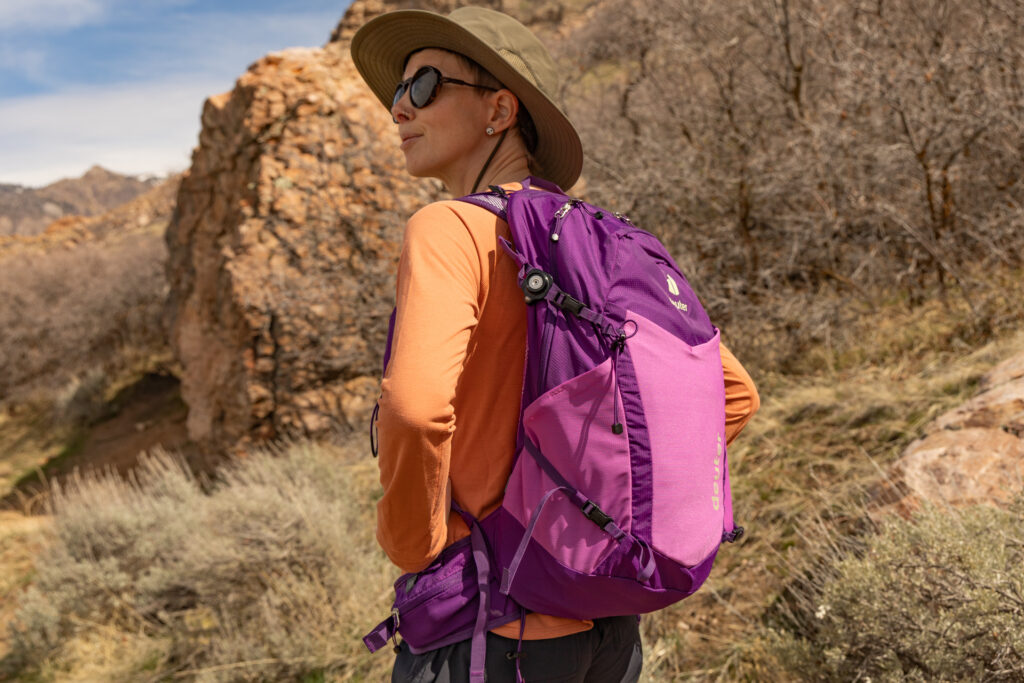
If there’s one pack I reach for continuously for all manner of hikes, it’s the Deuter Speed Lite Pro. Available in men’s (25) and women’s fits (23 SL version), it’s perfect for light and fast adventures where you still want all the functionality of a fully-featured pack.
Its slim profile held everything we needed for moderate days without it feeling floppy on shorter hikes when the pack wasn’t as full. Plus it has plenty of pockets, including a stretchy stash pocket on the front––a must-have in our opinion––attachments points and customizable lash options. There are multiple pockets on the running vest-style straps so snacks and sunscreen are always within reach, bungees for trekking poles, ice ax loops, hip belt pockets, and a hydration sleeve.
The highly flexible and lightly padded mesh shoulder straps are comfortable and breathable without being overbuilt. The back panel is lightly padded with a semi-ridged foam to offer just a touch of structure and breathability. Frankly, it’s everything we want in a daypack and nothing we don’t.
Pros:
- Comfy straps
- Plenty of pockets
- Lots of lash points
- Lightweight
- Comfy, breathable hip belt with pockets
- Available in several sizes
Cons:
- Only available in a few colors
- Not as light as extreme UL options
How it’s sustainable: Made of 100% recycled materials, Bluesign Product, Green Button certified, comes with a lifetime repair warranty.
- Weight: 24 oz
- Capacity: 23L
- Price: $140
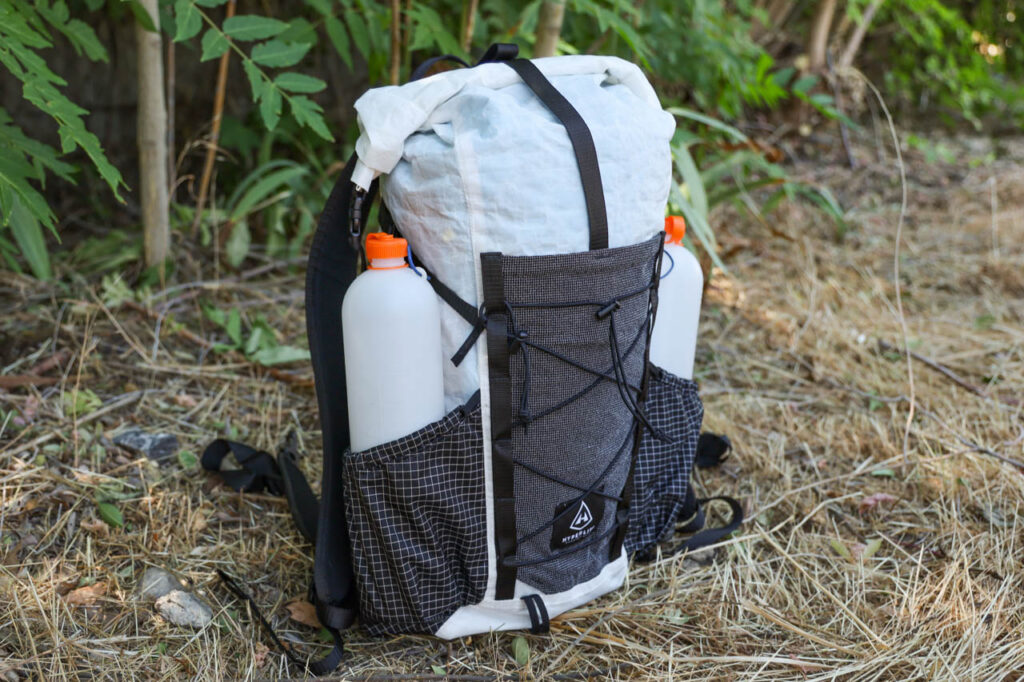
Hyperlite Elevate 22: The Hike + Travel Powerhouse
We’re a sucker for a white pack made of Dyneema. And Hyperlite packs never disappoint. (We tested the Unbound 55 last year.) In addition to it being an excellent UL hiking pack, the Elevate 22 is also a top pick for an ultralight daypack for travel. The main compartment is large enough for a laptop and the side pockets and front stretch drop pocket offer plenty of room for water bottles, snacks, you name it.
The straps have low-profile padding that’s comfortable but not overbuilt and the water bottle pockets are large and low enough that we could retrieve a bottle without taking the pack off. We also loved the slim hip belt, which is removable, but also tucks away into the back panel if you don’t need it and then deploys quickly and easily.
The roll-top is a bit more time-consuming to get in and out of than a traditional zipper bag, but coupled with the waterproof materials, it does help keep contents dry. That said, the seams did still leak a bit when we spilled a water bottle in the side pocket. The top can roll over and clip into itself or clip down on each side via removable webbing straps. A top strap offers over-the-top security and expandable capacity.
The pack is available in small, medium and large so fits a wide range of torso lengths. There are tons of daisy chain loops and attachment bungees for trekking poles or ice axes. The capacity is perfect for medium to long day hikes in any weather.
Pros:
- Packs flat for travel
- Plenty of functional pockets
- Water resistant
- Ultra durable
- Expandable capacity
- Customizable webbing straps
Cons:
- Only available in two colors
- Back panel isn’t breathable
How it’s sustainable: Backed by an extensive repair and warranty program. Made in North America (Mexico).
- Weight: 17.5 oz
- Capacity: 22L
- Price: $265
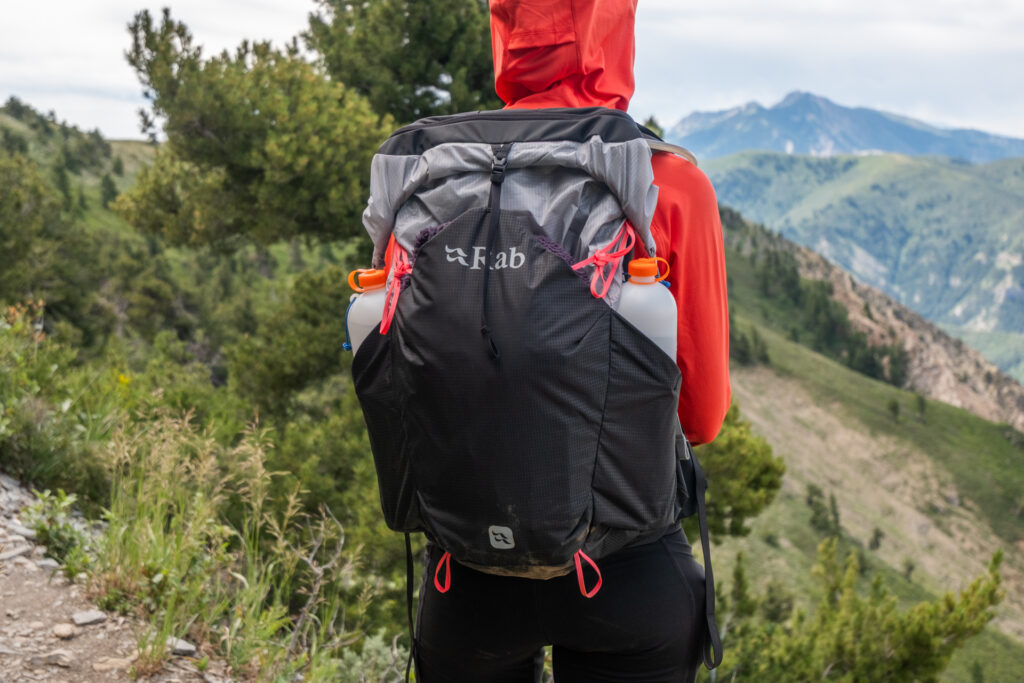
Rab Syclon 28: The Gear Hauler
Some day hikes call for more gear (or more snacks). When you have to carry more than 8-10lbs or so, many UL packs start to get uncomfortable. Not the Rab Syclon. Not only is it more spacious at 28L than most other packs on this list, it can carry more weight more comfortably, too. In fact, it’s one of the best ultralight daypacks for long hikes.
That’s thanks to comfy padded shoulder straps, but also an ultralight frame that helps the pack keep its shape. That, plus the suspended mesh back panel not only keeps contents from digging into your back, but does wonders for breathability, too.
On a recent summit hike in hot, dry desert-y Utah, we stayed cool and much less sweaty than in a pack with a solid back panel. It was breezy, the entire back panel and harness were crazy comfortable, and it was perfect for big mountain days when you need more snacks and gear. The water bottle pockets were a bit high for easy bottle extraction, but not impossible to use.
It’s perfect for longer exploits, family hikes where tots aren’t strong enough to carry all their own stuff, bouldering, or just hauling a vegan charcuterie board up a mountain for a summit picnic. It’s even available in two styles: regular and ND, which stands for “narrow dimensions” (aka women/small humans). Larger capacities are also available.
Pros:
- Shoulder strap pockets
- Breathable back panel
- Frame keeps gear away from your back
- Supremely comfortable
- Waterproof
- Customizable webbing straps
Cons:
- Heavier than some UL packs
- A bit large for standard day hikes
- Not easily packable
How it’s sustainable: Only 13% total recycled content but Rab is a Certified B-Corp.
- Weight: 28.2 oz
- Capacity: 28L
- Price: $200
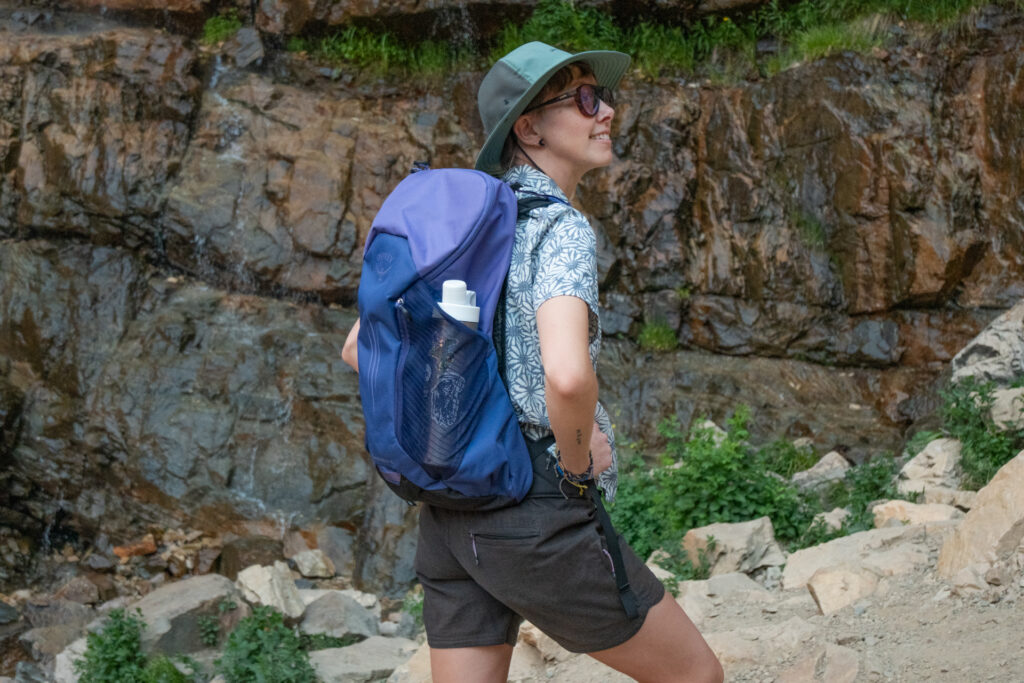
Osprey Hikelite LT 16: The Simple, Streamlined Option
A slim profile, wide opening, breathable fit and durable materials make the Osprey Hikelite LT 16 a solid choice for a compact ultralight daypack. It’s not overly technical and it’s not the lightest pack on this list, especially for the size, but it does have the most comfortable back panel and harness for such a minimalist backpack.
The back panel, like most Osprey packs, is suspended and made of mesh so it’s ultra breathable and reduces pressure on your back. Not that you need pressure relief in a 16L ultralight daypack that doesn’t hold that much weight anyway, but it is super comfy. That said, we love a suspended back panel because it offers a quick and easy way to stash a bandana or other small items.
There’s a minimalist hip belt and very few bells and whistles like extra pockets. The water bottle pockets are high and a bit challenging to get bottles in and out of on the go, but not impossible depending on your flexibility and range of motion.
There are also larger capacities available, though they go up in weight quickly due to the burly materials. It’s only available in one size, and it is unisex sizing, so it won’t work for every body type, but it’s a reliable pack for those it does fit.
Pros:
- Durable materials
- Breathable back panel
- Comfortable harness and shoulder straps
- Lots of colors available
- Compact design is perfect for short hikes and travel
Cons:
- Slim water bottle pockets extend into pack when full
- Unisex sizing, one size fits all
- No good external storage or lashing options
How it’s sustainable: Made of Bluesign approved 100% recycled materials. Lifetime All Mighty Guarantee.
- Weight: 25 oz
- Capacity: 16L
- Price: $95
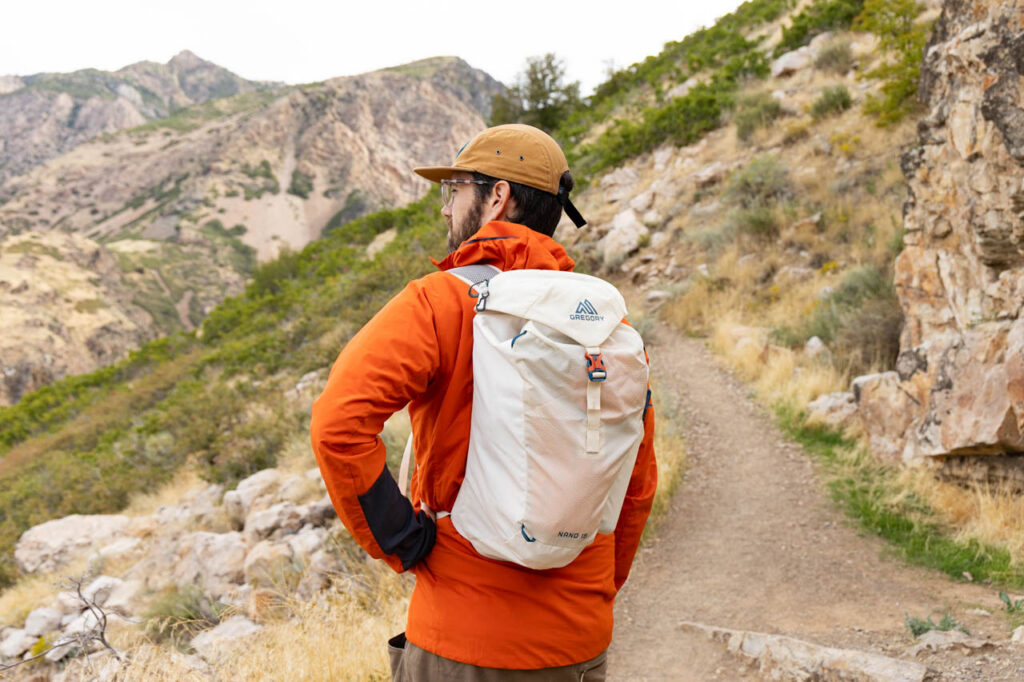
Gregory Nano 16: The Pack for Hydration Reservoir Lovers
Looking for the most streamlined daypack that’s still comfy and structured while offering plenty of room to stash essentials like extra layers, snacks, rain jackets and more? Look no further than th Gregory Nano 16. The pack is available in several capacities, but we like the 16L because it’s the perfect size for summer dashikis and short excursions in shoulder seasons.
The back panel is a combo of mesh and thin foam, which is plenty to keep the pack structured but not bulky, meaning it packs down nearly flat for travel. The shoulder straps, too, are lightweight, flexible, and minimally padded, which I prefer in an ultralight pack. It’s comfy without being overbuilt.
It’s a minimalist pack with limited bells and whistles: there’s one exterior drop/water bottle pocket and a zipper pocket in the lid and sternum strap, but that’s all. Of course, that also makes it supremely lightweight and streamlined. In fact, while the capacity is the same as the Osprey above, the Nano feels far more compact. Bonus: It’s less than $70 AND it’s available in plus size.
We say this one is best suited for folks who prefer hydration reservoirs to water bottles (here’s how to decide which is right for you) because there’s only one exterior water bottle pocket on the right side. That tended to make the pack hang lopsided and it was difficult to distribute weight evenly. But slide in a bladder and utilize the tube port and routing and balancing weight wasn’t an issue.
Pros:
- Durable materials
- Breathable back panel
- Comfortable and flexible shoulder straps
- Several of colors available
- Packs flat for travel
- Affordable
Cons:
- Only one water bottle pocket creates imbalance
- Minimal external pockets
How it’s sustainable: Made of mostly recycled nylon and polyester. Limited lifetime guarantee.
- Weight: 12.8 oz
- Capacity: 16L
- Price: $70
Bottom Line
Finding the perfect ultralight daypack can involve a lot of research, pros and cons list, and consideration of personal preferences. But hopefully we helped you find the right one for you so you can hike happy whether you’re going on leisurely afternoon jaunts or challenging summit pushes. Have more questions? Drop them in the comments!
Wander on.
To decide how large your pack should be, consider the distance of your typical hikes, duration, current gear setup and packing preferences. For shorter hikes that require minimal gear, 16-20 liters is often more than sufficient. For big mile days, hikes where you’re heading deep into the backcountry and require more safety gear, or when hiking with kids, you may prefer something a bit larger, between 20-30 liters. Personally, on big mile days in mild weather I find anything around 20L to be the sweet spot.
Weight capacity varies by brand and depends largely on design. For example, a frameless pack with minimalist straps is going to carry far less weight comfortably (closer to 10 lbs.) while a pack with a frame or structure, padded straps and a hip belt might allow you to comfortably carry up to 20 lbs. Check the recommendation on the brand website to find weight guidance.