The 6 Best Sustainable Ultralight Synthetic Insulated Jackets for Hiking and Backpacking [2026]
When it comes to ultralight jackets, down is typically the default insulation. That’s because it’s lighter and packs up smaller than synthetic insulation while still insulating well. But not everyone wants a down jacket. Down is expensive, doesn’t insulate at all when it’s wet (with sweat, condensation or rain), and because it’s a byproduct of the meat industry and comes from dead ducks and geese, it isn’t suitable for vegans or vegetarians (like us).
So what’s an outdoorist on a budget, someone who regularly hikes and backpacking in damp conditions, or an active vegan supposed to do? Layer up with one of these ultralight synthetic insulated jackets, of course! They are functional, cozy, feature-rich, and still ultra lightweight so you stay warm in all conditions without weighing down your pack.
When to Choose an Ultralight Synthetic Jacket
Why wear a synthetic jacket instead of down? And what conditions are best suited for ultralight insulating layers? There are plenty of reasons:
- In wet weather: synthetic insulation still insulates when wet, so if you’re bad at keeping layers dry in rain or snow, choose synthetics.
- When backpacking: warm layers can really weigh you down. Choosing an ultralight option can trim ounces––sometimes pounds––off your load.
- In cool to cold weather: Frigid conditions often call for thicker, heavier layers, but in cooler seasons, an ultralight option is often all you need.
- When layering is key: When hiking in fluctuating temps, having a couple of interchangeable ultralight layers that you can mix and match will help keep you from getting too hot or too cold.
- For chilly nights in the backcountry: When daytime temps are warm but you need a cozy layer for evenings in the backcountry, an ultralight jacket is often the lightest and most packable option for the weight.
- If you don’t want to baby your jacket: Synthetic jackets don’t take any special care. Just wash them like normal using a detergent for technical apparel and you’re done.
- Packable + warm: Ultralight insulated jackets are carefully engineered to be packable but still plenty warm, making them great for travel and portability.
Pro tip: Pair a packable insulated jacket with a wind breaker or ultralight rain jacket for extra wind and rain protection plus a warmth boost.
Sustainable Ultralight Synthetic Insulated Jackets
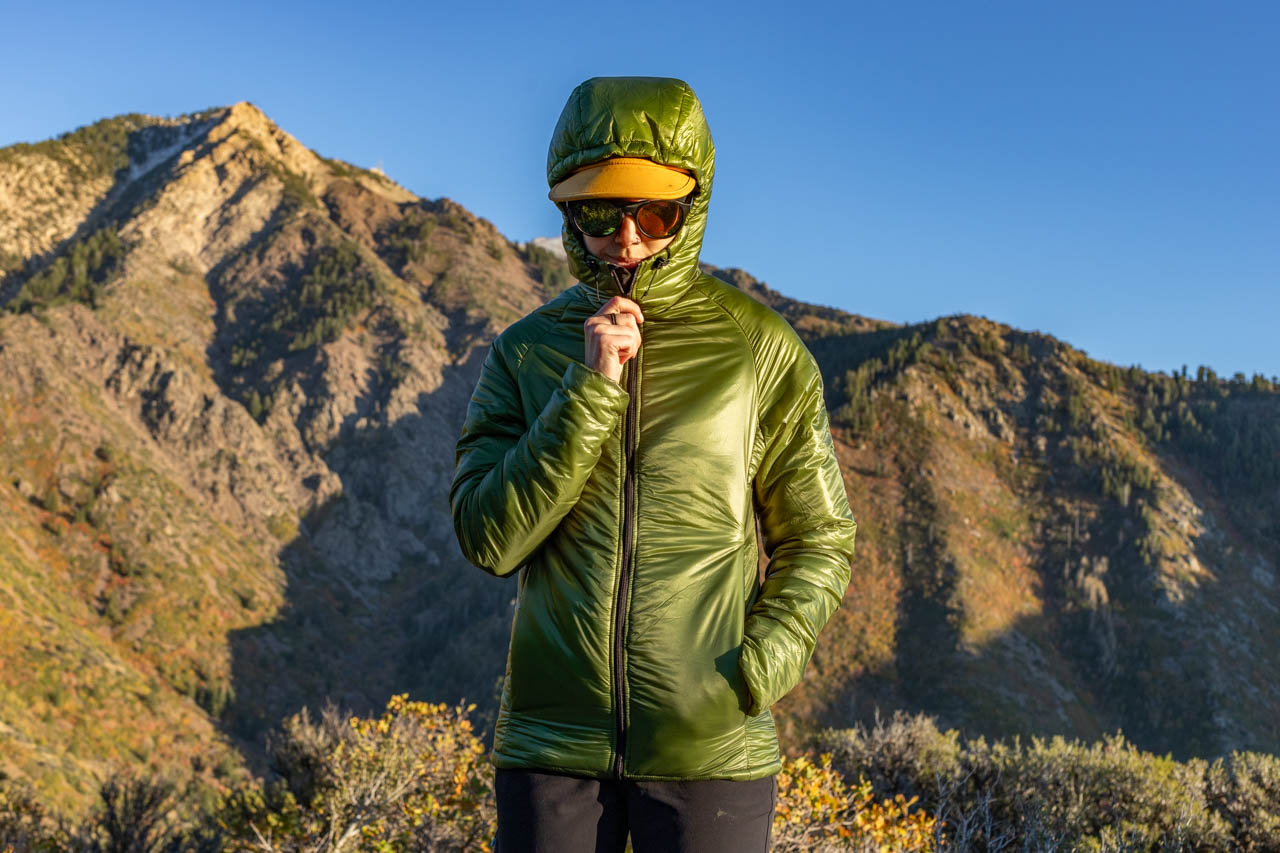
Enlightened Equipment Torrid Jacket: The Ultralight Powerhouse
Weight: 7 oz (women’s XS)
Cost: $200
I was happy to bring this packable jacket on a recent fall backpacking trip into the mountains when temps were below 40º after the sun went down. It blocked the wind and kept me cozy when layered over a sun shirt and ultralight fleece until about those temps, but I’d likely want more robust layers underneath for anything colder.
On a cool but humid hike out from the backcountry, I did have to shed it soon after starting as it didn’t breathe remarkably well––but few jackets do in those kinds of conditions. On the upside, I could still access the extra tall pockets even with a pack hip belt securely fastened.
It *technically* fits into its own pocket, but it’s not designed to. There’s no double-sided zipper pull to make it easy to open and close once it’s stuffed. But it does pack down small.
Be warned: the fit is…weird. The Torrid was quite roomy in the shoulders, arms and chest with room for layering but it was too snug in the hips. That’s mostly because the jacket is so long that it has to be wide enough to fit over hips and butt. I got an XS and, despite not being particularly well-endowed in the booty department, it was tight. Fortunately, the bungee in the hem made it possible to tuck it under and make it shorter. But if you have a big booty or wide hips, I would size up (though folks with larger chests may benefit from the roominess up top).
That said, because it’s absolutely the most ultralight synthetic insulated jacket we tested, it will definitely be our go-to for ultralight shoulder season trips and layering on chilly nights.
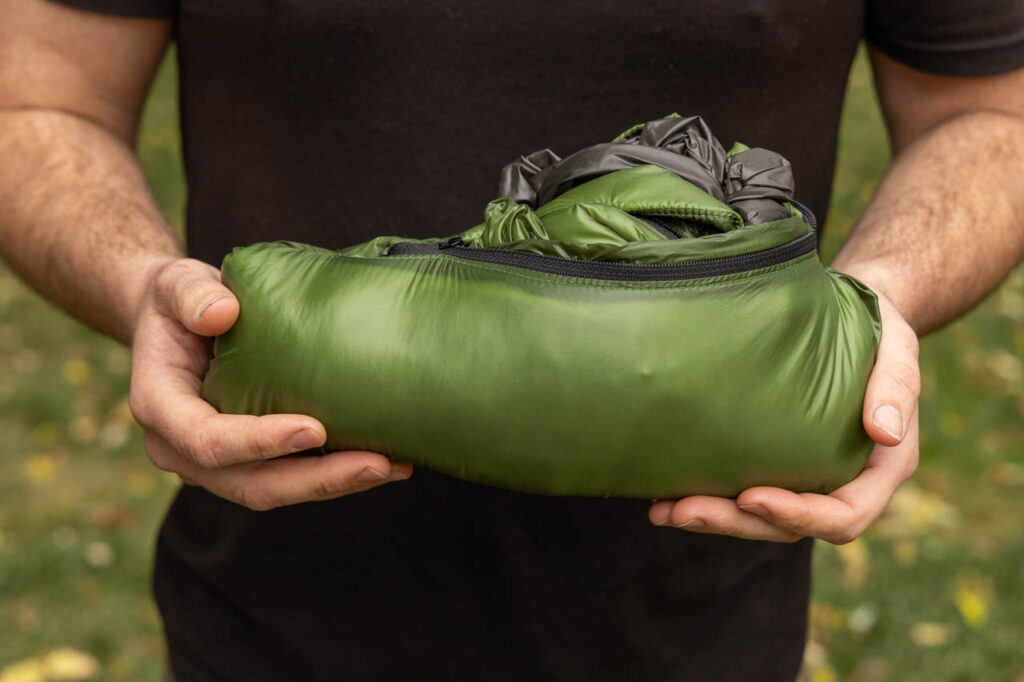
How it’s sustainable: Made in the USA (Minnesota) by a small cottage brand.
Sizes Available: It’s available in XS to 3XL for women and XS to 3XL for men and in two to three buy-now colors and a dozen more customizable options.
Pros
- Sheet insulation and no baffles means no cold spots
- Ultralight
- Cinchable hood
- Spacious zippered hand pockets
- Ultra soft and silky fabric
- Customizable color options
Cons
- Tight in the hips
- Tiny zipper pulls are hard to use with gloves
- Fabric can shift and bunch
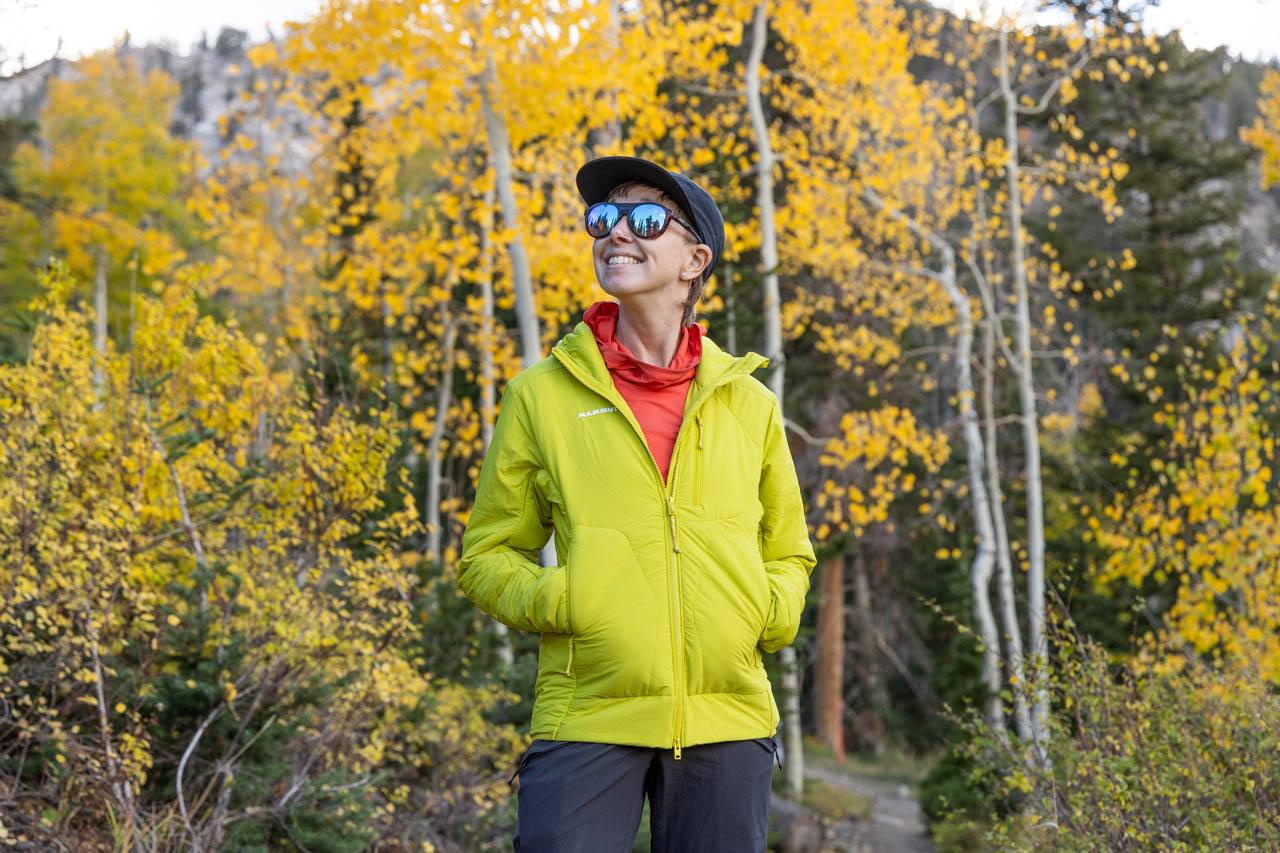
Mammut Aenergy Air IN Hooded Jacket: The Active Insulation
Weight: 14 oz (women’s XS)
Cost: $349
Warm, light, and more packable than the Mammut Sender IN jacket we included on this list of insulated jackets, the Aenergy Air IN is better suited for adventures that require your jacket take up less space in your bag. The best part: the insulation is made of 50% industrial climbing rope production offcuts and 50% rPET. Meaning this jacket keeps a very specific waste stream out of landfills.
What’s more, it’s impressively cozy for its weight, has enough stretch to accommodate high-output activities, and even breathes tolerably well. The hand pockets are harness- and backpack hipbelt-compatible and an external chest pocket is large enough for most phones. It even comes with its own little removable stuff sack that clips into a hand pocket when not in use.
Plus, it fits beautifully. The elasticated hood stays put, the elasticated cuffs and hem help keep out the cold, and it comes in a handful of epic colors (I’m wearing the acacia color). It leaves enough space for layering a base layer and slim grid fleece––though it’s a more slim cut than some other options, so size up if you like lots of room.
One downside: it’s a bit heavier and less compressible than some other lightweight jackets on this list, so it may be better suited for adventures where you’ll be wearing the jacket more than carrying it. But it’s super comfy, cozy, and fits like a dream.
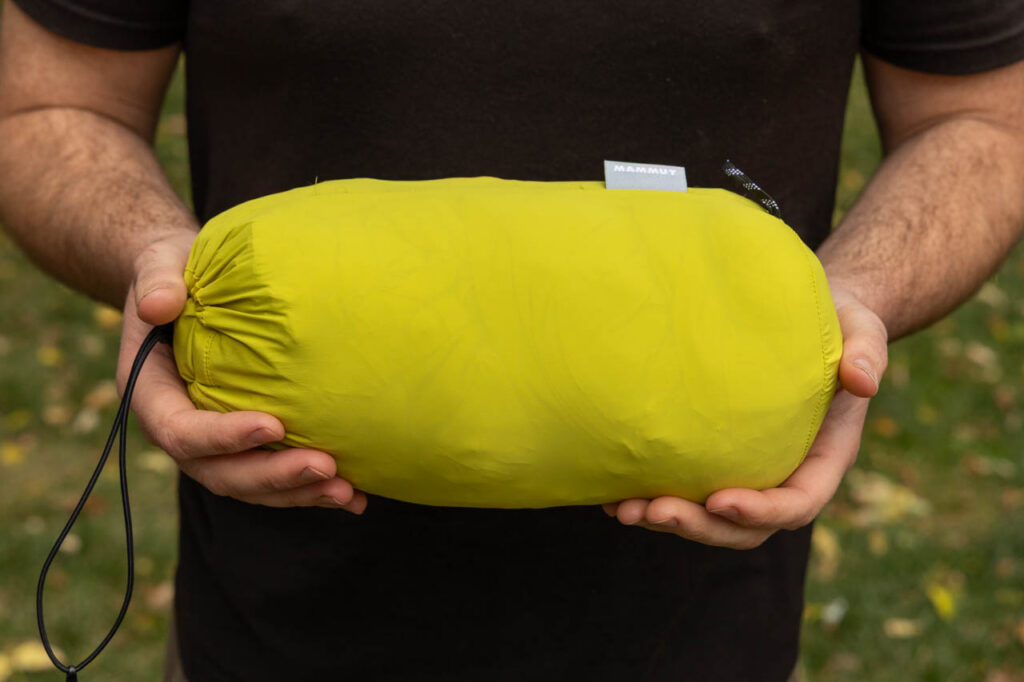
How it’s sustainable: The outer fabric and lining are made of recycled materials and the insulation is Mammut LOOPINSULATION made from climbing rope scraps and recycled polyester. It’s also PFAS-free, Bluesign approved and Fair Wear certified.
Sizes Available: It’s available in XS to XL for women and S to XXL for men, and in a handful of bright and neutral colors for each.
Pros
- Warm
- Cozy hood
- Plenty of pockets
- Unique upcycled insulation
- Designed for movement
- Durable fabric
Cons
- Less room for layering than other options
- Expensive
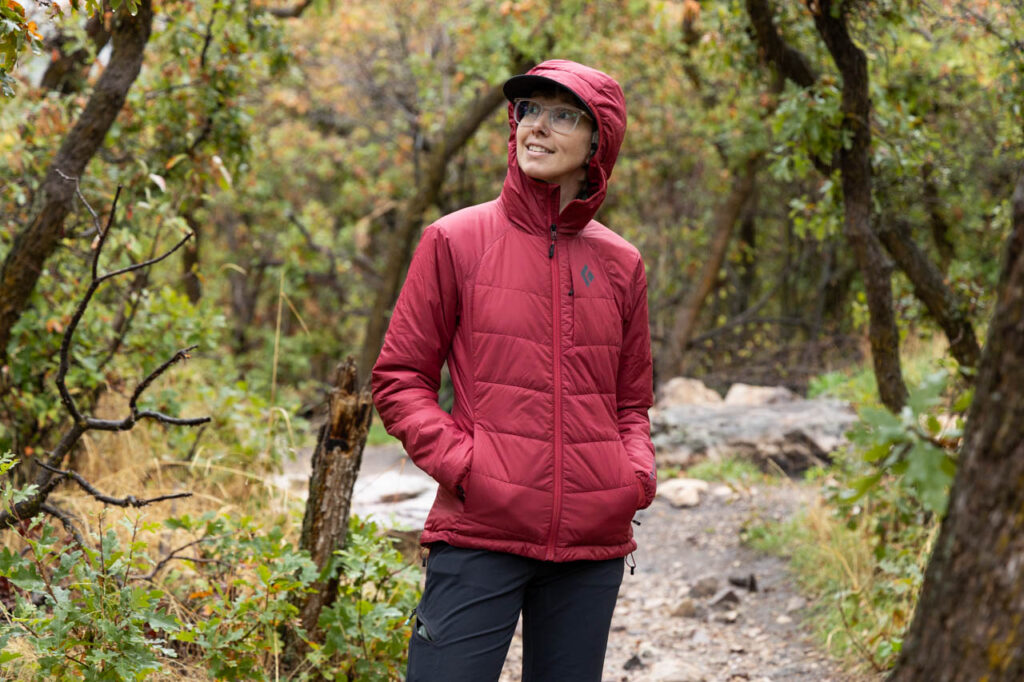
Black Diamond Solution 2.0 Jacket: Function Before Form
Weight: 11.5 oz (women’s XS)
Cost: $249
At first glance, the Black Diamond Solution Jacket may not look like much. It’s available in a few classic colors, doesn’t sport trendy styling, and baffles aren’t stitched in any unique configurations. But I was surprised and delighted to find that this weather resistant, windproof jacket that easily acts as a lightweight outer layer or a cozy mid layer was functional as all get-out.
That’s because it’s both water resistant (I stayed dry on an hour-long drizzly hike in Utah) and blocks strong breezes, but is also anything but bulky, so it fit seamlessly under a shell. I first tested it on a chilly hike when temps were close to freezing and while it got a little too sweaty on the long uphill climb, I kept it on because it was so good at blocking the cold wind.
It’s on the fitted side, but not TOO fitted, and the women’s cut is more aggressively hour-glass shaped than other options, so may be a good choice for curvy ladies. The outer fabric feels so soft and lightweight and it hardly felt like I had anything on at all. In fact, it moved with me whether or not I was wearing a pack, even though it doesn’t really have any stretch. It was impressively warm for its weight and highly packable.
The hem has an adjustable bungee, and the stretchy cuffs are silky soft and excellent at sealing out wind and moisture without being too tight or restrictive. Plus there are two zippered hand pockets and a zippered chest pocket and a bungee in the hood that kept it firm in place while hiking. There’s a hooded version of the jacket available and a non-hooded design that’s great for layering. Plus, it packs up neatly into its own pocket for portability.
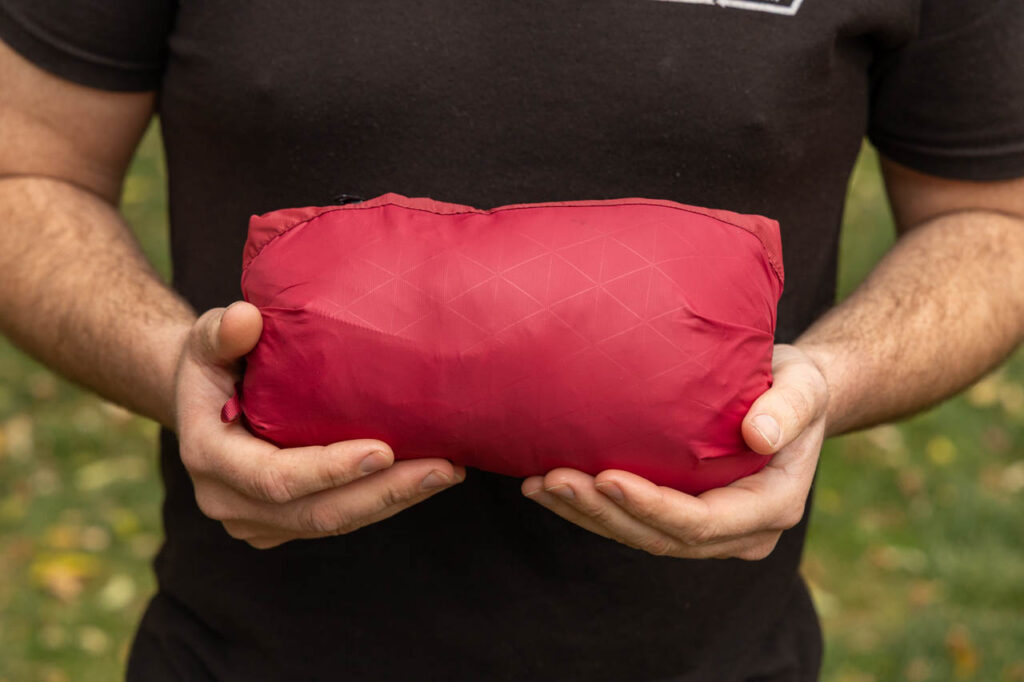
How it’s sustainable: The Solution Hoody is filled with PrimaLoft Gold with Cross Core (an Aerogel-infused insulation) for better warmth at the same weight and packability as older versions of the jacket (even though it looks almost identical). Insulation is also made from 100% post-consumer-recycled PET and “Produced Using Reduced Emissions.” The inner and outer materials are also made of recycled materials.
Size, Weight, Colors: It comes in a S to XL for men and an XS to XL for women. There are a few color options for both.
Pros
- Stuffs into its own pocket
- Weather resistant
- Easy to layer
- Hoodless design available
- Comfortable fit
- Warm for its weight
Cons
- Pockets not as accessible with a hip belt
- Not size-inclusive
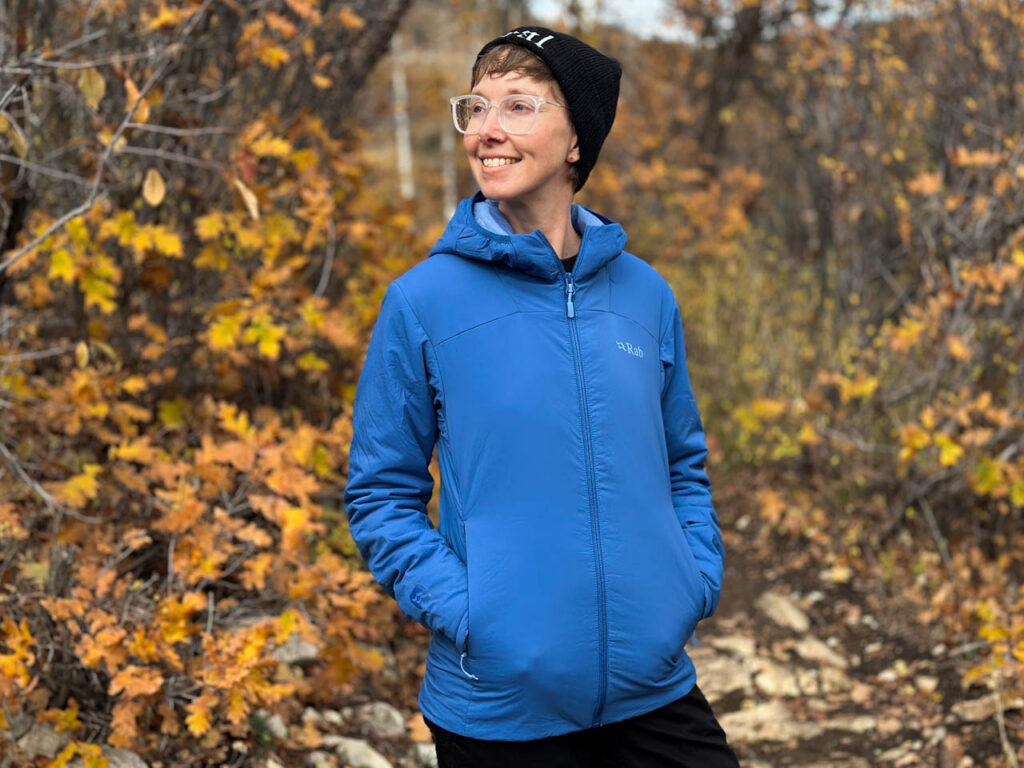
Rab Xenair Alpine Light Jacket: The Fitted Midlayer
Weight: 9.5 oz (women’s XS)
Cost: $240
If there’s one jacket I’ll reach for when I want a more svelte silhouette, wether I am throwing on a jacket as an outer layer or trim midlayer, it’s probably going to be the Rab Xenair Alpine Light. After all, it’s low-bulk, more fitted than most other options we tested, but still plenty warm and ultra packable.
The inner fabric is nice and slick for easy on-off even when wearing layers that tend to cling and catch, but the exterior (water resistant) fabric feels more durable than some of the softer-to-the-touch options we tested, which is always a plus. It has a bungee in the slightly longer hem, the hood, which is partially elasticated, feels comfortable on, and during a cloudy fall hike in 45ºF temps, I stayed almost too warm with a baselayer and sweater on underneath.
Like most jackets, it features two zippered hand pockets, but also an interior zippered chest pocket, which is nice for storing snacks or cell phones when it’s really cold. The cuffs are just snug enough to seal out the wind but are super stretchy and comfy with a wide, soft elasticated panel on the underside. Though it’s moderately fitted, it still offers enough room underneath for slim layers, but if you prefer bulky layers, you may want to size up.
Also cool: The PrimaLoft® Gold Active+ insulation is lighter in hot spots like the armpits to aid in breathability and help regulate your body temperature during activity, but still insulates when you’re at rest. Indeed, I kept the jacket on when hiking uphill longer than I would have other jackets. It also packs up into its own tiny pocket for easy portability.
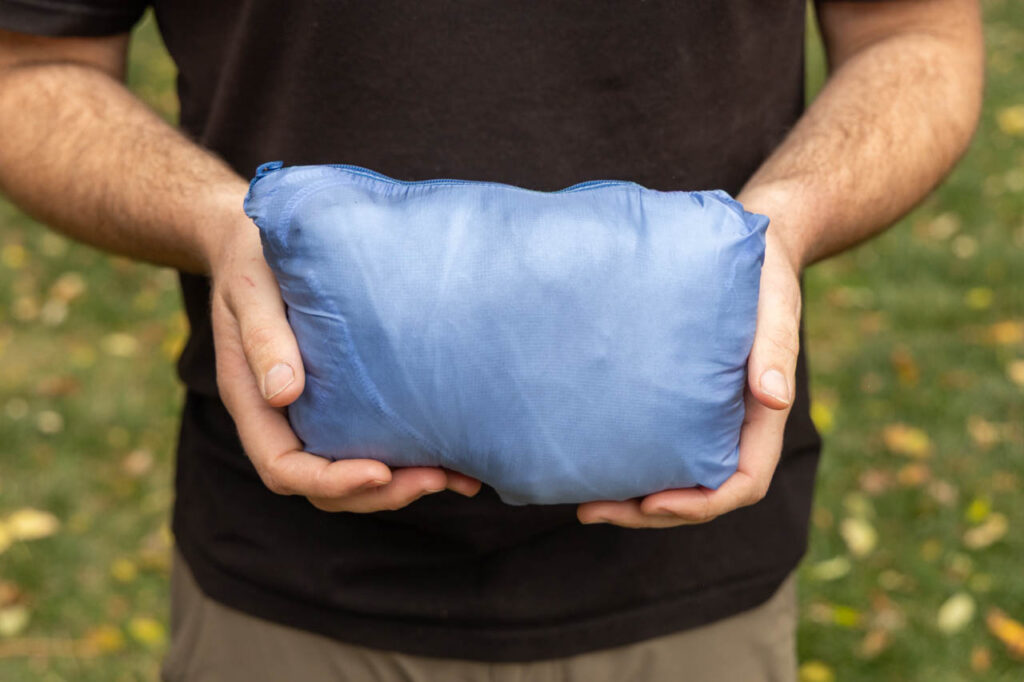
How it’s sustainable: Over half the jacket is made with recycled materials. Rab also publishes a “Material Facts” label for every product for full transparency and an annual impact report with goals to reduces emissions substantially. They also have a robust repair program.
Sizes Available: XS-3XL for women, S-3XL for men. Brights and neutrals are available.
Pros
- More size inclusive
- Extremely lightweight
- More fitted
- Internal chest pocket
- Designed for breathability during movement
Cons
- Only jacket without a zipper guard at the chin
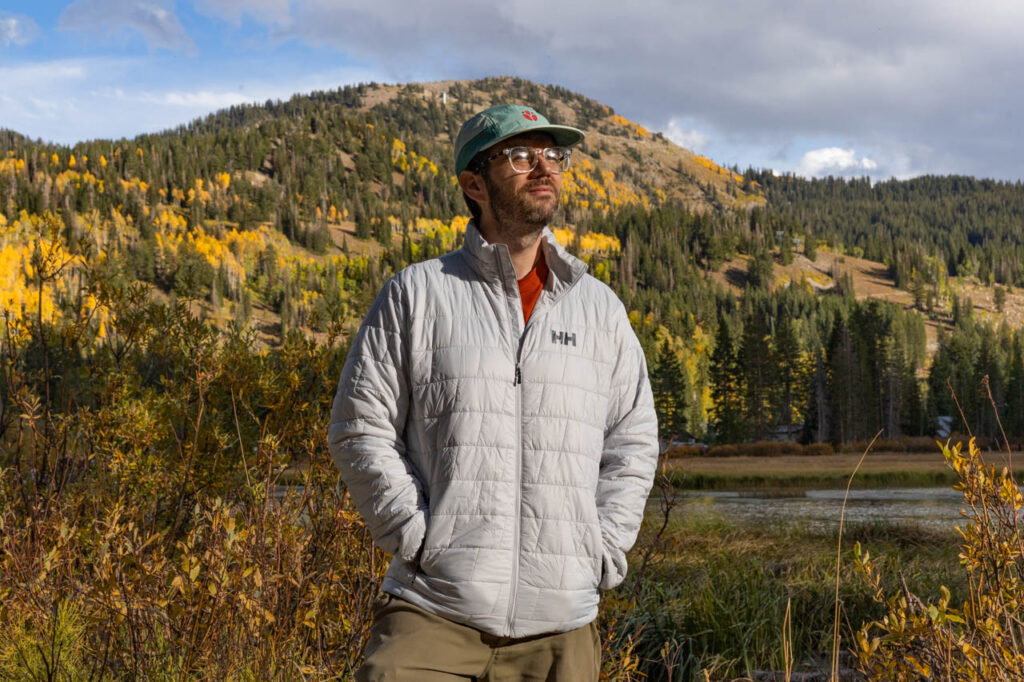
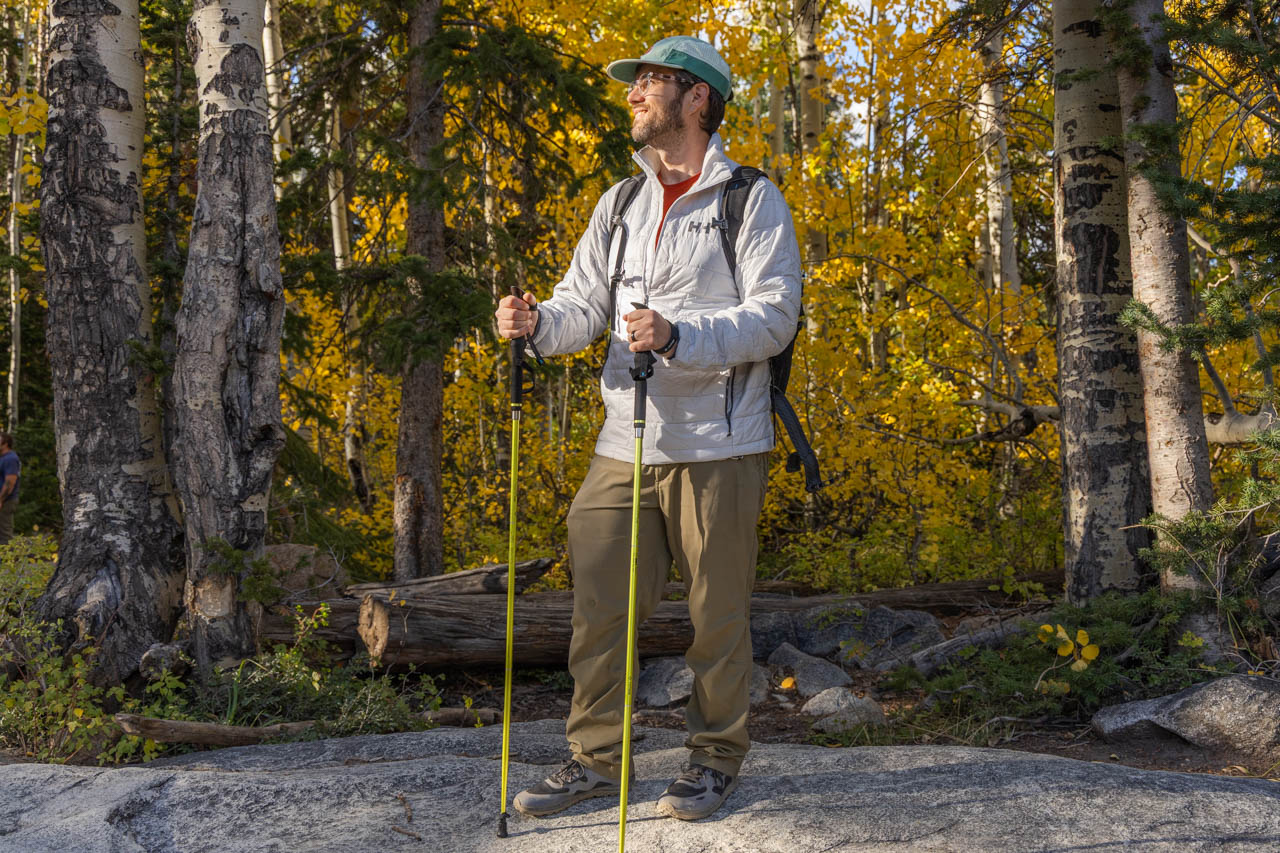
Helly Hansen LIFALOFT Insulator Jacket: The Town to Trail Layer
Weight: 12 oz (men’s M)
Cost: $220
Looking for a lightweight, packable jacket that’s robust enough to stave off the chill on cool nights when backpacking (or during long shady fall descents)? This is the one. Updated LIFALOFT insulation (HH’s proprietary insulation) offers a better warmth-to-weight ratio than older styles (including 40% more loft for the same weight, to be precise), plus there are elasticated cuffs, a bungee in the hem, and it’s available in hooded versions, too (although Josh loves the collar for neck warmth).
It’s only lightly fitted, but there’s enough room underneath for a fleece or hoodie. It kept Josh warm on a recent chilly fall hike and when sitting around doing nothing in 50º temps at an outdoor festival. A highlight: the front side of the pocket interior is micro fleece lined for extra coziness.
On various cool-weather hikes it breathed well and the elasticated cuffs weren’t too tight and sort of tucked themselves up under the sleeves, which made for a sleeker appearance. In fact, it was Josh’s favorite jacket simply because of the cut and how it fit. Indeed, it’s become his go-to jacket for everything from grocery runs to chilly hikes.
It’s sleek enough for everyday wear and perfect for chilly fall hikes or layered under more robust jackets on winter days. Plus, it’s soft to the touch and comfy enough to want to wear all day. When not in use it stuffs easily into its own stretchy pocket for portability. It’s lightly water resistant, but don’t expect to stay dry in more than a few minutes in a light rain.
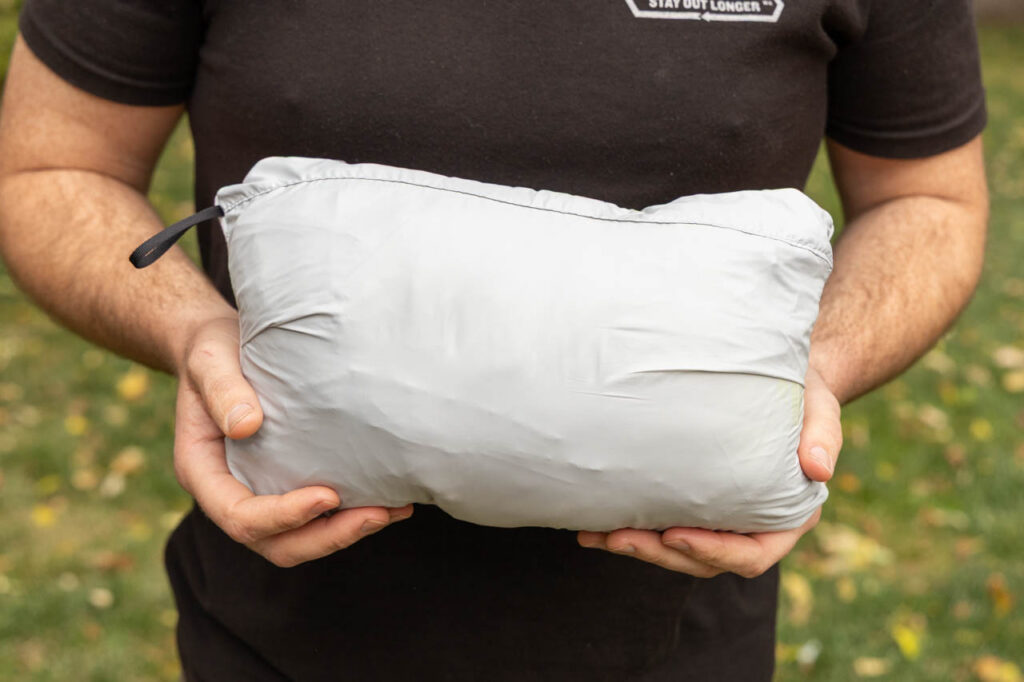
How it’s sustainable: the outer material, lining and insulation is Bluesign approved (Bluepass certified), uses 100% recycled insulation, and has a recycled ripstop nylon outer fabric.
Size, Weight, Colors: It comes in a S to XXL for men and an XXS to XL for women. There are a few color options for both.
Pros:
- Impressively light
- Warm for its weight
- Sleek appearance
- Soft to the touch
- Great for layering
Cons:
- No chest pocket
- Not very size inclusive
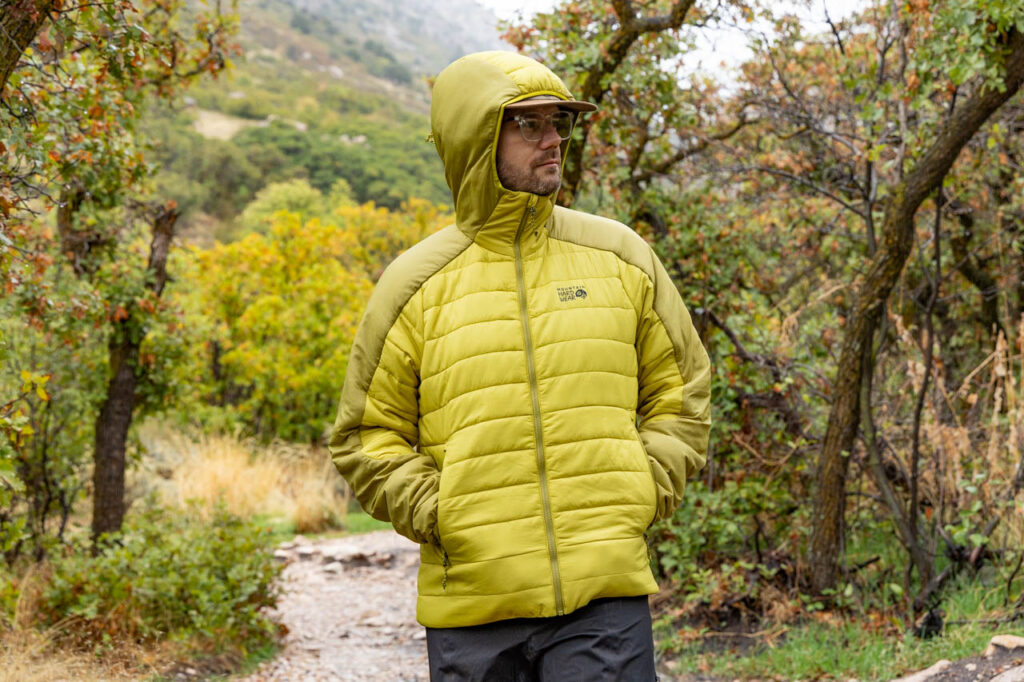
Mountain Hardwear Free Element Jacket: The Down-Like Layer
Weight: 14.2 oz (men’s M)
Cost: $220
For the perfect cool weather jacket that’s soft, cozy, and impressively packable, check out the MHW Free Element. The fabric feels oh so buttery soft and light and the synthetic sheet insulation is so silky soft and light it feels like down. That made it a pleasure to pull on anytime there was a chill in the air on recent fall hikes and backpacking trips––and made it irresistible to roll between fingers.
Plus, it’s comfy. The wide cuffs are soft and stretchy and just snug enough to seal out wind without digging in. There’s an adjustable bungee on the back of the hood––the only jacket we tested with this feature––but the hood fit so well Josh rarely used it. Bungees in the pockets adjust the hem and there are key clips on the ends of both for securing valuables. There’s an interior chest pocket, too, and hand pockets are accessible when wearing a hip belt.
The jacket breathed well on cool hikes, but is only lightly water resistant, so plan to pack an ultralight rain jacket if there’s much precipitation in the forecast. It even packs tidily into its own pocket.
Like plenty of Mountain Hardwear apparel we’ve tested over the years, this jacket is sized and cut for layering. There’s plenty of room for a bulky fleece or hoodie underneath and material is slick enough that layering another jacket like a shell on top is absolutely feasible. In any case, don’t be tempted to size up––even folks with long arms will likely find their usual size fits beautifully (though if you prefer a more fitted look, size down).
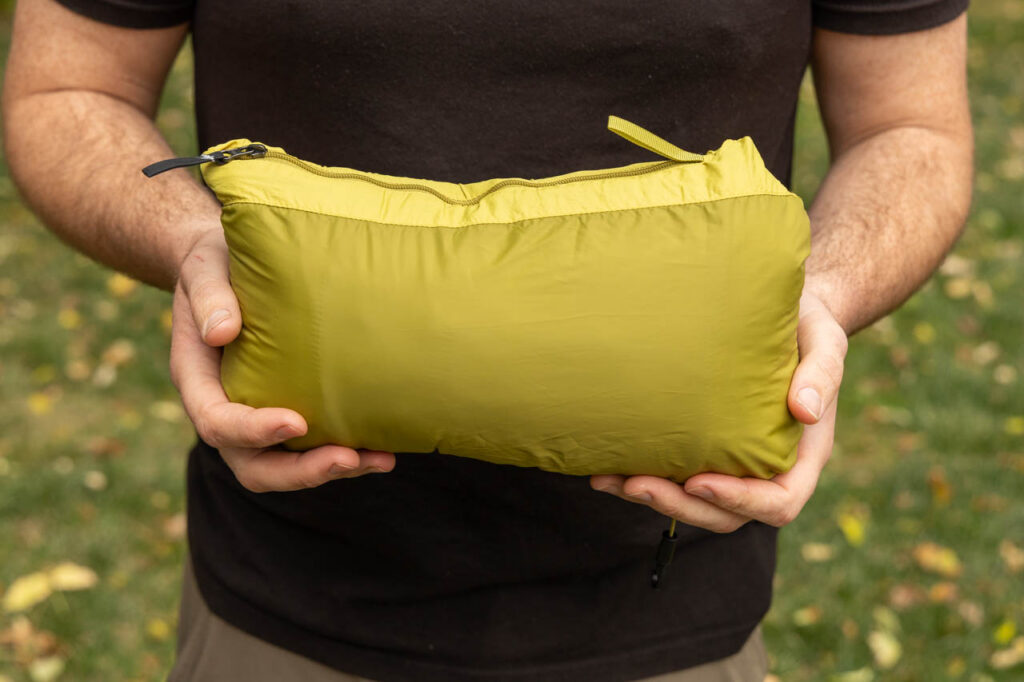
How it’s sustainable: Made of 100% recycled nylon.
Sizes Available: XS–XL for women, S–XXL for men. Available in a handful of colors, neutrals and brights.
Pros
- Silky soft fabric
- Compressible
- Interior chest pocket
- Stay-put hood
- Feels similar to down
Cons
- Not size inclusive
- Runs large
Bottom Line
There are plenty of ultralight, packable insulated jackets to choose from out there. These are just some of our favorites after testing plenty of options over the years. Plus, they’re more sustainable, come from reputable brands who stand behind their products, and should last you for many, many years to come. Just remember to take care of them, repair instead of replace, and then get out there and wander on, no matter the weather.