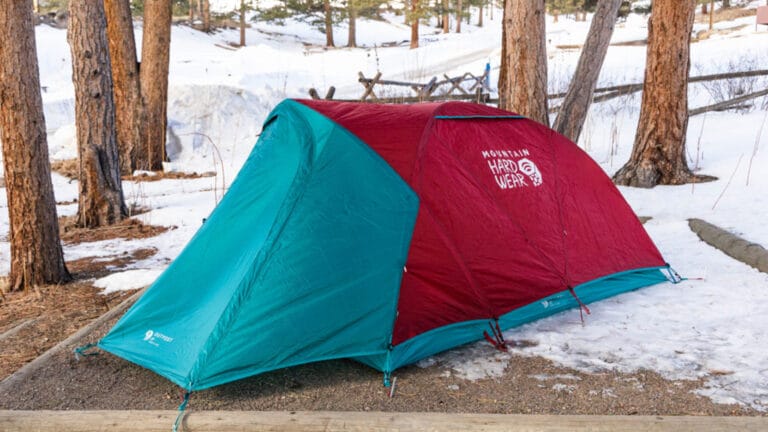
The Ultralight Backpacking Tent Showdown: Freestanding vs Trekking Pole Pitch
In the market for an ultralight backpacking tent? Why wouldn’t you be? After all, who doesn’t want a tent that packs up smaller, weighs less, and is just as roomy and comfy as its more conventional car camping counterparts? Fortunately, if you’re looking to trim weight from your pack, there are a few types of shelter options available, including freestanding and trekking pole tents. But how do you decide?
Here are the main types:
- Tarp
- Bivy
- Freestanding/Semi-freestanding tent
- Trekking pole tent
The first two (tarp and bivy) are pretty niche and tend to appeal more to fast-packers than everyday ultralight backpackers since they are neither comfortable nor as protective, so we’ll skip over those.
But the last two? Freestanding/semi-freestanding and trekking pole tents? Now that debate can get heated.
After all, they each have their places, their pros, cons and fierce advocates. But if you’re new to ultralight tents or shopping for a new one (check out our favorite UL backpacking tents here), you may be wondering why you’d choose one over the other. Let’s break it down.
What’s the Difference Between Freestanding Tents and Trekking Pole Tents?
Let’s start at the beginning.
Freestanding Tents
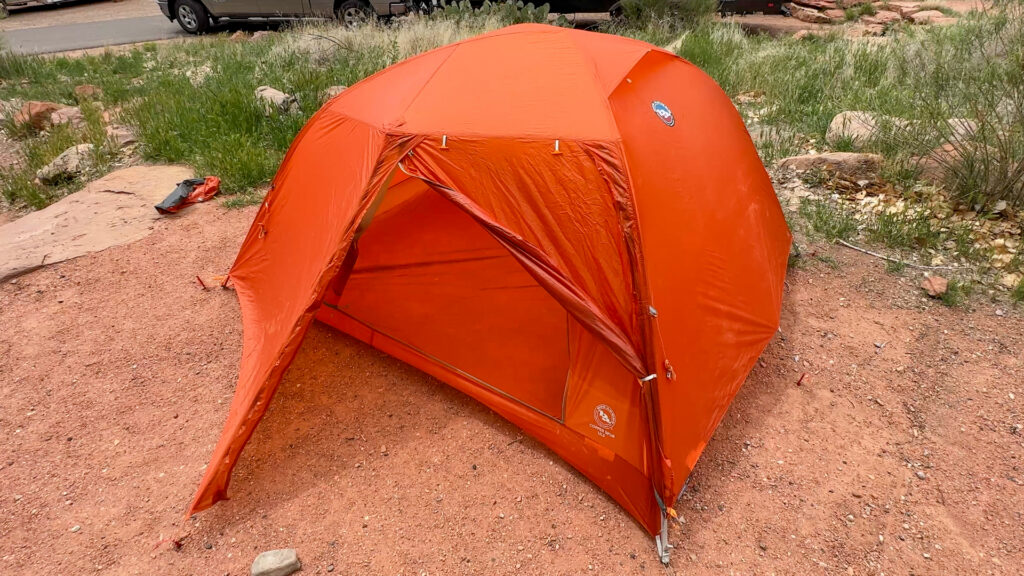
Freestanding tents are just what they sound like (I guess): tents that when pitched, stand freely and independently without needing tied or staked down in order to maintain a structure. That doesn’t mean you shouldn’t stake them, it just means they hold their shape even when they’re not staked thanks to conventional pole design.
These tents can be single-wall (no separate tent fly), have the fly attached, or have a removable fly that drapes over the main tent body (the most common setup).
Freestanding tents typically come with dedicated tent poles that insert into the corners of the tent body (picture an X shape). These turn it into a semi-rigid rectangular structure that you can pick up, shake out, move anywhere and it’ll hold its shape. Think the Copper Spur, pictured above.
Pros
- Come in all shapes and sizes (2p-6p+)
- Are the most versatile
- Can be pitched on any surface, including wood or rock
- Often have lots of pockets
- Can usually fully remove the fly for views + breathability
Cons
- Heaviest of the UL tent options
- Bulkiest of the UL tent options
Our Favorite Ultralight Freestanding Tents
- The Big Agnes Copper Spur: A bit heavy, but supremely spacious with extra storage.
Semi-Freestanding Tents
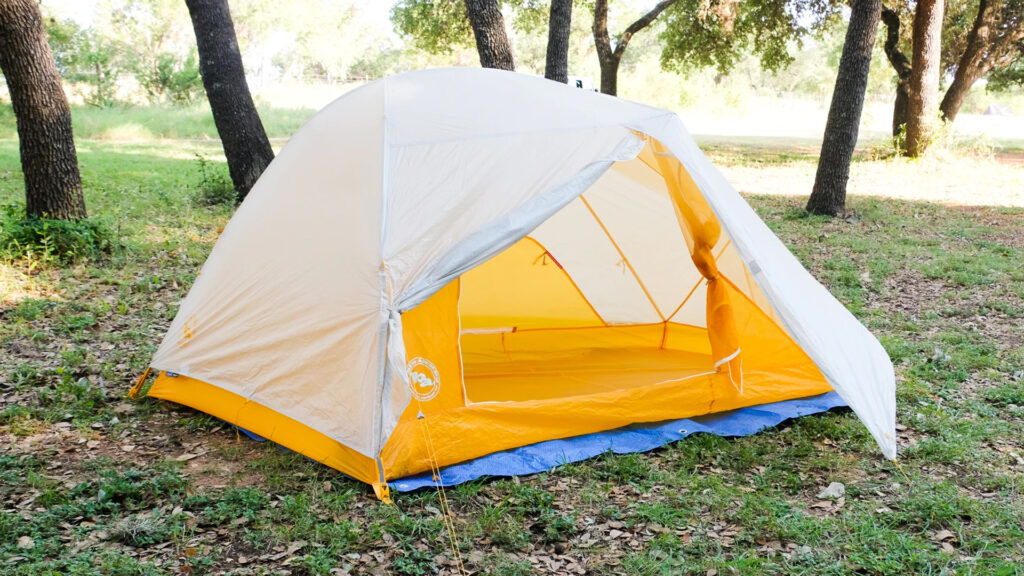
Similar to freestanding tents, semi-freestanding tents are probably the second most common backpacking tents these days thanks to their excellent balance of versatility, comfort, and light weight.
They often have a removable fly that clips in over the main tent body, but you might spot single-wall versions out there, too.
They usually come with dedicated tent poles that insert into at least three spots on the tent body: the two corners at the head and one point at the middle of the foot of the tent (picture a Y shape). Three poles instead of four reduces a bit of weight and create a semi-rigid rectangular-ish structure that you can still pick up, shake out, move anywhere and the shape and structure will hold (but the corners of the feet will be a little floppy).
That’s usually not too big of a deal once you add in sleeping pads that fill out the floor and corners, but those corners still usually need to be staked out for the best protection from inclement weather and the most interior space. Think: the Big Agnes Tiger Wall, pictured above.
Pros
- Come in all shapes and sizes
- Are highly versatile
- Can be pitched most places
- Often designed with plenty of pockets
- Can usually fully remove the fly for views + breathability
- Lighter than fully freestanding options
Cons
- Heavier than some UL tent options
- Poles can be bulky to pack
Our Favorite Semi-Freestanding Tents
- Big Agnes Tiger Wall: Packs down small, made of responsible materials.

Trekking Pole Pitch Tents
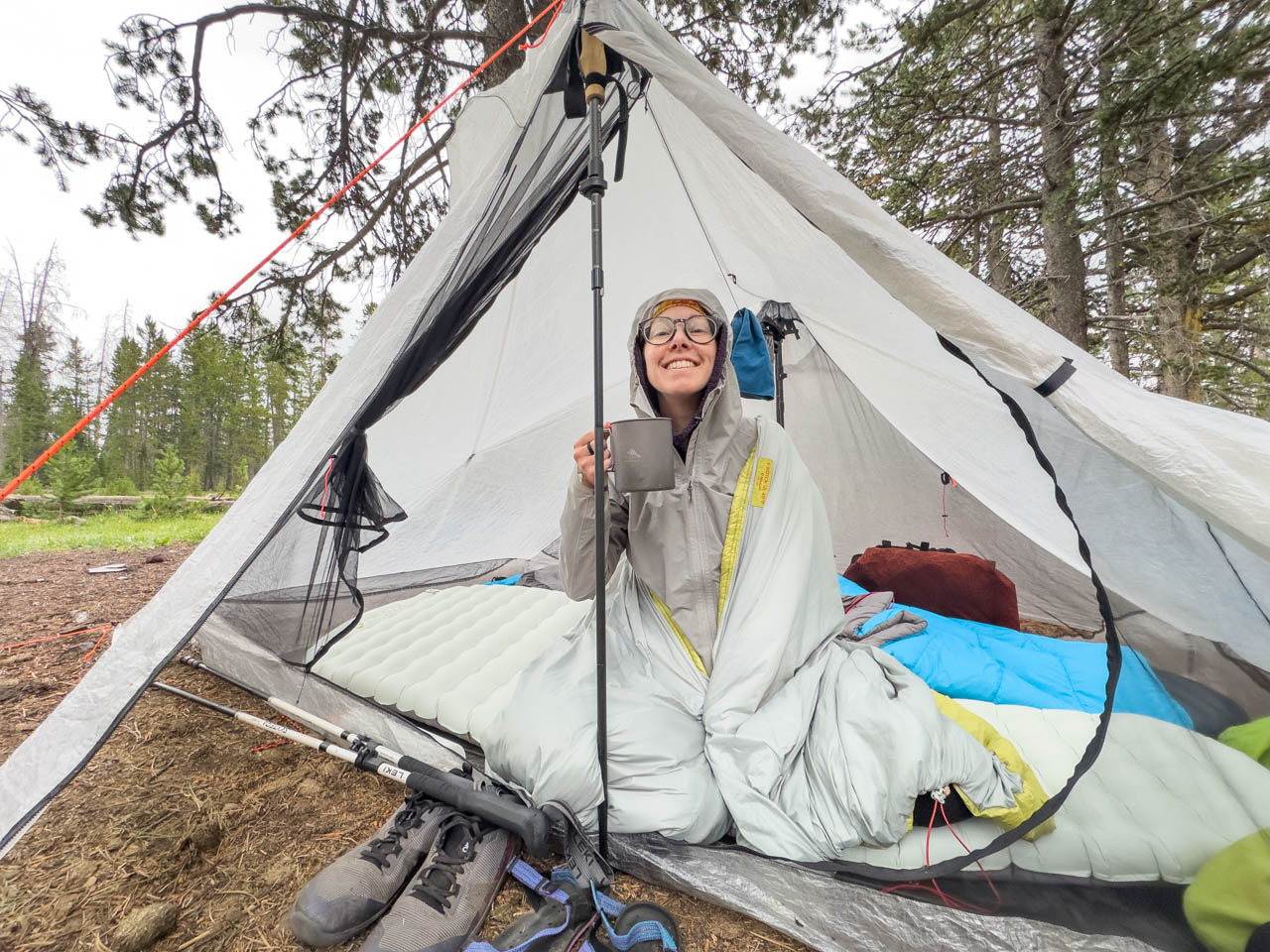
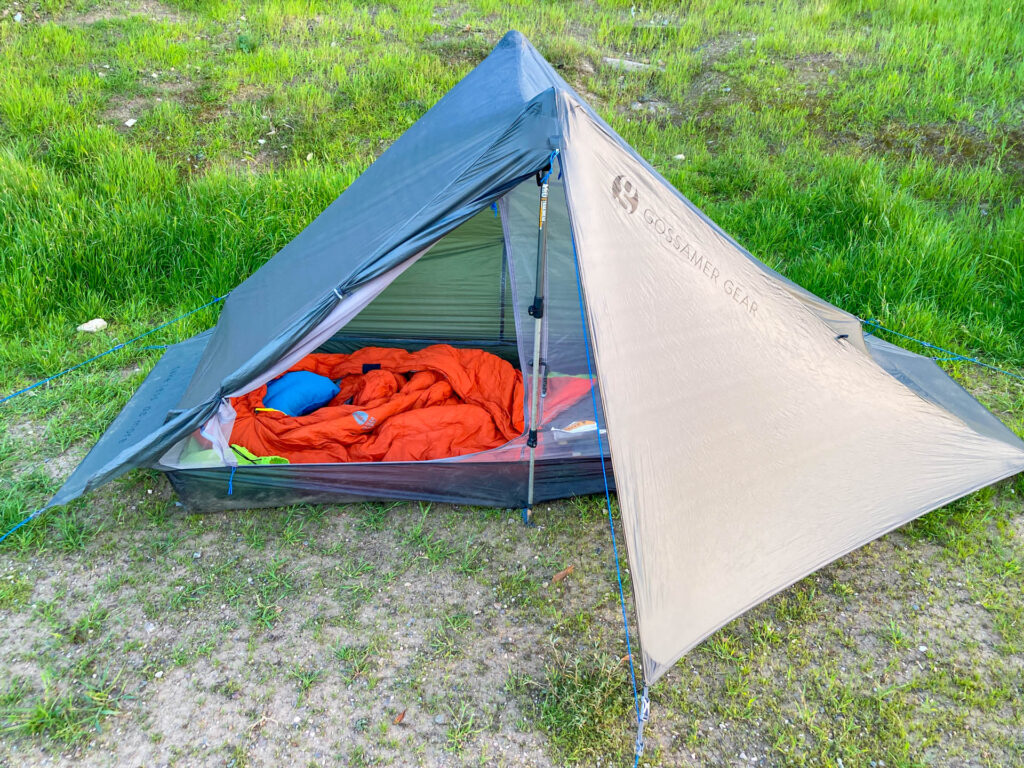
Trekking pole tents are the most ultralight tents on the market, generally speaking. That’s because they pitch with just your tracking poles instead of dedicated tent poles––though you can buy support poles separately with some tents if you don’t hike with ultralight trekking poles.
Frequently these tents feature single-wall designs, which sometimes get a bad rap for interior condensation buildup, but that depends on where you live and what seasons in which you’re backpacking. That said, they’re the most popular among dedicated ultralighters because they’re always the lightest tent option. Always.
Typically, these tents have an A-frame shape, which makes for tons of headroom in the middle of the tent but less at the head and feet. Instead of a typical Y- or X-shaped pole structure, they utilize two trekking poles, one erected on either side of the tent near the doors, to prop up the structure.
From there, each corner needs to be staked out. Unlike the other tent styles above, staking is absolutely necessary, otherwise there’s nothing to keep your trekking poles, and thus your tent, upright.
That also means the tent only has a structure when it is fully pitched. Think: the Hyperlite Unbound tent pictured above.
Pros
- Comes in several sizes (1-person to 3-person generally)
- The lightest option by far
- Lots of interior head space for the weight
- Packs down the smallest
- Available in many different materials
Cons
- Not as versatile in all locations
- Can be more susceptible to wind
- It can be tricky to fly with trekking poles
- Usually can’t remove the fly
- If planning a day hike from base camp, you will have to collapse your tent if you want to take your poles with you.
Our Favorite Ultralight Trekking Pole Tents
- Zpacks: The lightest we’ve tested
- Hyperlite Unbound: Super light, super sleek (we’ve also tested this one)
- Gossamer Gear: Plenty roomy and budget-conscious (read the review)
- Durston: A bit heavier but with tons more space and budget-friendly (read the review)
When Should You Choose Which Tent?
But which is better? Or here’s a more appropriate question: Which is right for you? Because the tent you choose will depend as much on personal preference as where you often camp and backpack. Here’s a breakdown of when and where you might want to consider each.
Freestanding Tents
- For the easiest, most straightforward and classic pitch
- When camping in areas where staking may not be an option (like on platforms, smooth rock face, sand, etc.)
- When you prioritize storage options and specific livability space
- When you regularly experience foul weather
- If you like to be able to leave the fly off on pleasant evenings
Semi-Freestanding Tents
- For the best balance of versatility and weight savings
- When camping in areas where staking may not be an option (like on platforms, smooth rock face, sand, etc.)
- When regularly camping in mixed weather conditions
- If you don’t hike with trekking poles
- If you like to be able to leave the fly off on pleasant evenings
Trekking Pole Pitch Tents
- For the absolute lightest weight possible
- For an excellent space:weight ratio
- When there’s limited room in your pack
- It you already hike with trekking poles
What Type of Tent Should You Choose?
So which is the right choice? Honestly, I always choose a trekking pole pitch tent when backpacking because I want the lightest gear imaginable that takes up the least amount of space in my pack. I’m happy to accept any trade-offs that come with it. Plus, I already hike with ultralight trekking poles, so why carry more weight than I need to by packing single-purpose tent poles?
I’m also willing to improvise if I do come across an area where I’m not able to stake my tent out (like finding sturdy trees or heavy rocks to guy out to), but honestly, that’s only happened a couple of times: when backpacking in Isle Royale National Park where most campsites requested you camp on wooden platforms and on a chickee in the Everglades when I camped on a platform over the water. Both times I had a semi-freestanding tent but could have made a trekking pole pitch work (or simply cowboy camped).
But honestly, base weight is king around my house, so I’ll always choose the lighter option. I’ll often choose the trekking pole pitch for car camping, too, simple because of how roomy they are and how little space they take up in my car.
If you have the budget or find a great deal on a used tent, having more than one style is a great option. But if only one is in the cards, hopefully we helped you choose the one that’s right for you. Wander on.