Read This Before You Go Backpacking in Barefoot Shoes!
Can you go backpacking in barefoot shoes? Are minimalist shoes safe for backpacking?
Short answer: Heck yes! We do it regularly.
Long Answer: Whoa! Slow down there, buddy. You’ve got to work your way up to it. You absolutely should NOT throw on a pair of barefoot shoes for the first time and head out on a multi-day hike. You must have spent the last several months hiking and living in barefoot shoes to even consider it plus keep in mind where you’re hiking and how heavy your pack is. Bottom line: it’s nuanced.
But if you’re thinking you might want to start backpacking in barefoot shoes, read this article first. Because we didn’t just call on our own experience for this one, we asked experts whether barefoot shoes were good for backpacking and how to do it safely.
First Things First: Barefoot Mechanics
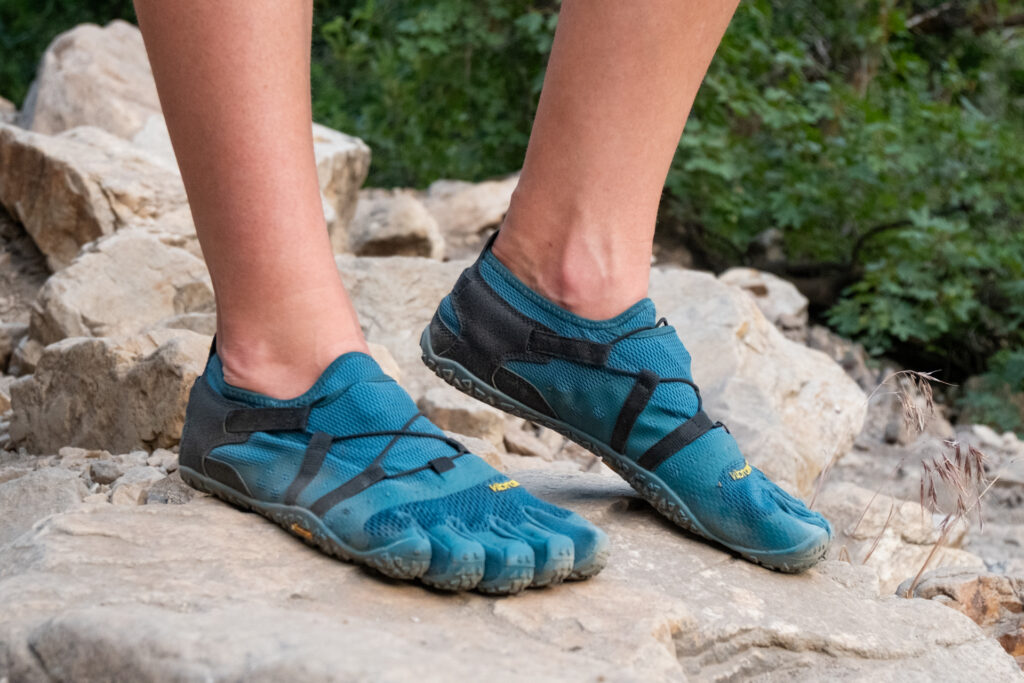
Let’s get one thing out of the way right up front: feet are made for walking. Humans have been trekking and migrating long distances and summiting mountains in barefoot shoes for centuries. Millenia. Of course, no one called them “barefoot shoes” at the time (they were just shoes).
But over the last 100 years, shoes have gotten more and more advanced and comfortable. Heels on everything from loafers to boots were introduced. Most shoes now feature a “drop” (when your heel is farther from the ground than your forefoot). Toe boxes got more narrow and restrictive. Thick foam soles were introduced. All in the name of comfort and competition.
Which is great! Who doesn’t want to go farther, faster, and with more comfort? But it all makes feet weaker and less capable in the long run, not to mention negatively impacts balance.
“Conventional cushioned footwear does a lot of the work the foot should be doing, and over time the foot gets weaker for it. Barefoot shoes let the foot work the way it was built to, which has real benefits for foot strength, arch integrity, ankle mobility, proprioceptive input, and the rest of the body effects on gait, glute activation, and posture,” says Dr. Andrew Gorecki, co-founder & CEO of MovementRx.
But there’s a caveat, Gorecki adds: “Barefoot shoes work brilliantly for hikers who have prepared their feet, transitioned gradually, and choose the right terrain. They can go badly for hikers who jump in cold, load too much pack weight too soon, or attempt technical terrain their feet aren’t ready for. The difference between the two outcomes is preparation and progression, not the shoes themselves.”
Indeed, he continues, “The shoes are not the risk. The mismatch between the load you place on the foot and the load that foot has been prepared for is the risk. Minimalist footwear simply removes the buffer that was hiding the mismatch,” Gorecki says. Translation: your feet have to build up to backpacking in barefoot shoes. And it takes a while.

Transition Slowly
If you haven’t read our guide to transitioning to barefoot shoes, go read it now. The long and short of it is this: if you haven’t already been wearing barefoot shoes for several months, don’t try backpacking in them yet.
“The mistake most hikers make is treating [barefoot shoes] as a gear change. It is not a gear change. It is a training program that happens to involve shoes,” Gorecki states.
And it takes time to train your feet and ankles, just like any other body part, and it happens slowly. It also takes longer than you may think because the parts of your foot respond at different speeds. “Your feet, calves, and Achilles handle what they’re prepared for, and preparation beats any theory about ideal form. Bone and tendon adapt slower than muscle, which is where people get hurt,” explains Dr. Zaki Afzal, a doctor of physical therapy and the owner of Optimize Physical Therapy and Performance.
So to prep your muscles, tendons and bones (in that order), follow Gorecki’s ideal timeline.
Transition Timeline
Here’s how to transition to barefoot shoes for backpacking.
- Weeks 1 to 6: Wear minimalist shoes for daily life like errands and standing at work.
- Weeks 6 to 12: Try short day hikes on smooth terrain with little to no weight in a pack. Start with a couple short miles and build slowly.
- Weeks 12 to 20: Add distance with light loads. Don’t add weight and milage in the same week. You can start attempting rockier trails toward the end if your feet feel OK.
- Weeks 20+: Start adding pack weight a little at a time (10% per outing)every week. Add in more technical, rocky, rooty trails slowly.
We waited at least a year after we’d be hiking exclusively in barefoot shoes to go backpacking in them. Because you should walk before you hike and hike before you backpack. And if you experience discomfort or the type of pain that makes you go, “that doesn’t feel right,” hit the pause button and go back a step in the process.
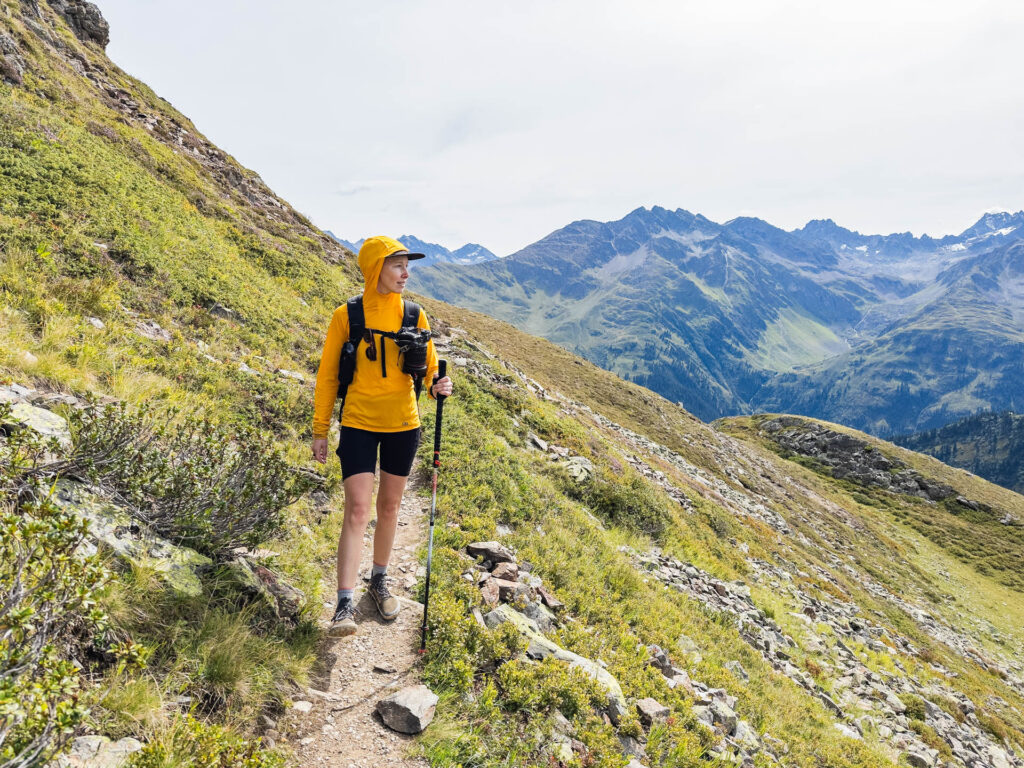
How to Tell if You’re Ready
Gorecki doesn’t clear his patients for hiking in minimalist shoes until they can do the following in them, so take this quick test to see if you’re healthfully on your way to backpacking in barefoot shoes:
- Do twenty five single leg heel raises, full range, with control, without any trunk swinging. “If the calf cannot handle twenty five reps standing still in your kitchen,” Gorecki states, “it will not handle four thousand loaded reps on a trail.”
- Complete thirty seconds of single leg balance trials with your eyes closed. “Removing vision forces the foot and ankle to do the proprioceptive work instead of leaning on visual input. Uneven trail in a thin sole demands exactly that,” he says.
- Single leg hopping for 60 seconds per leg with no discomfort.
Who Should Not Wear Barefoot Shoes (Or At Least Be Extra Careful)
Of course, not all feet are created equal. While most people can transition safely and successfully when doing it the right way, there are a few folks who should take extra care when transitioning to barefoot shoes or considering them at all:
- Anyone with prior stress fractures or low bone density should be more conservative with backpack weight and consider more supportive shoes for heavy trips.
- If you have a rigid high arch (pes cavus) your feet have poor shock attenuation. Consider avoiding heavy loads and extra minimalist shoes.
- Very mobile flat feet can fare well in minimalist shoes, but you may need a longer transition period because you’re asking more of the intrinsics to control arch position.
- Older hikers should to remember that tendon and bone adaptation slow with age, so plan to extend your transition timeline.
- Folks with a tight Achilles may need a longer transition time as minimalist shoes cut mechanical work at the knee by about 12 to 14% and raise it at the ankle by 17 to 25%. So there’s less knee-injury risk, but slightly more ankle and calf risk if you switch too fast according to Afzal.

Weight is Everything
After preparing your feet, calves, and Achilles, “Load management is king,” says Azfal. Meaning what you put on your back should be approached with as much care and consideration as what you put on your feet.
“Twenty percent of body weight is my ceiling for total pack weight for anyone in minimalist footwear,” Gorecki recommends. That’s a smidge lower than what conventional backpacking guidance has historically been (30%), but makes sense for barefoot shoes since there’s no cushion to absorb more heavily loaded steps and often harder heel-strikes as you become fatigued throughout the day.
Translation: minimalist shoes are best paired with minimalist backpacks. As in, ultralight (these are our favorite ultralight backpacks). If you’re a larger human, you will naturally be able to carry (and your feet handle) more weight comfortably, but higher body weight hikers should abide by a cap when it comes to pack weight instead of a straight percentage. Small humans like myself should be far more careful about the load you’re carrying. After all, at 108lbs, I reach that 20% benchmark pretty quickly.
Fortunately, I am an ultralight backpacker and my base weight is regularly under 10lbs. But if you carry a more traditional, heavier pack, especially for long distances over days or weeks, extreme minimalist footwear might not be for you. Consider more cushioned shoes with zero drop and wide toe boxes instead.
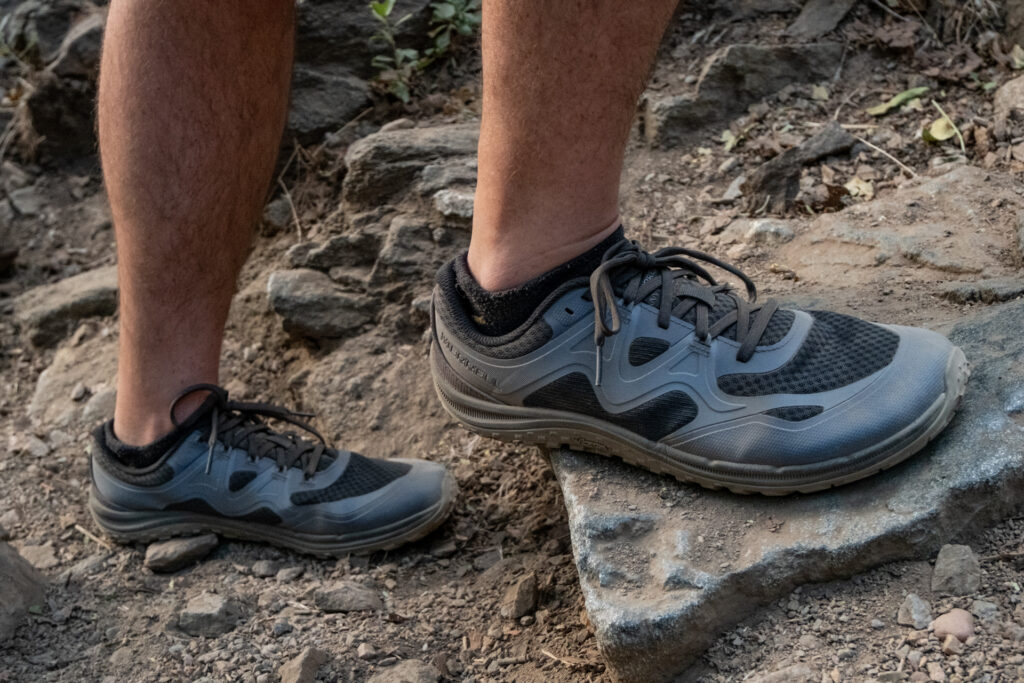
Keep Trail Surface in Mind
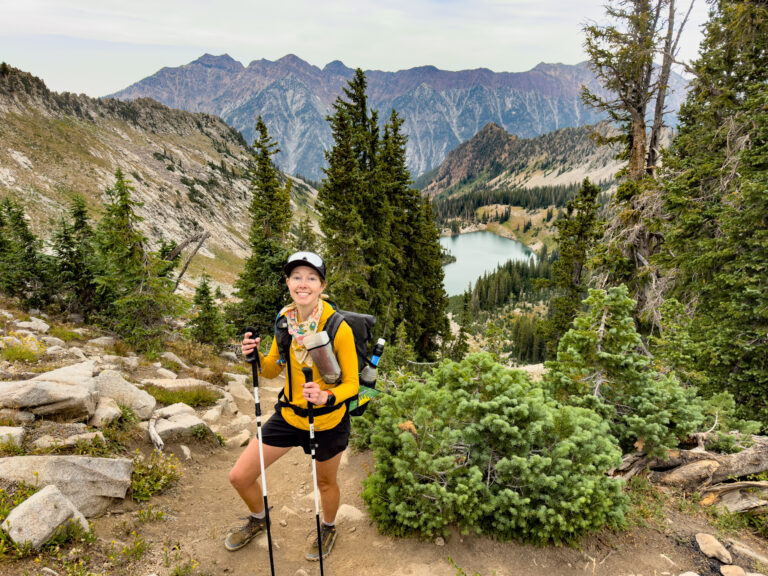
I’ve backpacked in barefoot shoes on all types of trails: muddy, wet, dry, rocky…the list goes on. And for most hikes, I’m fine in highly flexible soles. But I’ve been hiking in barefoot shoes for years, so my feet are strong and can take it. That said, I’ll occasionally grab a pair of shoes with a denser, more protective sole when most of a really long or multi-day trail will be rocky. I’m talking doll head-sized, baseball or football-sized rocks. Those are brutal on feet.
But everyone’s feet are different. So if you’re bothered by gravel or rooty paths underfoot, choose a sole thickness that’s more comfortable for you. And if you’re just starting out, stick to smooth, groomed paths for several weeks then gradually introduce rougher surfaces as you build strength and tolerance.
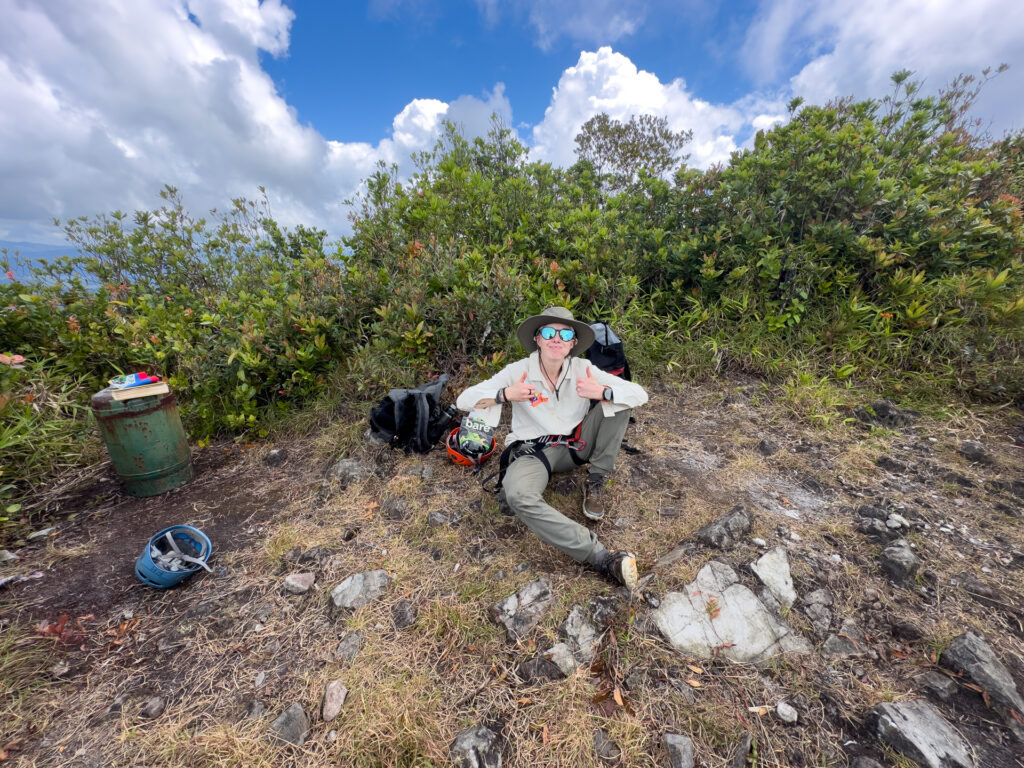
Distance Matters
On a recent trek through the jungle in Belize to hike Victoria Peak, the nation’s second-highest mountain, the trail wasn’t rough. It wasn’t rocky or rooty. But it was long. And steep. And difficult. The last several miles of the three-day, 34-mile trek, were brutal.
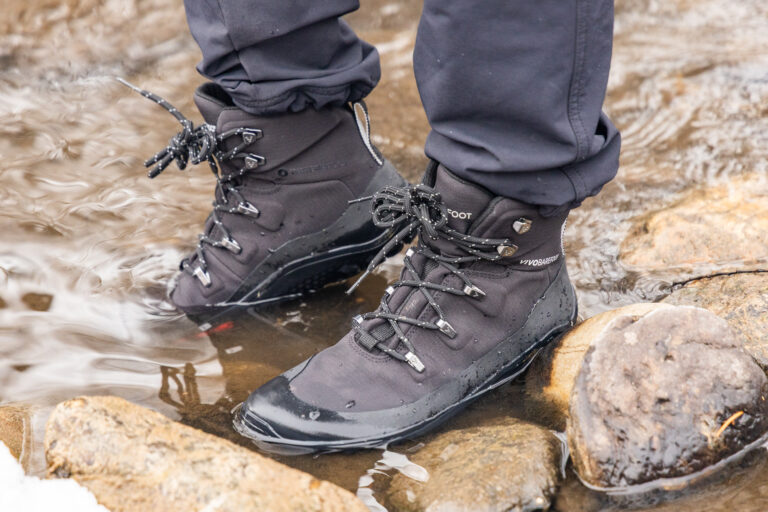
Josh’s feet hurt in more structured, cushioned shoes, too, but because I chose a pair of shoes that were super ultra flexible (Vivobarefoot Primus Trail), my feet were extra fatigued by the end of each day despite bringing along a cork ball to roll and release my feet.
So distance does matter––accumulative impact makes a huge difference––and when you’re logging big mile days, especially back-to-back, you may consider choosing a pair of barefoot shoes with a touch more rigidity. Training helps, too. Gradually log longer hikes once you’re fully transitioned until your feet are conditioned. That goes for hiking in any shoes, but is especially important in barefoot footwear.

Pro Tip: Bring a Backup Pair + Treat Your Feet
If it’s your first backpacking trip in barefoot boots or shoes, maybe start with a short route or a single overnight, then bring a backup pair of shoes on your first trip or two. Make them lightweight hiking sandals or comfy camp shoes. That way, if you get really uncomfortable you can swap your footwear and enjoy some relief. Soon you won’t need to, but don’t push it too hard on the first couple trips.
Also, use recovery tools. We often pack ultralight cork balls for the trail, but love our RAD Neuro Roller for after the hike. The soft spikes feel like a little massage and there are not only two large shapes and surfaces for rolling out your feet, but pop open the roller and there are two sizes of hard spheres inside that you can remove to really get into the muscles and fascia for some serious release.
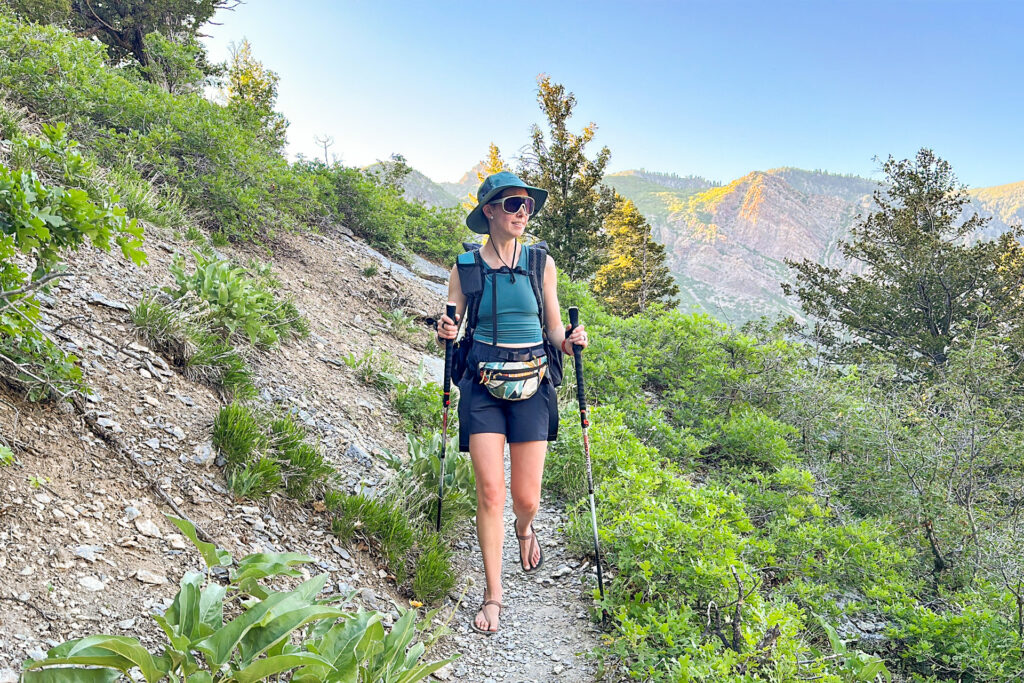
So Can you Backpack in Barefoot Sandals?!
Yup, you sure can. We’ve done it many times. We’ve even backpacked in barefoot sandals (but these are the best barefoot backpacking boots and shoes).
But you must abide by the rules when backpacking in minimalist footwear: transition very slowly, walk and perform everyday tasks first, hike on gradually more technical trails before you backpack, lower your pack weight, then venture forth on short trips before epic adventures.
Then wander on. In barefoot shoes, perhaps.