What to Wear Hiking: Sustainable Hiking Clothing for All Seasons!

New to hiking? Or just ready to level-up your hiking game? But not sure what to put on or how to best dress yourself for the outdoors? We get it; all the technical outdoor apparel out there can seem intimidating. But we got you. Here’s what to wear hiking in every season, plus some of our favorite hiking clothing from sustainable brands we love.
Warm Weather
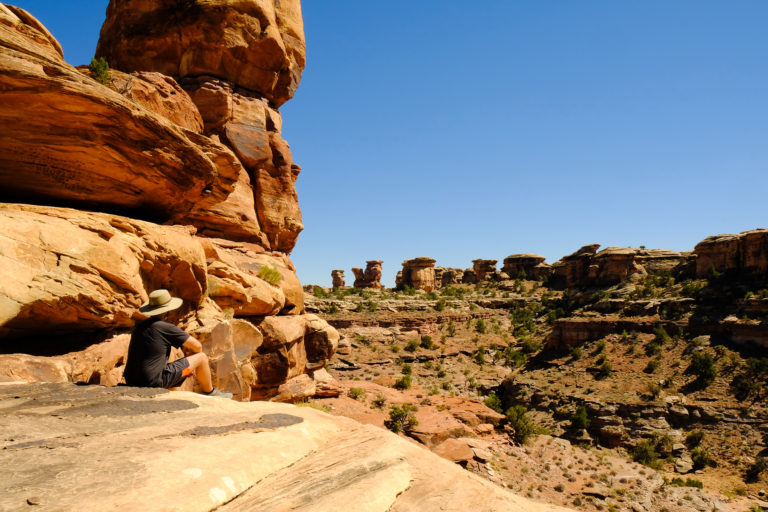
In the summer (or any time it’s warm), it’s much easier to dress for hiking. After all, you probably won’t have to worry about hypothermia unless you’re hiking at high elevation. So dress in what makes you comfy. Yup, even if that’s plant-based fibers like cotton, especially in dry climates where plant-based materials like that will dry out quickly if you get sweaty.
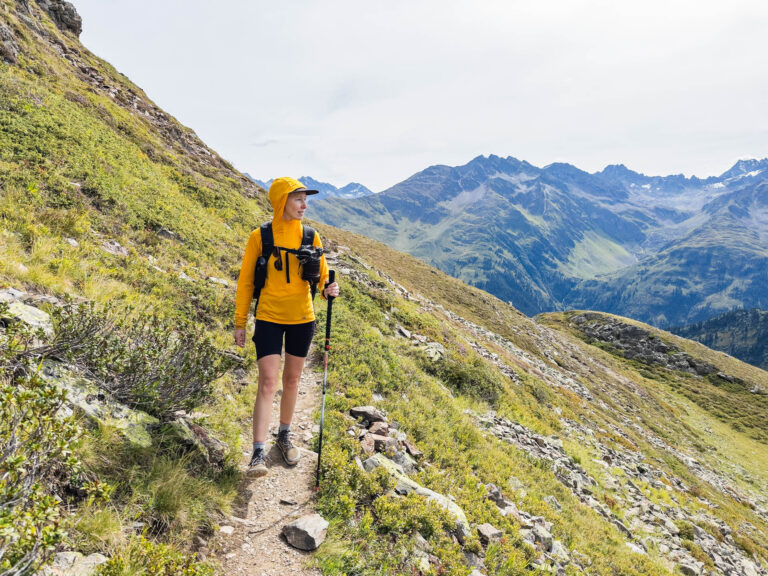
That said, don’t be afraid to still keep your skin covered, especially your shoulders and neck, with something like a sun shirt or hoody. But whether you choose a tank top or long-sleeve shirt, don’t forget the sunscreen for any exposed skin (and insect repellent)!
Pants
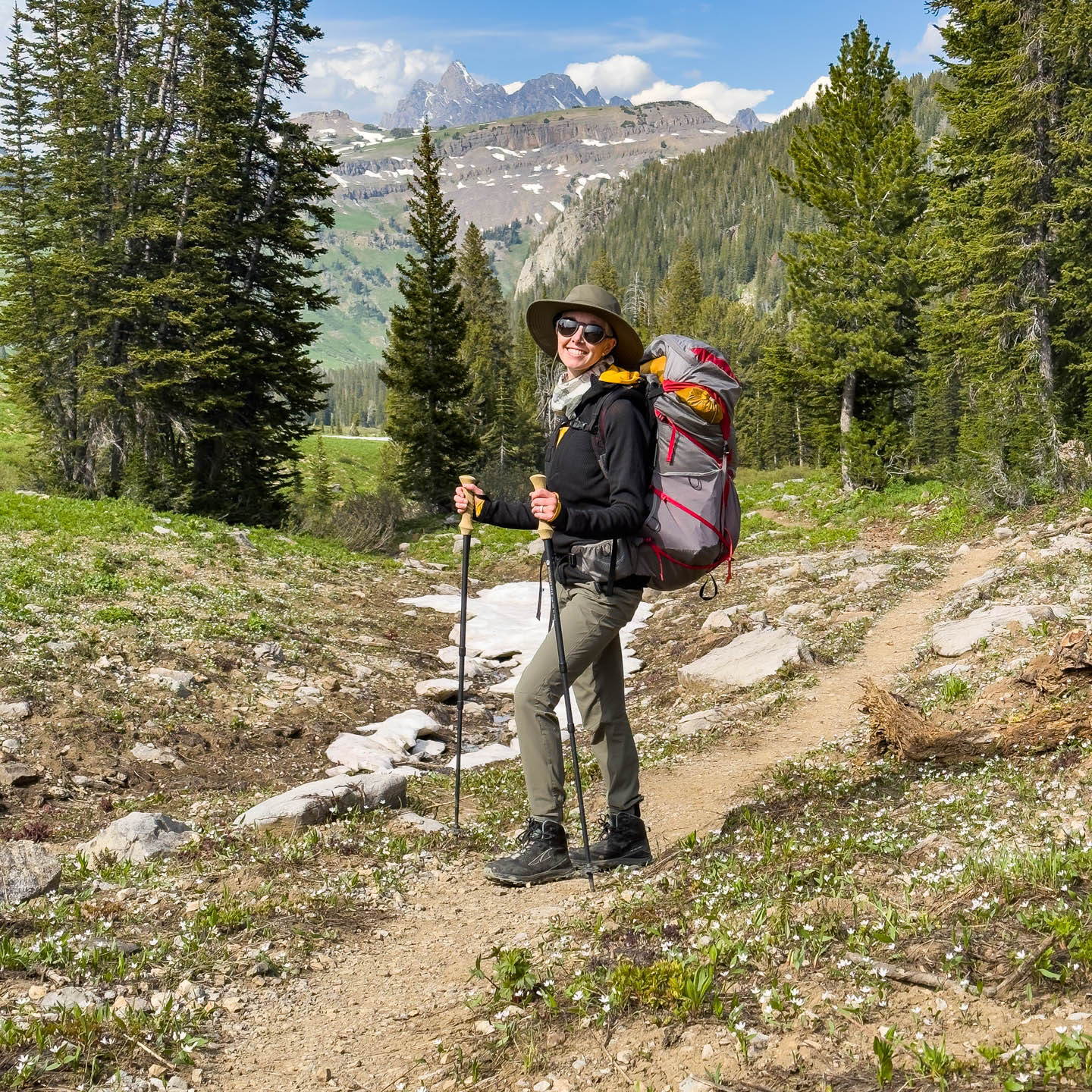
We rarely opt to wear pants when it’s hot out unless we’re expecting to have to do some bushwhacking or are in a region where ticks are an issue. But if you’re more of a pants person, look for ones that are lightweight and breathable so you don’t overheat when working hard hiking uphill. Bonus: pants mean you need less sunscreen to protect exposed skin.
Check out some of our favorite pants for hiking for men and women.

Shorts
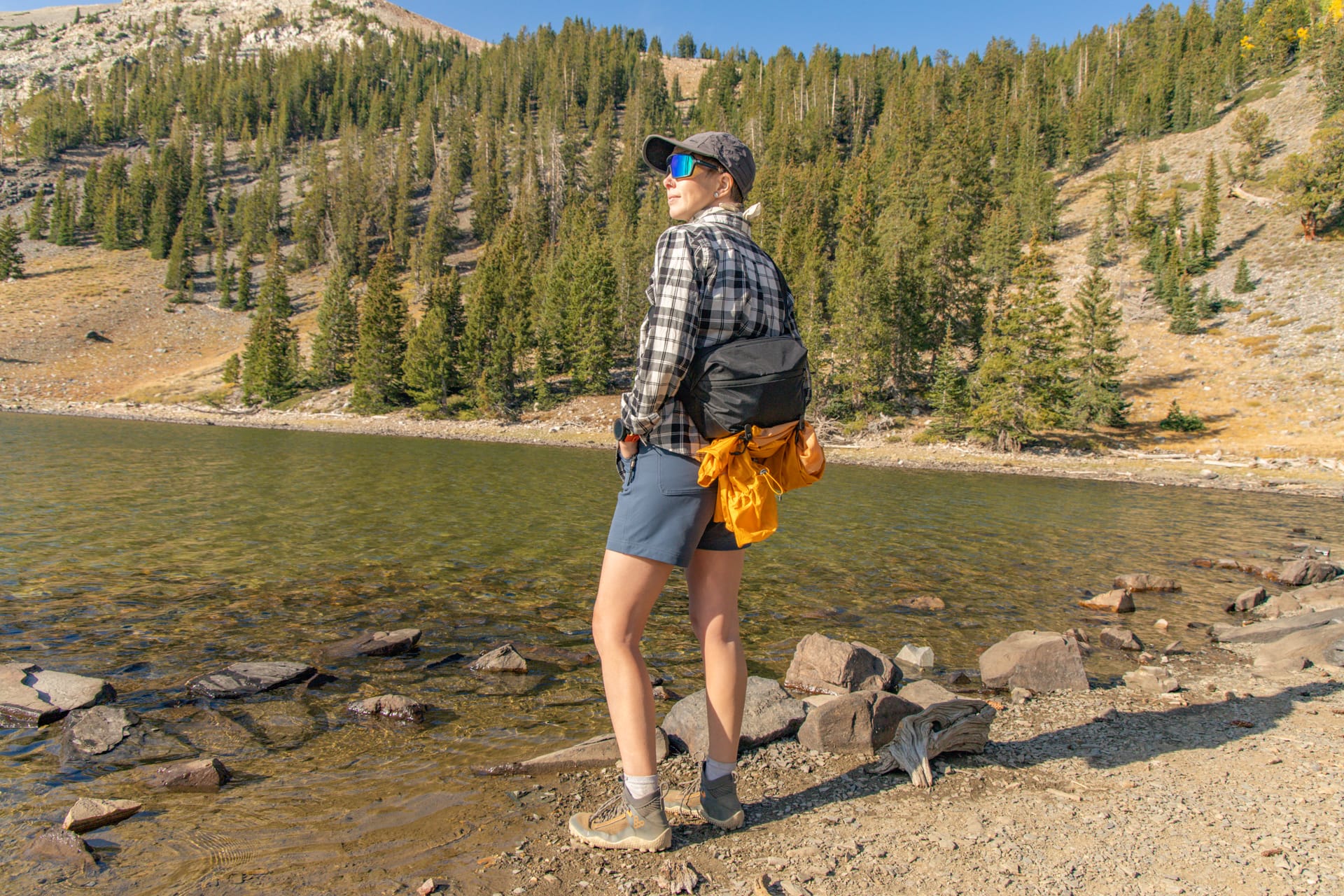
Our preferred covering for our bottom halves when hiking in the summer is always shorts. And while we love a breezy pair of hemp or cotton shorts, it’s nice to don something with a bit more durability when we expect to encounter rocks, sticks, branches, or anything else that might pull, tear, or scratch more delicate fibers. So we often opt for a pair of sustainably-designed synthetic shorts that fit well, have plenty of pockets, and will dry fast if they get wet (so we don’t have to worry about chafing).
Check out some of our favorite shorts for hiking for men and women.

Shirts
Everyone has different preferences when it comes to shirts when deciding what to wear hiking. Some folks just want to throw on a tank top, while others (like me) would prefer a long-sleeve hoody to protect my delicate epidermis on long hikes so I don’t have to constantly reapply sunscreen. And while you can hike in a cotton t-shirt if you like, we usually recommend synthetic materials for hiking shirts since they wick sweat, dry fast, and help keep you cool via evaporation.
Check out some of our favorite natural fiber hiking shirts and sustainable sun shirts.
Shoes
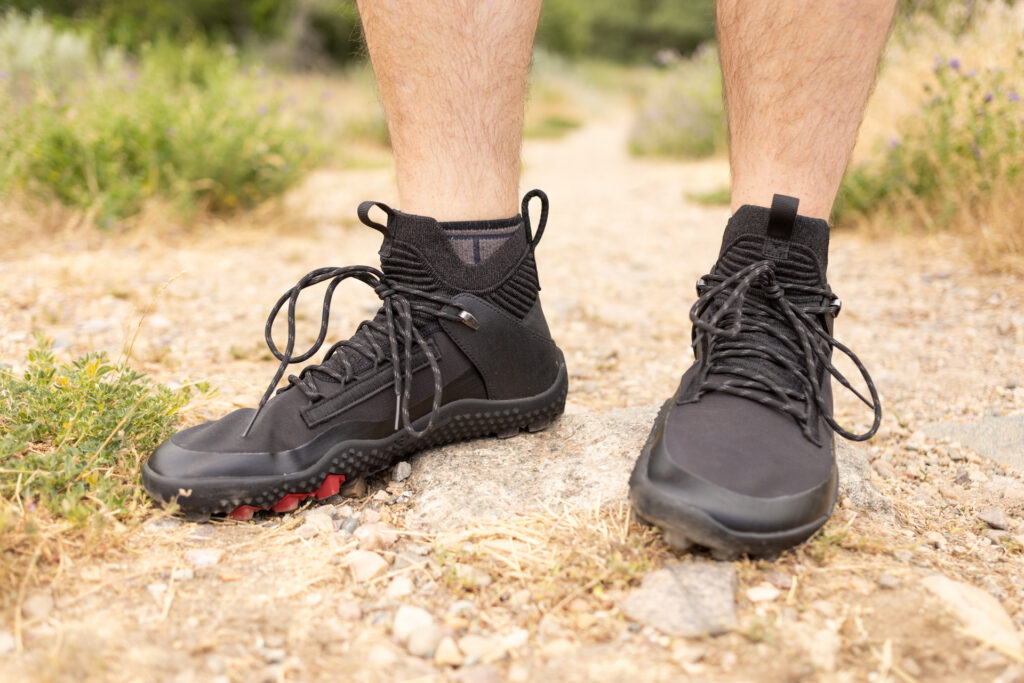
Hiking shoes are a personal choice, and while you can get away with regular ol’ sneakers or trail running shoes for plenty of easy hikes, if you hike often, a dedicated and purpose-built pair of durable shoes with good traction are a wonderful thing to have. In the summer, we don’t usually opt for waterproof shoes unless we’re expecting lots of shallow creek crossings and cold nights as they tend to be less breathable and take longer to dry. But it’s up to you whether you choose stuffy high-top boots or low-rise hiking shoes (which will likely be more comfy in hot temps).
Check out some of our favorite shoes for hiking here.
Cold Weather
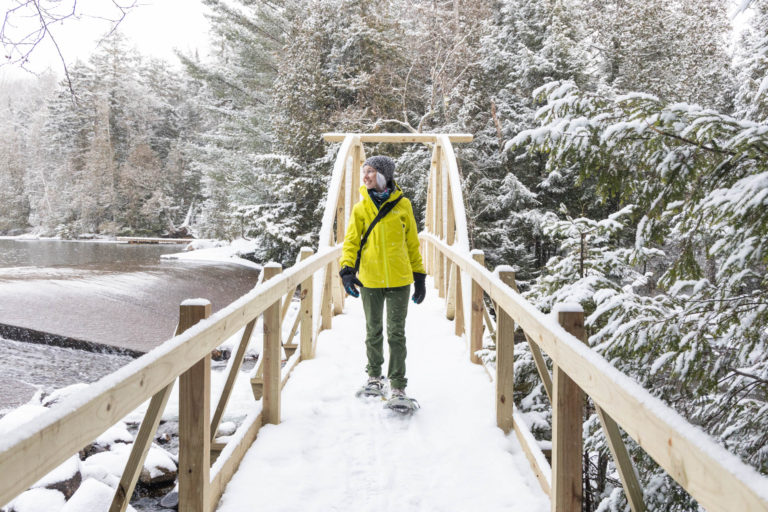
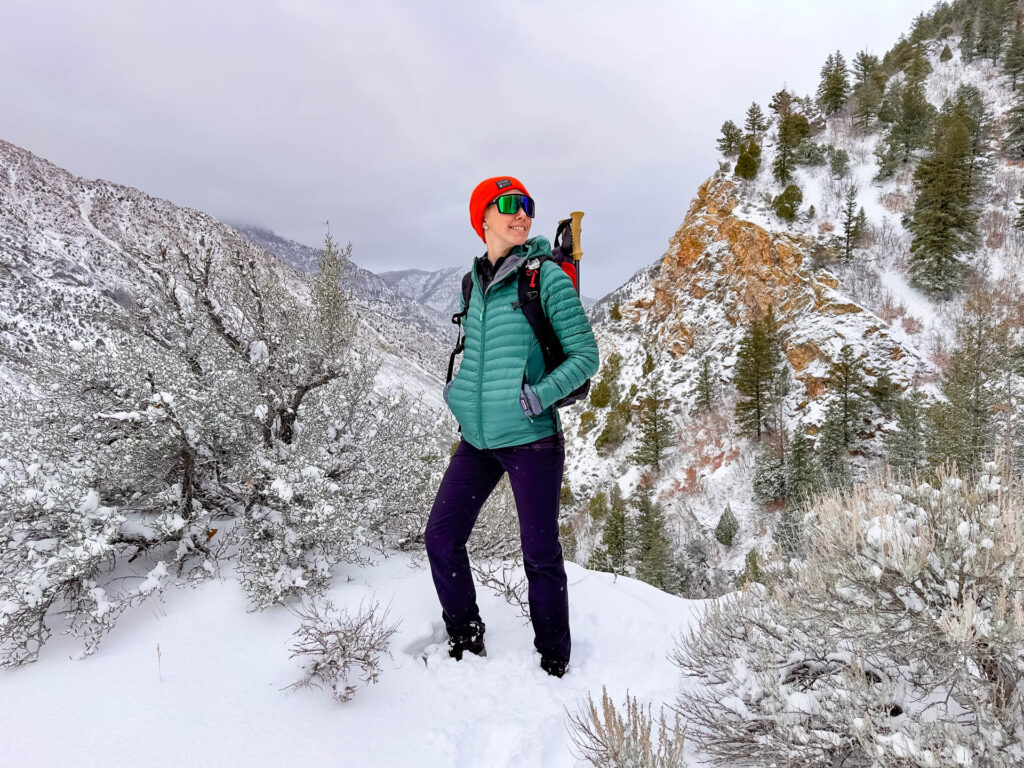
When it’s cold out, what you wear hiking is a bit more important, especially if you’ll be experiencing any sort of moisture, including rain, snow, water crossing, even sweat, which can all lead to hypothermia much more quickly. So when it’s cold out, especially if it’s wet, stick with synthetic materials that wick moisture and dry fast. Wool also works well to keep you warm, even when wet, but we don’t recommend it, because in addition to not being vegan (here’s why that matters to us), it dries very slowly.
You should also make sure to dress in layers to accommodate how your body temperature will fluctuate as you hike. You’ll get warm when moving uphill and want to remove layers, but as soon as you stop for a rest or start to sweat, you’ll get cold again and want to put those layers back on, so it’s more important in cooler months to dress in layers. Not sure what the deal with dressing in layers is or why it’s so dang important? Check out our full article all about layering for the outdoors here.
Find more tips and gear for winter hiking in this post about our favorite gloves and mittens and how to stay warm on winter hikes.
Pants
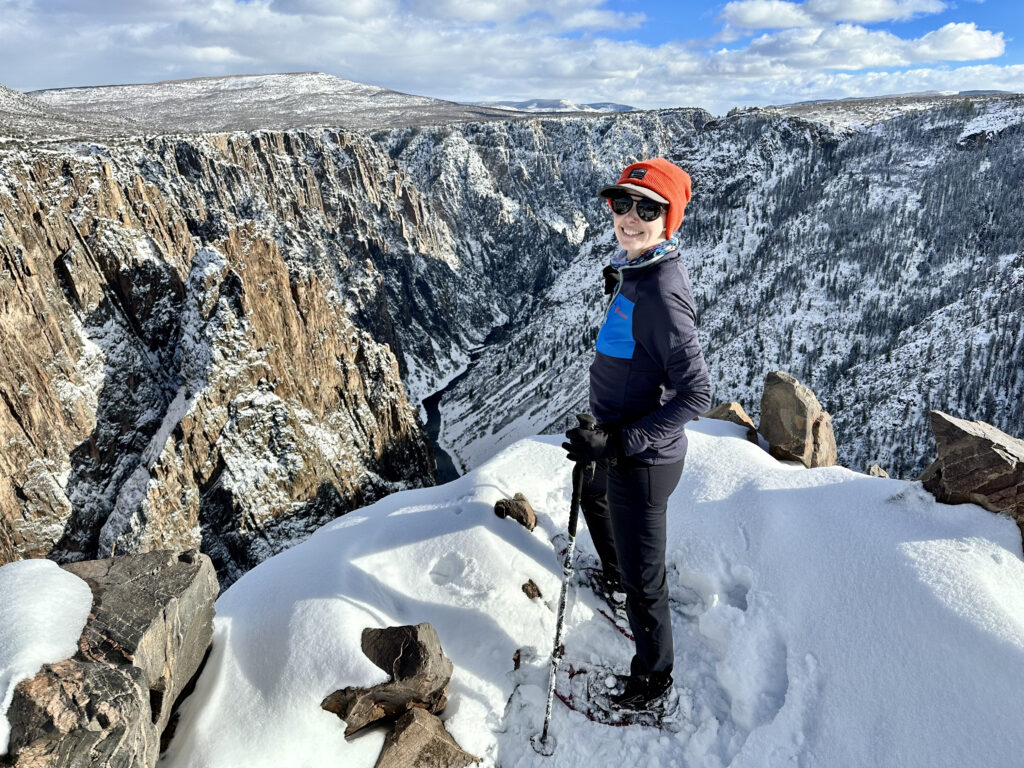
When looking for winter hiking pants, opt for those that are water resistant or waterproof if you’ll be hiking in snow or rain, but make sure anything with DWR (durable water repellent) is PFAS-free. Get something that fits but has some stretch and enough room underneath to accommodate a base layer like snug leggings for when it’s really cold.
Check out some of our favorite gear here.

Base Layer
A base layer may be one of the most important layers you wear when it’s cold because it’s your first line of defense against clothes that might get soggy with sweat. So opt for shirts and pants that are fitted or at least mostly fitted and that are made of synthetic materials that effectively wick sweat, dry quickly, and keep you warm on chilly days.
Check out some of our favorite base layers here.
Shoes
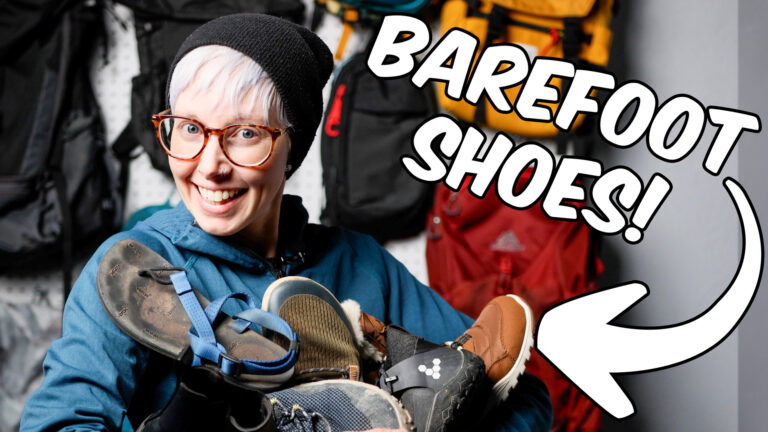
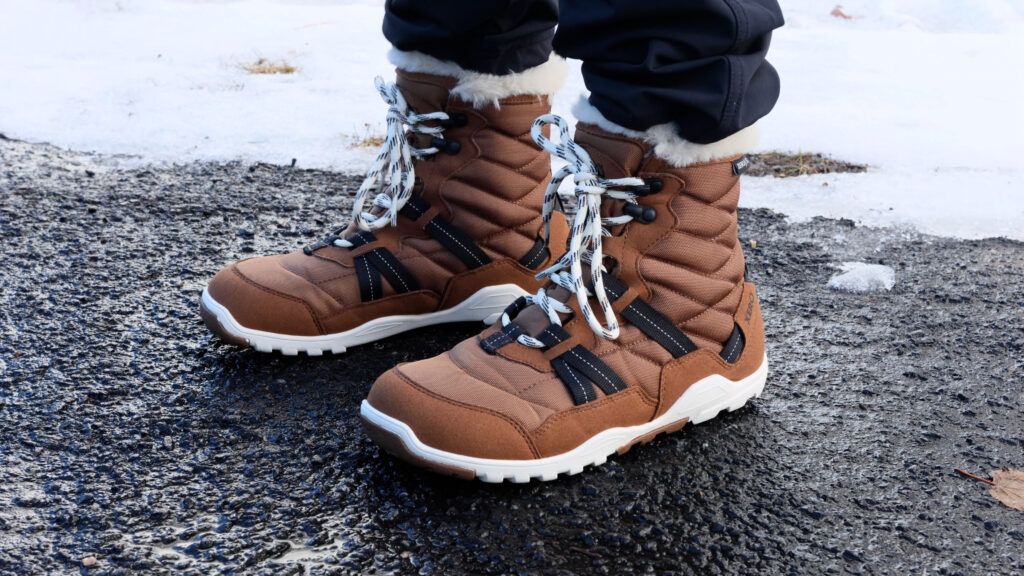
Hiking boots are a very personal choice, and everyone has specific fit and features they’re looking for we prefer minimalist and barefoot winter hiking boots). But whatever your preferences, grab a pair that’s waterproof, insulated if it’s gonna be super cold, comes up above your ankle to help keep any snow out of your shoes, and is comfy (learn how to find a pair of hiking boots that fits in this article).
Check out some of our favorite winter hiking boots here.
Midlayer
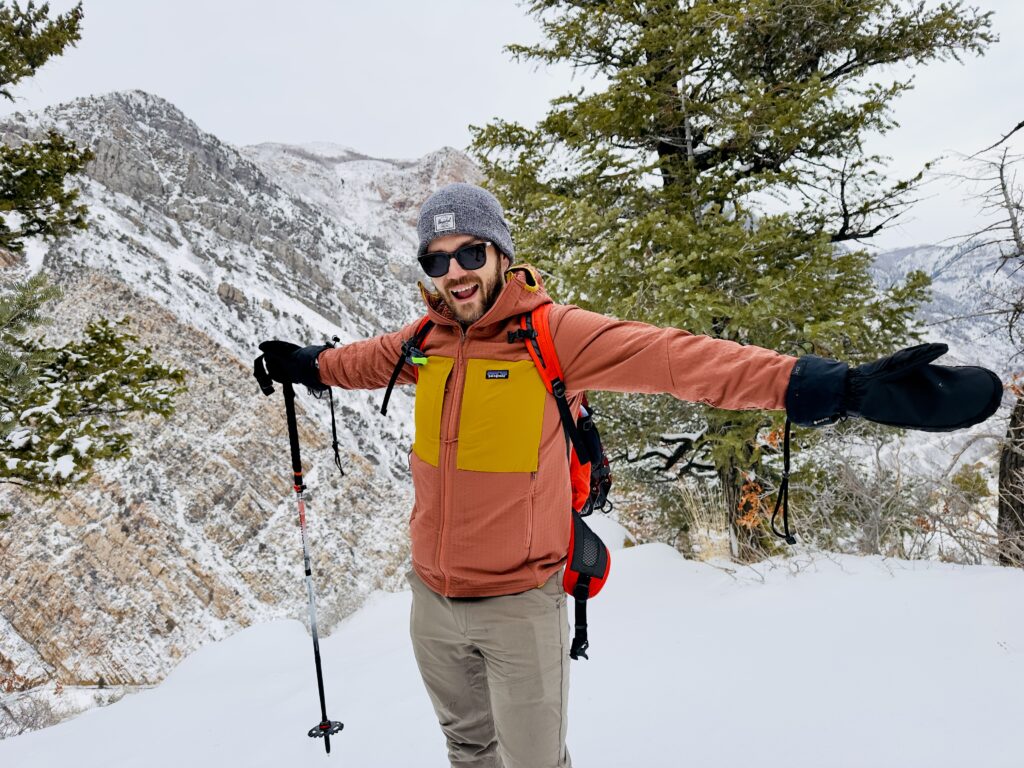
A mid layer can be many things, it can even be many layers since a mid layer is technically anything between your base layer and your outer layer like a shell jacket. So you could potential have on two or three midlayers ranging from fitted fleece sweaters to insulated jackets.
Check out some of our favorite grid fleece and hybrid jackets.
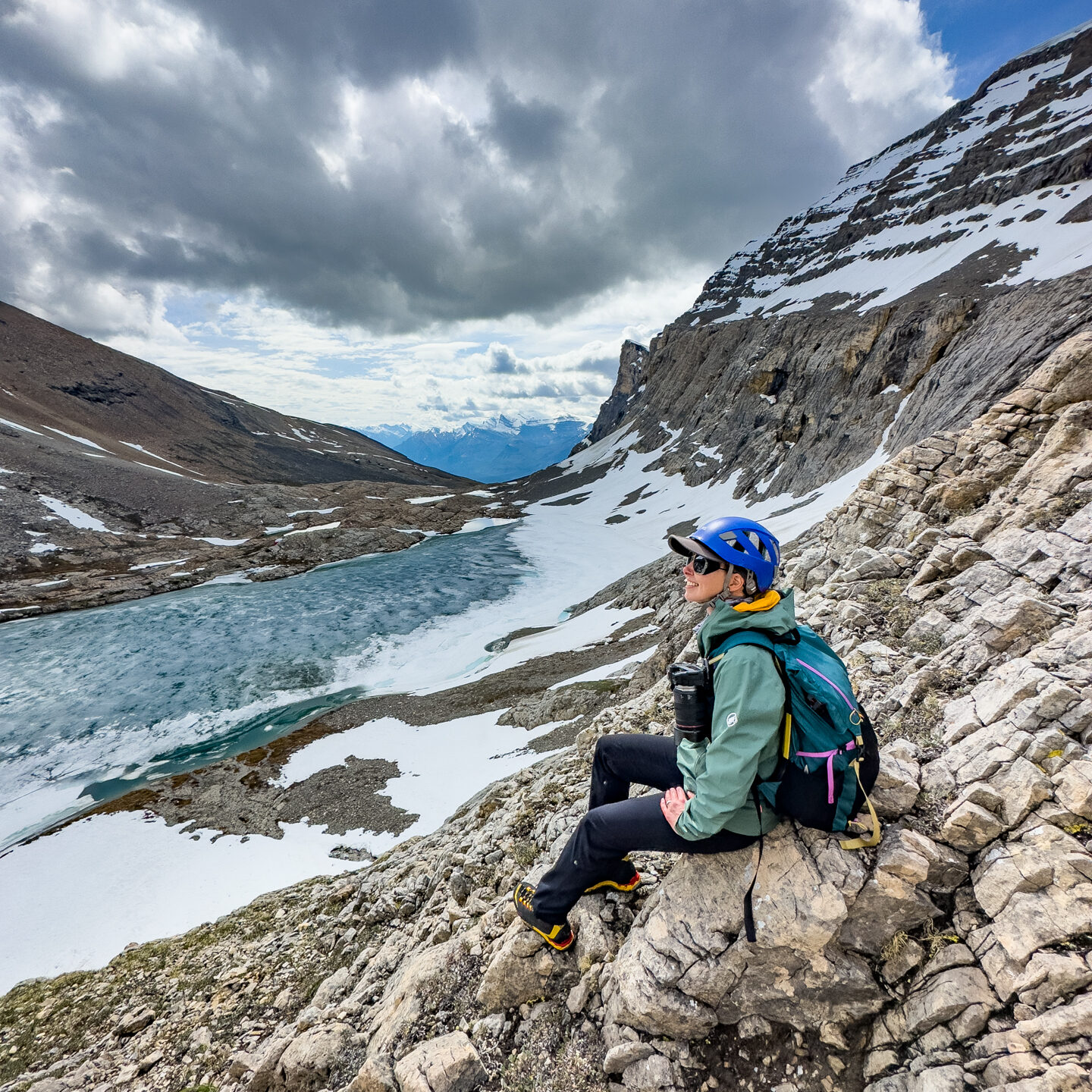
Outerwear
Especially if you’re expecting wind or precipitation, a robust outer layer or shell jacket is a must for winter hiking. You want something that is water- and wind-proof (so your other layers stay dry), that’s roomy enough to accommodate several other layers underneath it, but that also breathes so you don’t overheat when working hard during uphill hikes. That’s why we like shell jackets with zippered pit vents. And lots of pockets. Pockets are a must, as is an adjustable hood. And yes, a sturdy, breathable rain jacket will work for many excursions.
For serious protection from the elements, nothing beats Josh’s favorite Mountain Hardware Exposure Pro 2. It’s ultra durable, is also suitable for snow sports and mountaineering, and chances are, you won’t have to replace it for a decade or more! For light protection from snow, wind, or rain, I love my Mammut Alto Light jacket. It’s easily packable, doubles as a rain jacket, has all the bells and whistles like pit vents and hand pockets, and fits like a dream. Plus: it stretches!
Check out how to choose between a shell and insulated jacket here.
Bottom Line: What to Wear Hiking
There you have it! Some of our favorite clothing for hiking in every season and plenty of guidance on what to wear hiking in winter or summer or any time in between. Still have questions? Ask away in the comments! We’re happy to answer! Now gear up, get out there, and wander on.