What to Wear for Winter Hiking Based on the Temp

Winter hiking is a blast. Trails are less crowded, parking lots are empty, the views are spectacular (especially if there’s snow on the mountains where you live) and it’s a great excuse to indulge in your favorite trail snacks or a hot beverage (you burn more calories hiking in the cold).
Don’t agree? Maybe you’re doing winter hiking wrong. It’s OK if you have been. After all, cold weather hiking is about mastering layers, preventing sweat and staying warm while you recreate. If that’s been a challenge thus far or you’re planning a trip to a cold-weather destination and you’re not sure what to pack, we’ve got you. Here are some simple guidelines, recommendations and tips for what to wear winter hiking so you can enjoy the fourth season.
And don’t forget your snowshoes or microspikes if you expect snow or ice on the trail!
What to Wear for Winter Hiking: Considerations
First, a caveat: these guidelines are just a starting point. If you run hot, dress for warmer temps. If you run cold, wear slightly more layers. If you’re new to layering, read this article on why it’s so important to get right.
These recommendations are based on an average person talking a moderate hike on a partially sunny day. If you’re mainly walking on flat surfaces, you may not warm up as much as if you’re hiking up a mountain, so you might need to dress slightly warmer. If it’s super sunny you might need to wear less. Here are other conditions that could affect how you dress:
- Wind: Bring a windproof layer, gloves and a neck gaiter to cover exposed skin, no matter the winter temps.
- Snow or rain: if there’s precipitation, bring a waterproof layer.
- Uphill: You’ll heat up faster because you’re working harder. Be prepared to shed layers.
- Downhill/flat: Since you’re not working as hard, your body will stay cooler. Make sure to bring extra layers for the downhill or easy strolls.
- Sun: A bluebird day can make it feel much warmer than it is, especially in the dry climates. You can likely dress for slightly warmer temps.
Ready to get dressed? Here are our recommendations on what to wear. Plan on snowshoeing instead? Check out our recs for what to wear snowshoeing here. And yes, all temperatures are in Fahrenheit.

Temps in the 50’s
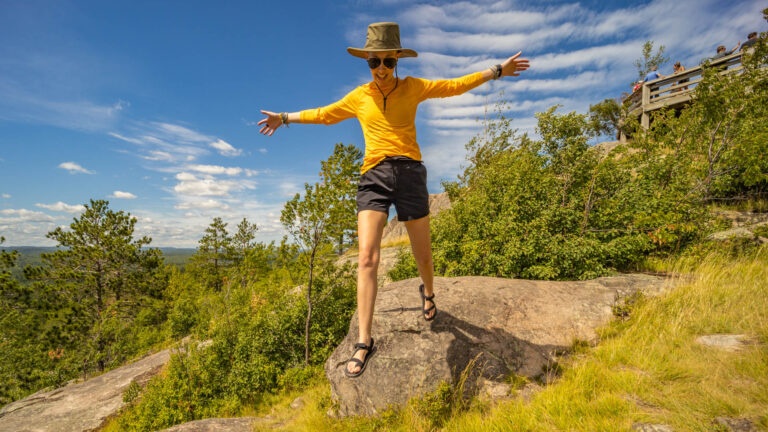
If you ask most folks who live in wintery regions, 50º days are barely winter. But if you’re coming from southern climes, that might seem a touch chilly. Don’t worry; it’s not (lol). Especially if it’s sunny, as long as you’re moving, temps in the 50’s can seem downright balmy. Don’t be surprised if you start to sweat.
- Hiking pants: A light pair of hiking pants like the Patagonia Quandary Joggers (for women) or Royal Robbins Wilder Pant are perfect. A pair of hiking leggings are likely sufficient, too.
- Baselayer: Chances are, no baselayer is required on your legs. But for tops, we might wear a simple sun shirt or something lightweight like the Craft Pro Active Extreme. Warm bodies may even prefer a short-sleeve shirt.
- Midlayer: At most, for those who run cold, a lightweight midlayer will be more than sufficient. Consider something breathable like an ultralight fleece or grid fleece at the very most.
- Outer Layer: Unless it’s raining, the most you’ll need as an outer layer is a lightweight jacket like a windbreaker. If you skipped the midlayer, a lightweight insulated jacket can be useful in the shade, during breaks, or on easy stretches of trail.
- Accessories: We might bring a lightweight neck gaiter and a lightweight beanie or hat, plus lightweight liner gloves for breezy days or breaks in the shade.

Temps in the 40’s
When temps hit the 40’s it starts to feel a bit brisk. Fortunately, it’s still far from truly cold and layering is still about light, versatile layers. Plan to rearrange and shed them often.
- Hiking pants: A mid-weight pair of hiking pants like the Gnara Go There pants (for women) or Outdoor Research Timberline Pants are perfect.
- Baselayer: In chilly temps, a lightweight layer like the Craft Pro Active Extreme or Uyn Energyon Biotech Baselayer are an excellent choice.
- Midlayer: A lightweight midlayer will likely be sufficient. Consider something breathable like an ultralight fleece or grid fleece.
- Outer Layer: A lightweight jacket like a windbreaker will probably do nicely over a warmer midlayer. If you go light on the midlayer, opt for a lightweight insulated jacket and a lightweight rain jacket if it’s windy or wet.
- Accessories: Pack a neck gaiter, a midweight beanie, and insulated gloves. We like a liner glove with a lightweight shell in these temps for versatility.
Temps in the 30’s
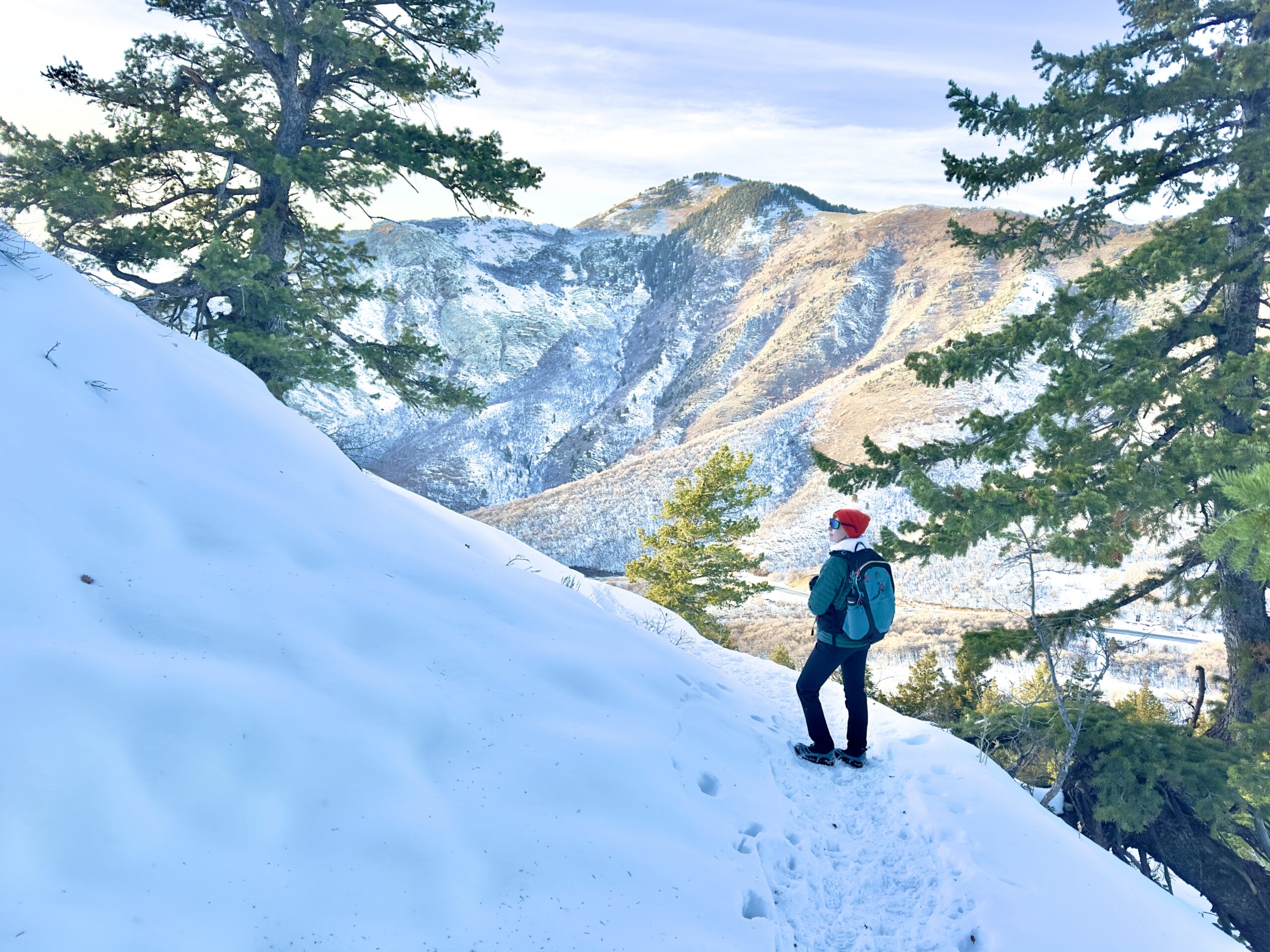
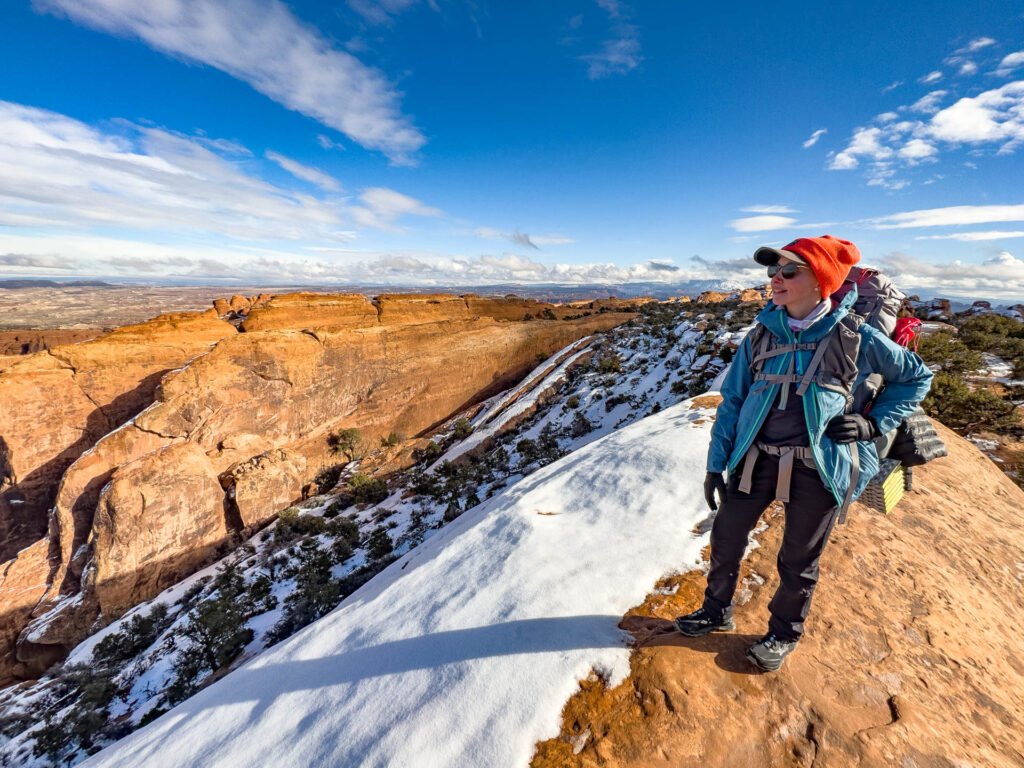
In my opinion, winter weather doesn’t really start until the mercury hits the 30’s. It’s starting to get chilly, but it’s nothing you can’t handle with the proper application of layers. Just make sure they’re adjustable and be prepared for temperature swings on summits or in deep shade like canyons.
- Hiking pants: A mid- to heavy-weight pair of hiking pants like the Stellar EQ Softshell Pants are great for hikes in the low 30’s but the Gnara Go There pants are still an excellent option for women when layered with a baselayer.
- Baselayer: A baselayer on top and bottom starts getting more vital at these temps. Depending on how thick your hiking pants are, you may prefer lightweight option like the Craft Pro Active Extreme or Uyn Energyon Biotech Baselayer. If you need more insulating power, the Backcountry Pines Microgrid is warmer but still breathes and wicks well.
- Midlayer: This is when a midlayer starts getting more important. Consider something more insulating like a grid fleece, potentially layered under a lightweight insulated jacket.
- Outer Layer: A wind- and waterproof jacket like a lightweight rain jacket or shell jacket will help trap heat and block cold breezes.
- Accessories: Don a cozy neck gaiter, a warm beanie, and insulated gloves. When the wind is whipping, we like to pull our gaiter over our head and ears then pull on a warm hat for extra protection. We will likely be packing hand warmers, too.
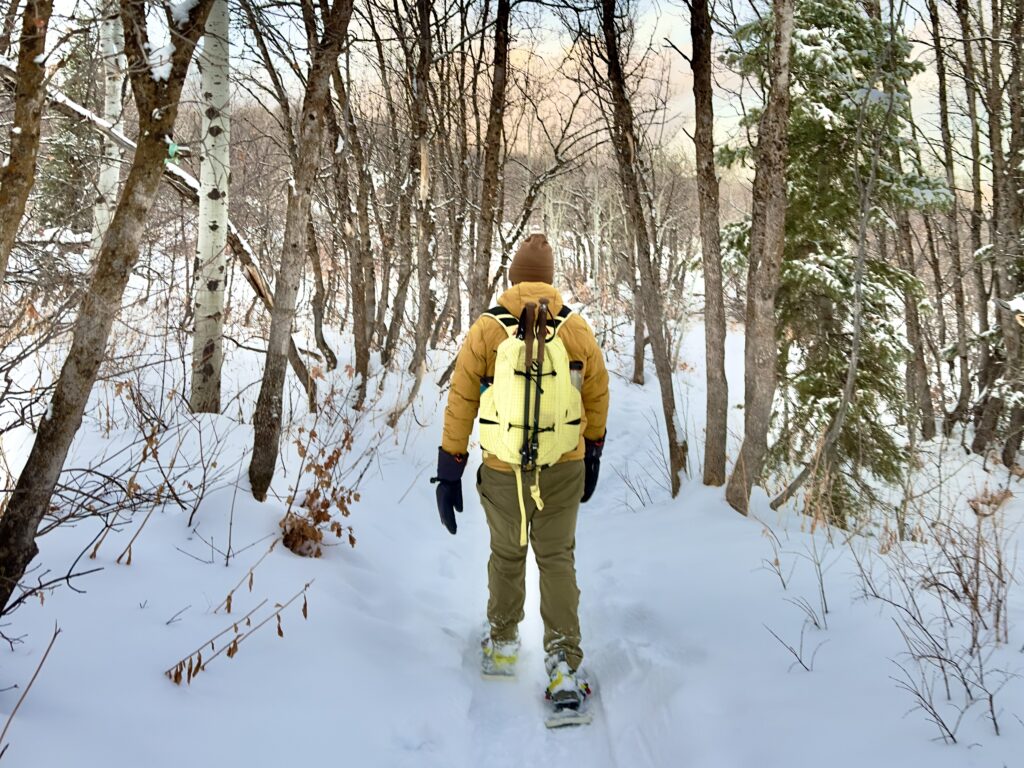
Temps in the 20’s
It’s starting to feel really cold once temps dip into the 20’s. Now it’s important to make sure all exposed skin is covered and you have adequate insulating layers. But make sure they’re still adjustable so you don’t soak your close-to-skin layers with sweat when you’re working hard, thus making you even colder.
- Hiking pants: A mid- to heavy-weight pair of hiking pants like the Stellar EQ Softshell Pants are great for chilly hikes but we’ll still don our Gnara Go There pants over a cozy baselayer.
- Baselayer: Make your baselayer warmer, but still breathable, especially if you’re working hard. Depending on how thick your hiking pants are, you may want to reach for something like the Patagonia Capilene Midweight or possibly something heavier depending on planned output level.
- Midlayer: When it’s this cold, breathable insulation is key. A cozy fleece will do, as will an insulated jacket or hybrid jacket. Don’t be afraid to layer two lighter weight midlayers like a grid fleece and an insulated jacket for extra coziness.
- Outer Layer: A wind- and waterproof jacket like a shell jacket is key to trap heat and block cold breezes.
- Accessories: Don a cozy fleece neck gaiter, a warm beanie, and insulated gloves. When the wind is whipping, we like to pull our gaiter over our head and ears then pull on a warm hat for extra protection. We will likely be packing hand warmers, too.

Temps in the 10’s
This is cold. Minnesotans and Alaskans may balk at that statement, but for most folks, that’s pretty dang chilly. Make sure to layer up, stay dry, and cover all exposed skin.
- Hiking pants: A heavy-weight pair of hiking pants like the Stellar EQ Softshell Pants are important. A pair of shell pants or bibs or rain pants over top of hiking pants for extra insulating power and windproof protection is a good idea.
- Baselayer: Make your baselayer warm, but still breathable, especially if you’re working hard. If your pants aren’t insulated, consider fleece leggings or joggers like the Sambob Microline pants.
- Midlayer: When it’s this cold, warm layers are important. Feel free to layer several options. Start with a cozy fleece, then add a heavier insulated jacket or hybrid jacket.
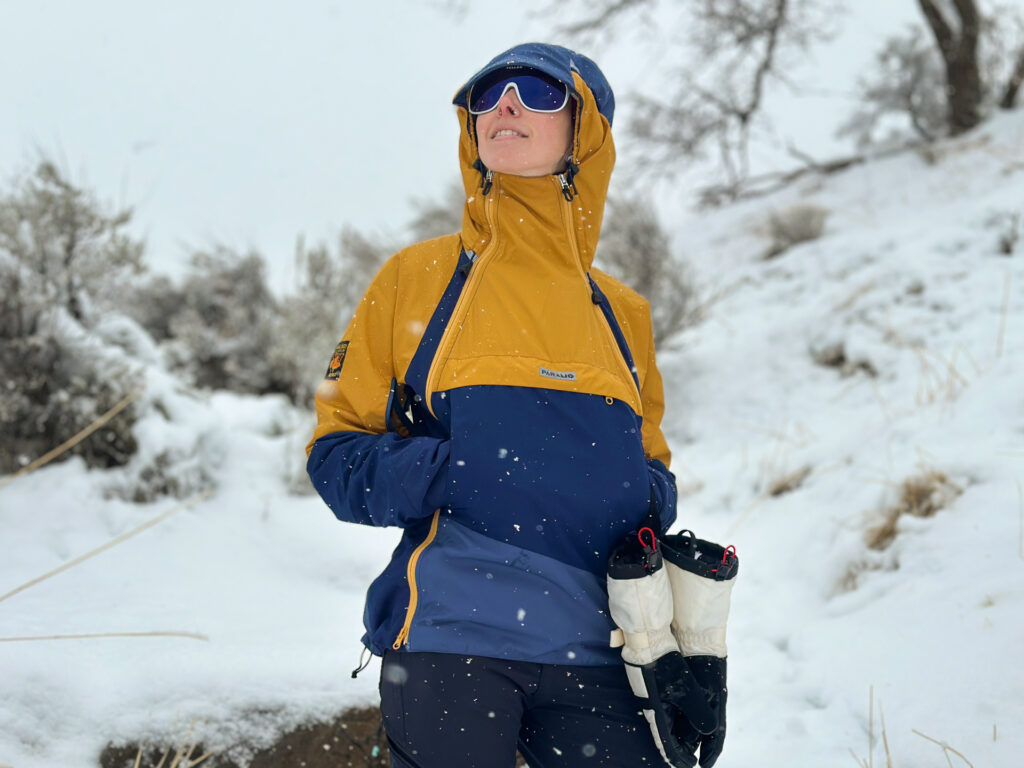
- Outer Layer: A wind- and waterproof jacket like a shell jacket or lightly insulated option like the Páramo Velez Evolution Hybrid Smock is key to trap heat and block cold breezes.
- Accessories: Don a cozy fleece neck gaiter, a warm beanie and possibly a thicker winter hat or midlayer hood on top of that, and insulating gloves. Hand warmers are a good idea.
Bottom Line
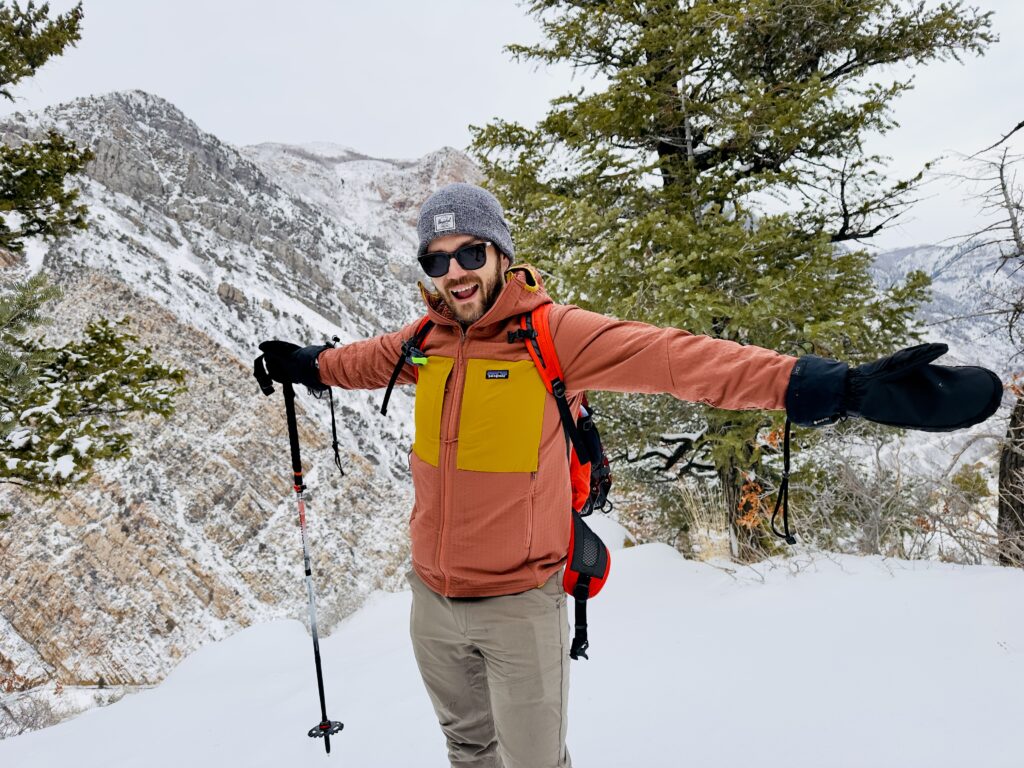
Winter hiking can present a challenge when it comes to deciding what to wear, especially as temps drop below freezing. But hopefully these guidelines offer a solid starting point for how to dress for success when it’s cold. The key thing to remember is that several lightweight layers are better than one or two bulky, warm layers, and you should actively manage what layers you’re wearing to keep from sweating and also keep you warm. Don’t worry; the more you do it, the more natural it will become. Have fun out there!
Check out These Articles Next:
Insulated Bottles (to keep your water from freezing in the cold)
Where to Hike in Winter if You Hate Hiking in Winter
The 5 Best Winter Barefoot Boots
Plan a Winter Adventure in Southwest Montana
4 Winter Hikes Near Salt Lake City
Gear, tips and tricks for winter mountain biking